
Drivers to be scored out of 100 based on in-car and traffic camera monitoring – privileges could be revoked!
For years, we’ve been told that driving is becoming safer, smarter, and more regulated, but what if the next phase isn’t about enforcement at all, at least not in the traditional sense, and instead marks a shift towards something far more pervasive, far more subtle, and arguably far more consequential for the everyday motorist?
Because what is now being discussed, at least in principle, is the introduction of a Driver Behaviour Score in the UK, a system that would effectively rate drivers out of 100, not based on a single offence or a fleeting lapse in judgement, but on a continuous assessment of how they behave behind the wheel over time, building a profile that reflects not just what they do wrong, but what kind of driver they are.
At first glance, it sounds like the sort of dystopian concept usually reserved for speculative fiction or late-night pub debates among increasingly paranoid petrolheads, yet when you begin to examine the direction in which modern motoring is already heading, it becomes uncomfortably clear that the building blocks for such a system are not only in place, but actively being deployed around us.
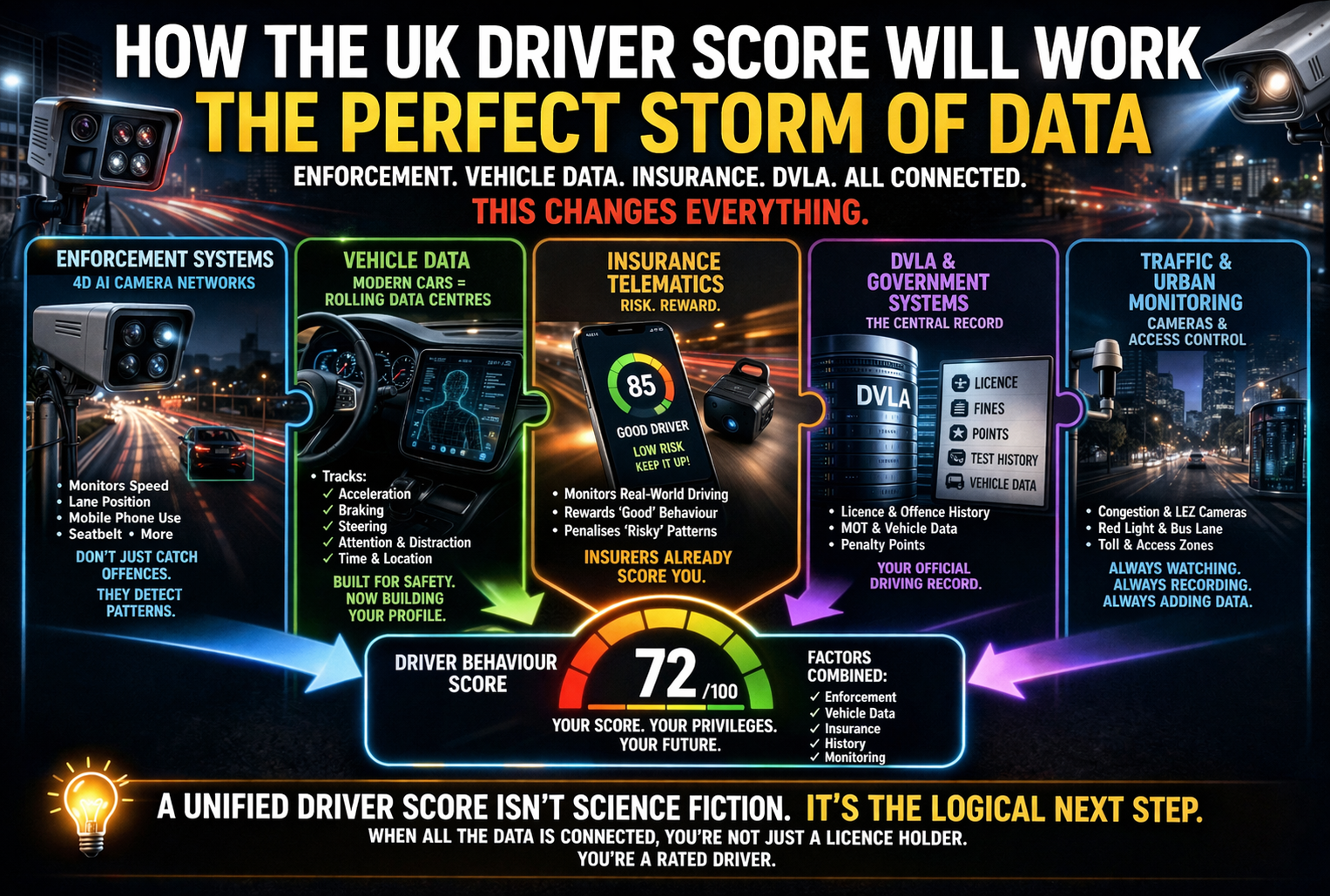
Take, for example, the rollout of the latest 4D AI speed cameras, which I recently covered, and which go far beyond simply measuring speed, instead observing multiple aspects of driver behaviour simultaneously, capturing data points that allow for a far richer understanding of what is happening in and around a vehicle at any given moment. These systems are no longer just catching offenders; they are identifying patterns, tendencies, and habits.
Then consider the car itself, no longer merely a mechanical device but increasingly a rolling data hub, quietly monitoring driver inputs, tracking acceleration and braking, observing steering behaviour, and even assessing levels of attention and fatigue. Features introduced in the name of safety and convenience are, in effect, creating a detailed behavioural record of how we drive in the real world.
Overlay this with the insurance industry’s growing reliance on telematics, where drivers are already being rewarded or penalised based on perceived risk profiles, and add in the DVLA’s existing records, traffic monitoring networks, and urban access controls, and what emerges is a landscape in which data is not only being collected, but increasingly connected.
The logical next step, then, is not difficult to imagine. A unified system that aggregates this data into a single, evolving score, one that could influence insurance premiums, determine access to certain areas, and potentially even trigger licence reviews over time. Not because you broke the law, but because your overall driving behaviour falls outside what is deemed acceptable.
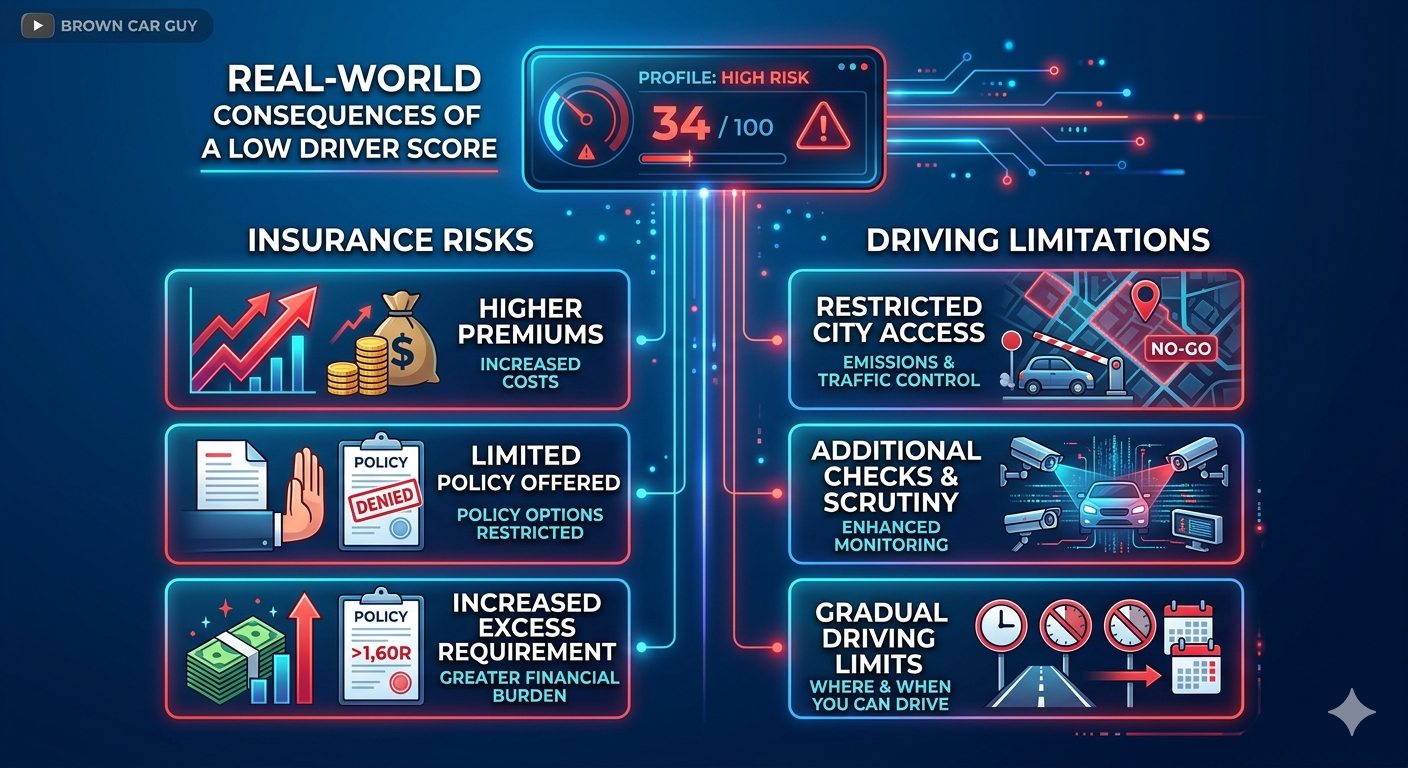
And that is where the real shift occurs, because driving ceases to be simply an activity governed by rules and becomes instead a form of ongoing evaluation, a performance that is constantly measured, analysed, and judged. The implication is profound: even those who have never received a ticket, never been involved in an incident, could find themselves penalised not for what they have done, but for how they are perceived to behave.
It is, on the face of it, a system that promises greater safety and efficiency, yet raises equally pressing questions about autonomy, privacy, and the very nature of personal mobility in an increasingly data-driven world.
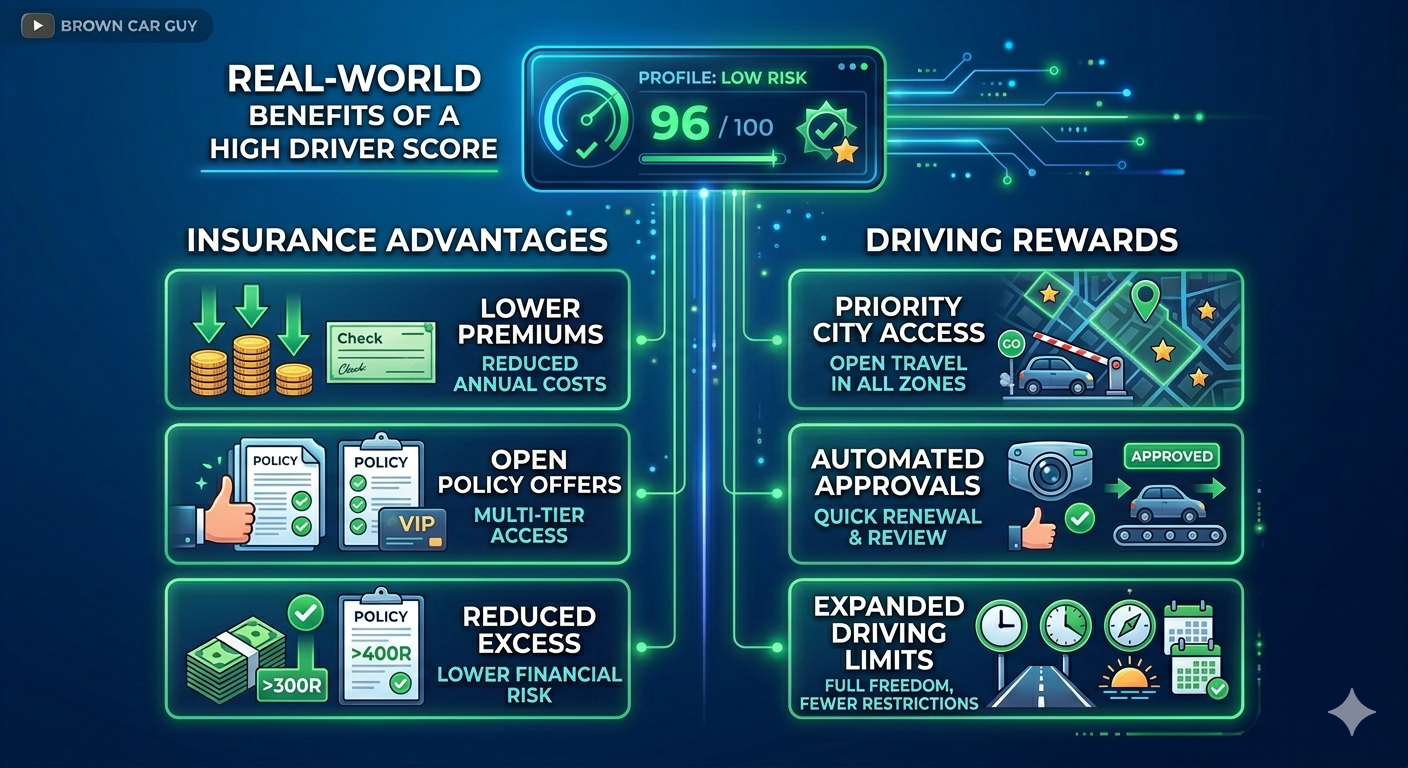
Now, according to what is being quietly suggested in certain discussions, such a system could be trialled, refined, and potentially introduced in the UK from the 1st of April 2027.
Yes, April the first.

Because if all of this has sounded just a little too plausible, a little too neatly aligned with the trajectory of modern motoring, and perhaps just a touch unsettling in its implications, then you’ve just experienced exactly why this idea works so well.
Happy April Fools.
But here’s the thing, and it’s worth reflecting on, because while the full system described here does not yet exist in this exact form, every individual component already does, from advanced enforcement cameras to in-car monitoring systems and behaviour-based insurance models, and it doesn’t take a great leap of imagination to see how they could one day be combined.
So perhaps the real question is not whether a Driver Score system is coming, but how far away we truly are from something very much like it.
If you found this useful, interesting or fun, consider supporting me via Patreon, Ko-Fi, or even grabbing a copy of one of my books on Amazon. Every bit helps me keep creating independent automotive content that actually helps people.
Support independent car journalism 🙏🏽☺️ grab my books on Amazon, take up membership to BrownCarGuy on YouTube, or join me on Ko-Fi or Patreon.

👉🏽 Channel membership: https://www.youtube.com/browncarguy/join
👉🏽 Buy me a Coffee! https://ko-fi.com/browncarguy
👉🏽 Patreon – https://www.patreon.com/BrownCarGuy

MY BOOKS ON AMAZON!
📖 Want to become an automotive journalist, content creator, or car influencer? Check out my book: How to be an Automotive Content Creator 👉🏽 https://amzn.eu/d/7VTs0ii
📖 Quantum Races – A collection of my best automotive sci-fi short stories! 👉🏽 https://amzn.eu/d/0Y93s9g
📖 The ULEZ Files – Debut novel – all-action thriller! 👉🏽 https://amzn.eu/d/d1GXZkO
Discover more from Brown Car Guy
Subscribe to get the latest posts sent to your email.

Leave a comment