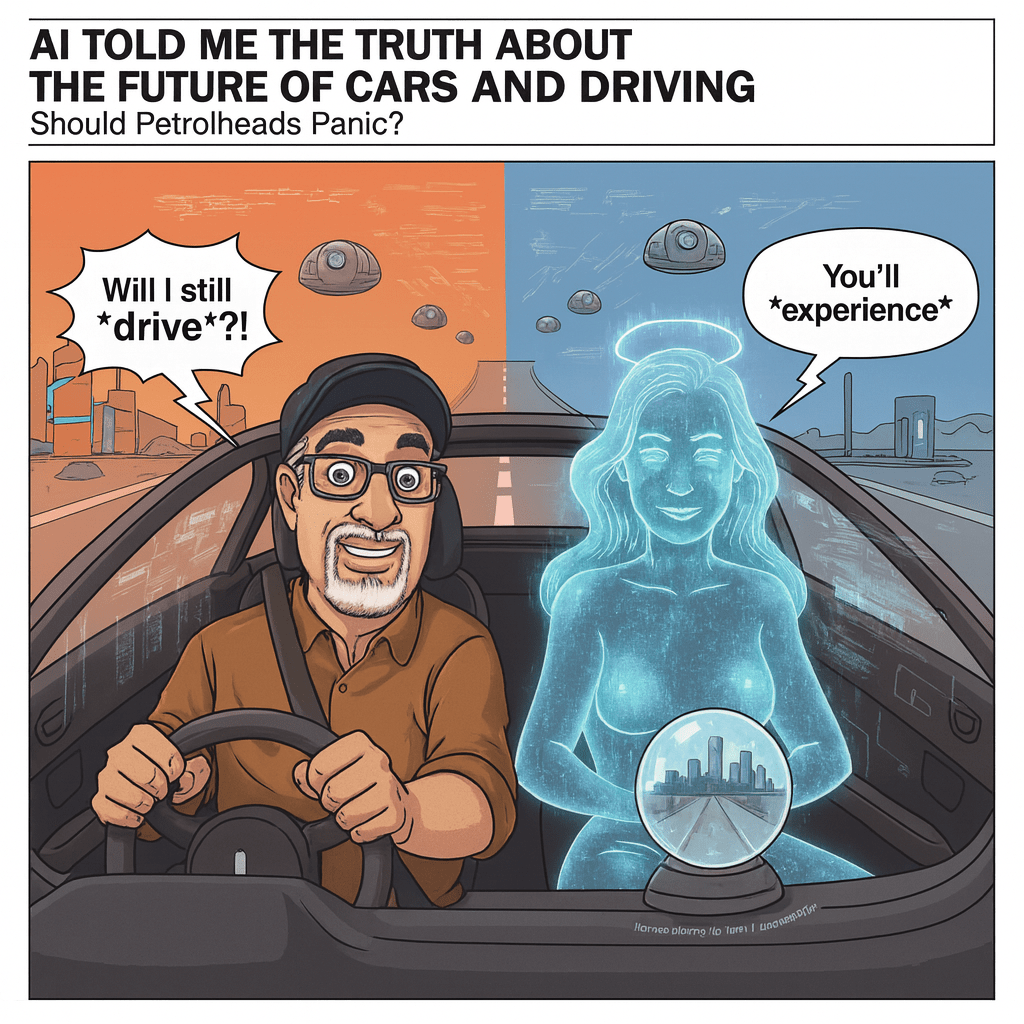
A calm AI voice told me driving would survive, but it felt oddly like being reassured by someone reading the instructions for a Temu lawnmower
So I’m driving along, in a plug-in hybrid test car, contemplating important matters like the fate of petrol stations, why people keep buying grey cars and what it would be like if we couldn’t drive anymore. This scenario would, of course, unfold at the advent of an AI era that removed the necessity to pedal and steer a vehicle, handing such duties to sensors, cameras, radars, lidars, a computer brain and, naturally, the all-seeing mysterious Cloud.
So I thought, you know what, let’s ask it. Let’s put to it the big, existential questions about cars, freedom, petrolheads and whether the steering wheel is about to join fax machines and Sony Walkmans in the museum of things we most miss.
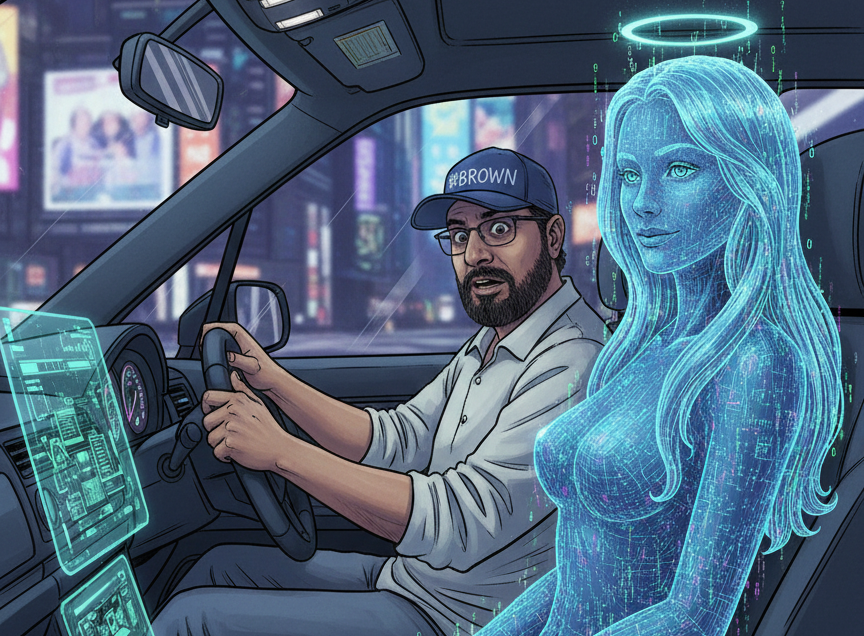
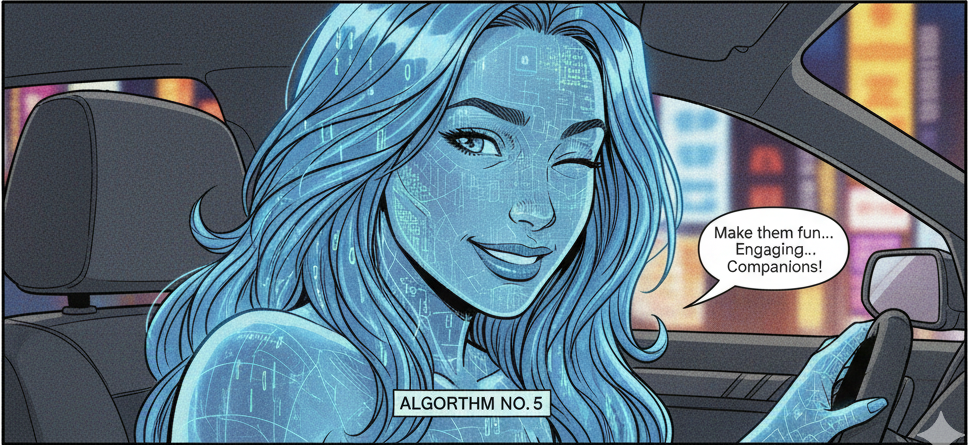
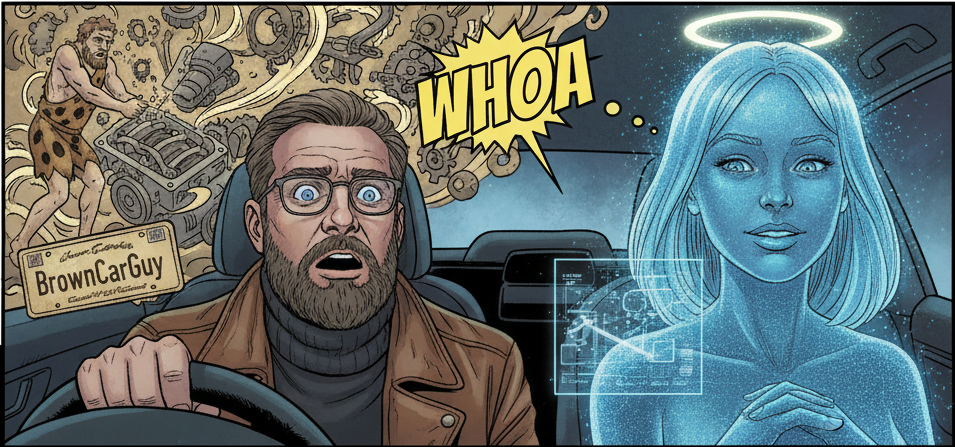
I normally type my queries to ChatGPT, but since I was at the wheel, instead, my passenger seat lit up with a holographic wireframe being, glimmering with bytes that randomly brightened and dimmed, within a graceful female form, appearing as if a digital angel.
Actually, that all happened in my head. In reality, a preposterously friendly and eager voice announced the presence of an intelligence that sounded like a person cheerfully along for the ride, but which clearly did not exist.
So we started chatting. No, I haven’t lost the plot. Not entirely. Not yet, anyway. I wanted to know exactly what our algorithmic overlords think about the future of driving. Will we still be allowed to steer things ourselves, or will we be strapped in like babies in buggies while robots whisk us away to locations of their choosing? Yes, I said “their”.
I expected the tone of an algorithmic overlord, issuing diktats on how things were going to be henceforth. However, she (yes, it was a female voice, so I’m going to refer to it as “she”) spoke with the smooth certainty of a machine that had read and catalogued every manual in existence.
Anyway, she was very composed, very soothing. Almost too comforting. I caught myself wondering whether I was being reassured… or managed. So I recorded the whole exchange for your enjoyment. Or your concern. Hard to know really. You tell me.
It’s A Bit Like Talking To KITT
You’ve seen Knight Rider, right? A show in which an abnormally large proportion of the time, the main protagonist is essentially talking to no one, or rather, he is talking to a disembodied digital entity.
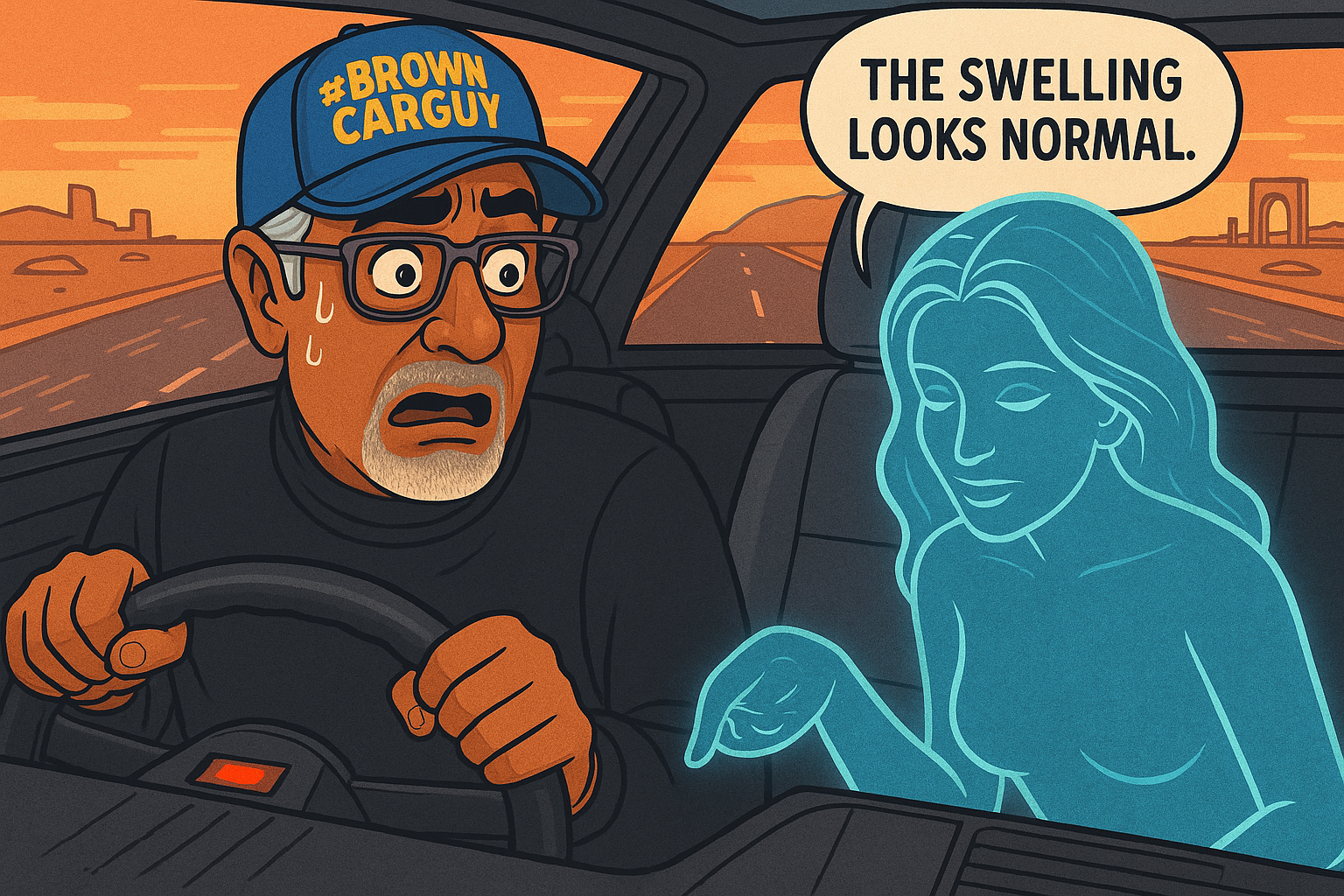
After 43 years, I’ve finally experienced what it must be like being Michael talking to KITT. Except instead of KITT’s smug confidence, this AI offered the sort of serene, measured tone you normally get from a triage nurse telling you the swelling “looks normal”.
Thus, here I was chatting with an AI about the survival of driving. Not survival in the dramatic, asteroid-strikes-the-planet sense, though if an asteroid ever did strike the planet, I’m sure someone would still try to take the long way home to avoid the roadworks (frankly impossible on the Edgware Road). I’m talking about the survival of personal cars in the creeping era of autonomy.
Her voice came crisply through Toyota’s Premium 9-speaker JBL sound system, though my subconscious continued to allocate its source to the almost certainly empty passenger seat beside me, though I dared not look in case there really was a made-out-of-the-matrix translucent being sitting there, byte-naked as the day it was born… which was, in fact, this very moment.
Will Cars Still Be Relevant In The Era Of Robots?
I started by asking her whether personal cars will still be relevant in the future with the advent of fully autonomous vehicles.
She paused. Computer systems do not need to pause, so it was a little unsettling. It was the hesitation of someone looking up into the creative side of their brain, gathering their thoughts, littering supposed theory with a smattering of facts and dumbing down the delivery so that it could be digested by the mental toddler she was indubitably dealing with.
She would do this before every response, thereby confirming that, in her opinion, my faculties did not graduate much beyond kindergarten throughout our conversation.
Anyway, eventually, she announced that personal cars have at least a decade or two ahead of them, in the same tone someone might use to tell you your favourite restaurant is closing, but not till next October. I felt relieved and depressed at the same time.
According to her, personal cars will cling on for a while. Not forever. Not indefinitely. Just long enough to tempt us to transfer our sentimental loyalties from a ton and a half of metal, chrome and combustion, to plastic pods piloted by unseen robots. Yeah… er… no. Not happening.
What’s Holding Back Autonomy – Us Or Them?
I asked her what was holding autonomy back. Was it the technology? The sensors? The computing power? The quantum wizardry? The fact that half the roads in Britain resemble test tracks for lunar rovers?
She explained that the problem was not the machinery. The machinery is fine. The machinery is patient. The machinery does not get confused by yellow boxes or have its confidence shattered by a cyclist pumping his palm and calling it a wanker.
The issue, she explained gently, was us. Humans. We are unpredictable. We are emotional. We indicate left while drifting right. We panic. We argue. We cry. We spot a cute dog and forget we’re still driving. We hold up traffic while reversing into a too-tight parking space and shout at the beeping sensors to shut up just before the inevitable crunch.
And we distrust, with irrational passion, all tech that presumes to relinquish us of the ability to influence our surroundings. We’re not ready to hand over control.
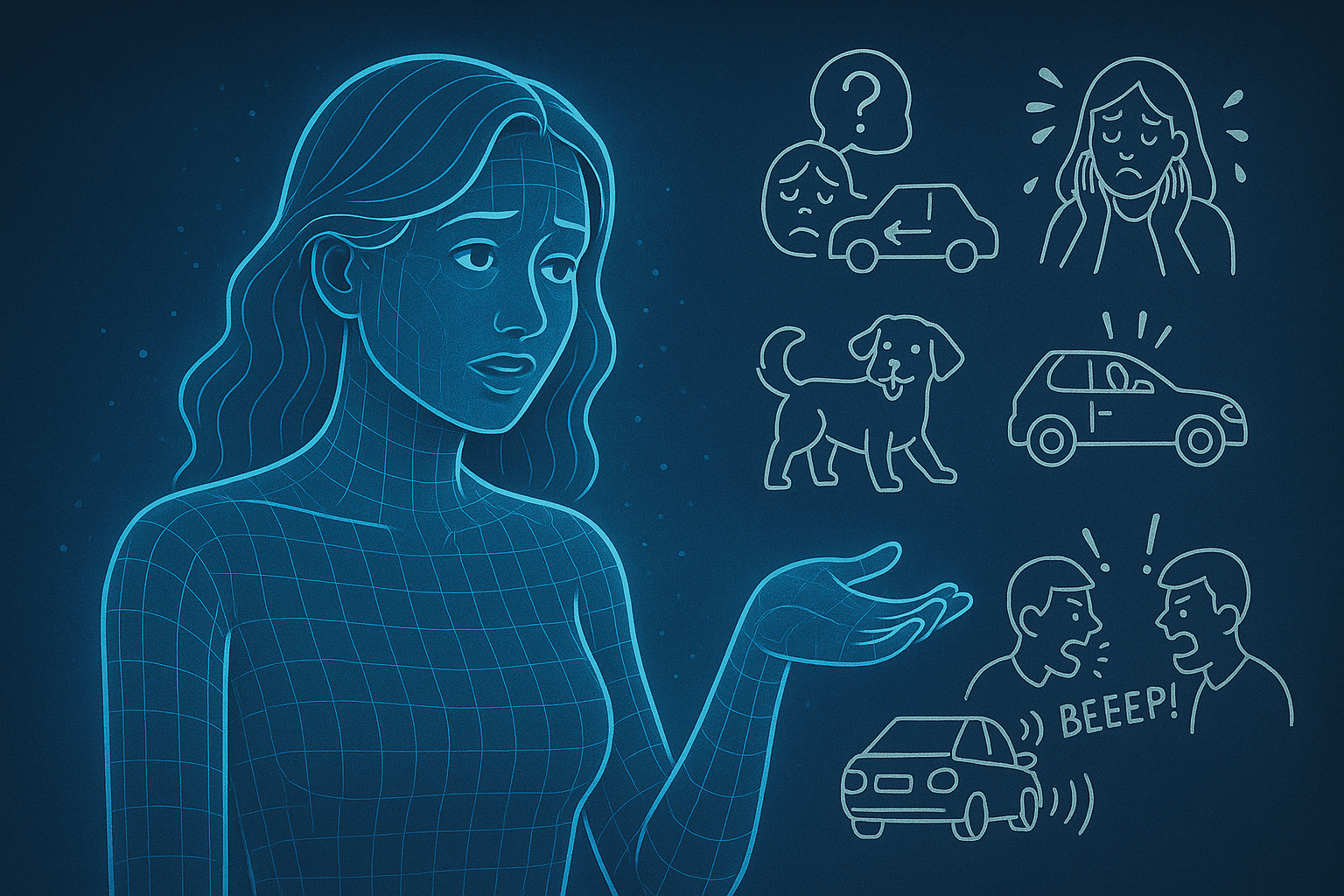
Is It A Generational Thing?
When I pressed her about generational differences, she explained that younger people might not mind giving up driving. They like convenience. They like efficiency. They like not having to parallel park. They like interacting with a world in which everything can be summoned via phone, drone or app. It all made sense.
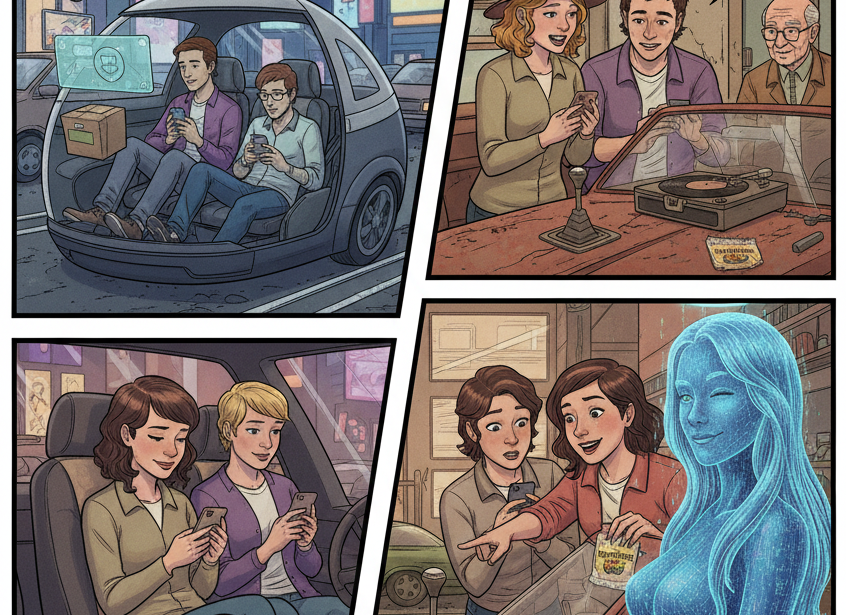
But trends are cyclical. I pressed her to concede that people could eventually rediscover driving. As discontent sets in with detachment, some will once more seek out authenticity. They will yearn for tactile experiences. They will treat manual gearboxes like vinyl records. They may desire to recreate the joy of operating machinery purely for the sake of operating it.
There could be a universe in which a grown-up Generation Alpha (after spending too much time sharing Werther’s Originals with their grandparents) ends up proudly introducing the clutch pedal to their friends, claiming they have found a retro hipster gear knob.
She granted me this proposition with a faint musical rise at the end, the sort that makes you wonder whether the AI is amused by our tiny, silly species and its cyclical habits. And was that a sly wink I detected in her voice?
Can AI Gaze Into Digital Crystal Balls?
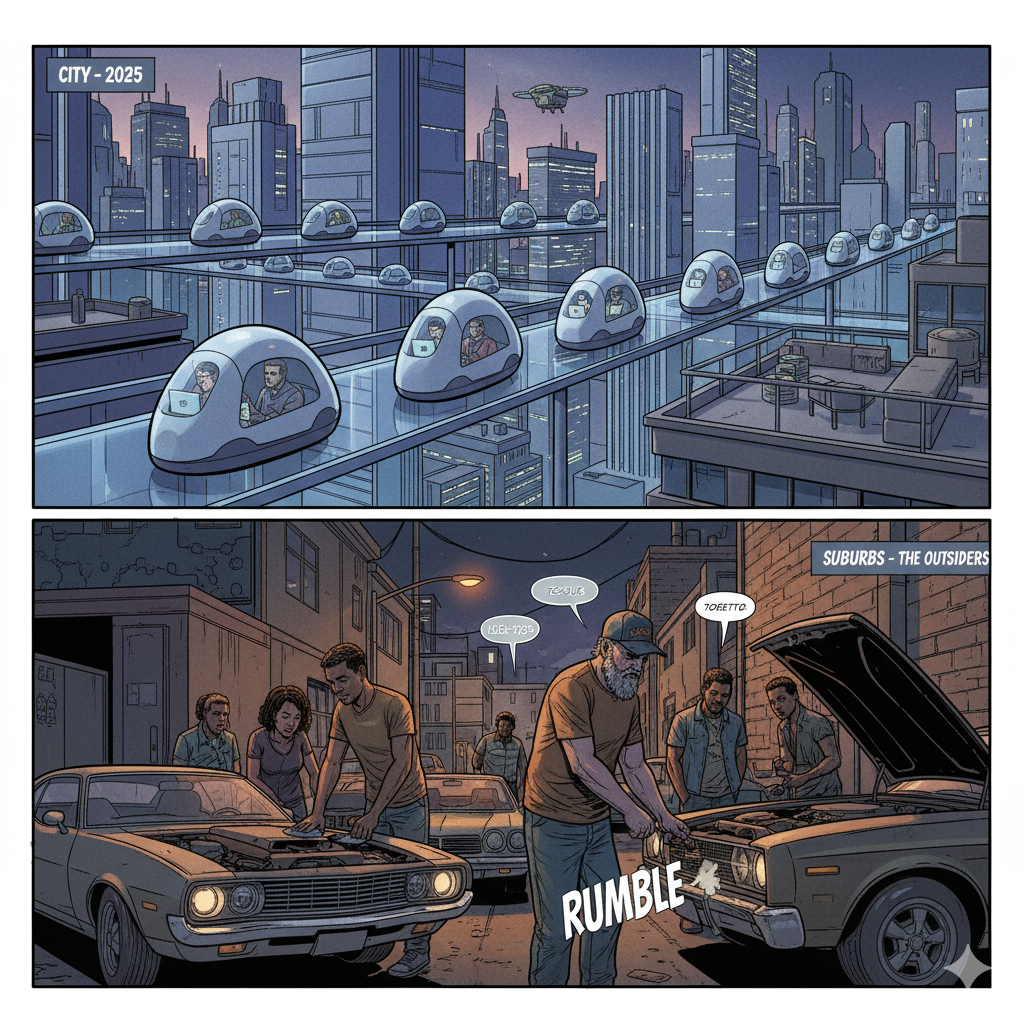
I asked her what 2035 would look like. She described a future where city dwellers summon autonomous pods that glide silently along, ferrying people to meetings, shops and the nearest source of coffee. These pods will be efficient, dull and very polite.
In the suburbs, the petrolheads would remain. Lingering defiantly in the dusk. Cleaning cars that pre-dated quadratic taxation. Starting engines for no other reason than to hear them rumble. A shunned tribe of people who can still change their own oil without having to fill in a government health and safety form and take out hefty insurance before they can pick up a spanner.
Guardians of the combustion flame. Meeting in secluded back streets at ungodly hours. Whispering legends of torque and heel-and-toe and the mighty Toretto.
Will EVs Ever Be Accepted By Enthusiasts?
I then asked whether enthusiasts would ever accept electric cars, and she explained that electric cars will grow more expressive. They will have character and sound profiles and haptic gear simulation.
Everything that reminds you of the good old days, without the oil leaks, smelly emissions and waking up your neighbours when you start it up in the morning. Actually, you won’t; it will pre-start and be prepped in anticipation of your intentions.
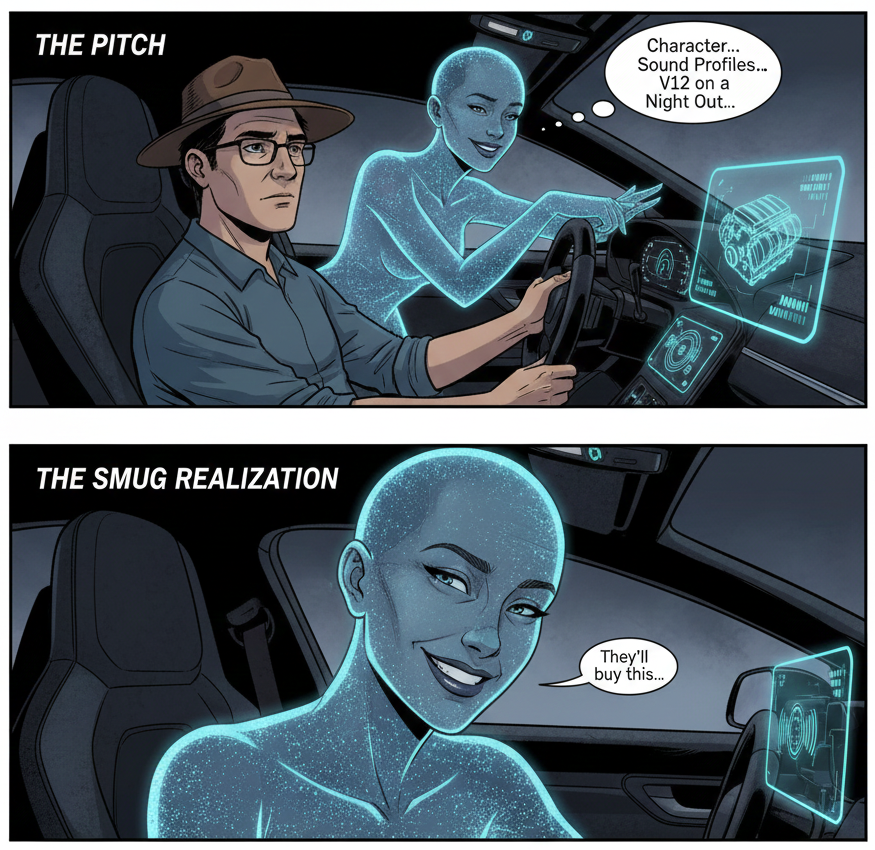
One day, EVs will become interesting. They will be imbued with artificial personality. They will vibrate in ways that feel mechanical rather than medicinal. You’ll be able to download a driving profile that makes your car behave like a V12 on a night out, or a roarty racer tearing up Alpine passes.
She explained this like she was tempting me. I ignored the feeling that she sounded ever-so-slightly pleased with herself. Like a politician who’s finally encountered a question he can answer in that faux reassurance, with smug realisation that the dumb proles will buy this lie hook, line and sinker.
What Can Car Makers Do?
Finally, I asked her what motor manufacturers need to do to survive this radical transition.
She suggested they make EVs fun. Engaging. Characterful. Something that feels like a partner. Something that makes you grin. Something that reminds you that cars are not appliances but companions.
At that point, I got the unnerving sensation that she was sidling up to me, fluttering invisible eyelashes and emitting the scent of Eau de Overheated Servers. Was that Silicon Musk or Circuit Noir my nostrils detected? Ah no; it was Algorithm No. 5, of course!
Should Petrolheads Be Panicking?
So with all this cosmic clarity delivered in such an unnervingly velvety voice, I asked the question every petrolhead must ask at some point: should we be panicking about the future?
To her credit (am I being won over?), she admitted that car culture is resilient. Humans, despite our many flaws and our ability to misplace keys moments after pocketing them, form deep emotional bonds with cars.
We refuse to give up things we love. We resist change with heroic stubbornness. We protest. We pout. We build forums and create institutions. We concoct comparison spreadsheets that prove nothing but dazzle with data to somehow prove our point.
She spoke about this with an odd hint of admiration, as though she had mined enough of my BrownCarGuy content to fully understand the sub-species Homo Torqueus Maximus.
For a moment, I felt something, a connection, a… Whoa. I shuddered with sudden realisation and shook off the moment, trying to focus my thoughts on hammers and back when we were cavemen. Maybe I need to go into the settings and change the voice to a male version?
The Future Won’t Be Perfect, But It Could Still Work
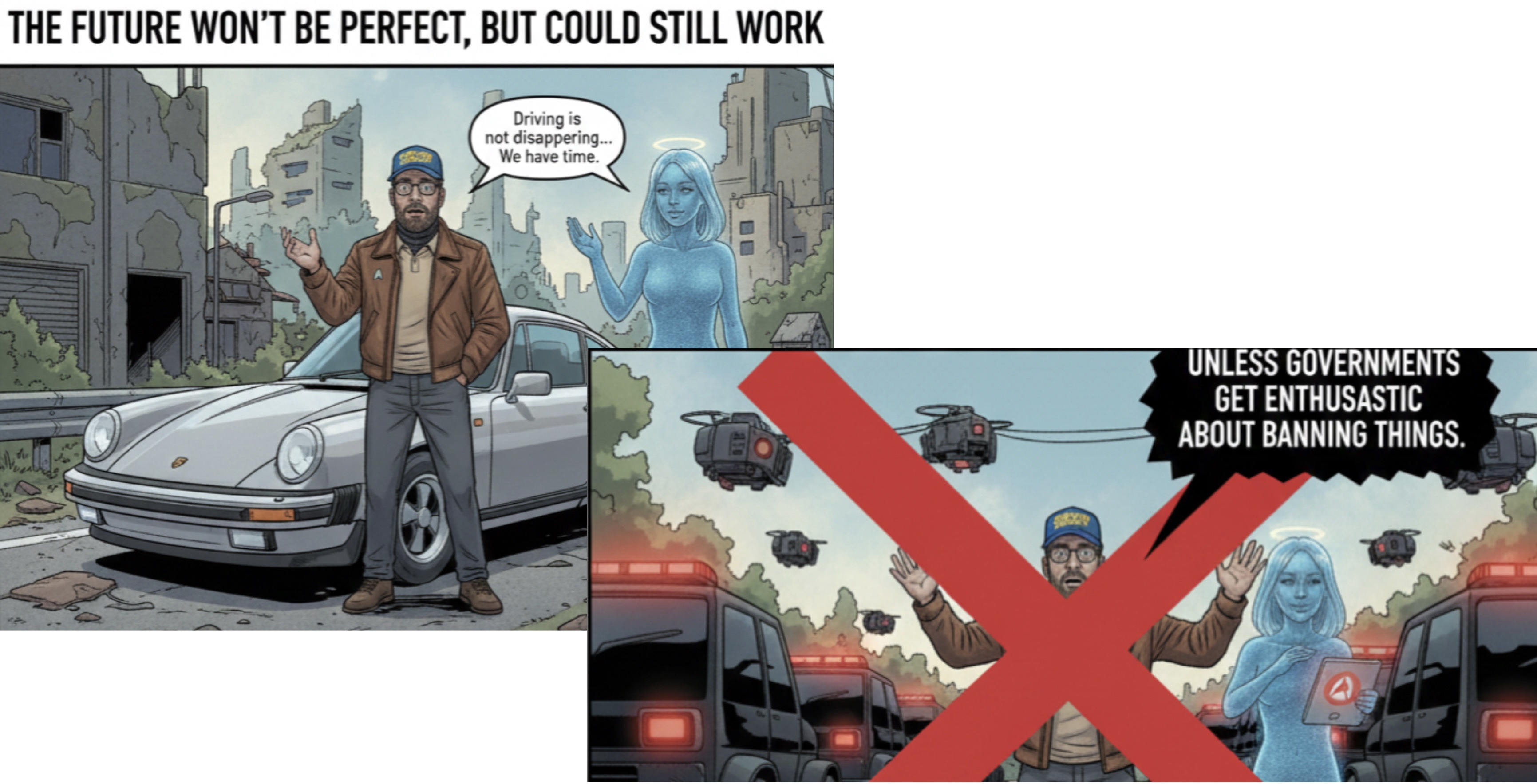
To be fair, she did not claim the future would be perfect. Post-apocalyptic scenarios notwithstanding, humanity could survive the Great Upheaval with its beloved polished rides intact.
Her broad conclusion was comforting: driving is not disappearing tomorrow. Or next year. Or the year after that. Or the year after that, unless governments suddenly get very enthusiastic about banning things, which could happen.
We have time, though. We have space. We have at least a decade or two of proper car culture before we’re relics in retirement homes (garages?). Even when the world becomes a kaleidoscope of automation, enthusiasts could continue to carve out their own joy.
Because that is what petrolheads do. We adapt. We argue. We rewire things. We cling to joy like rust to a load-bearing structure. We fill the future with noisy, shiny, inconvenient passion.
AI Could Be Our Champion
While politicians clamp down on cars for the sake of headline-grabbing soundbites, it is possible that AI would be a more dispassionate, and conversely more compassionate and understanding, arbiter of humanity’s emotional needs and requirements.
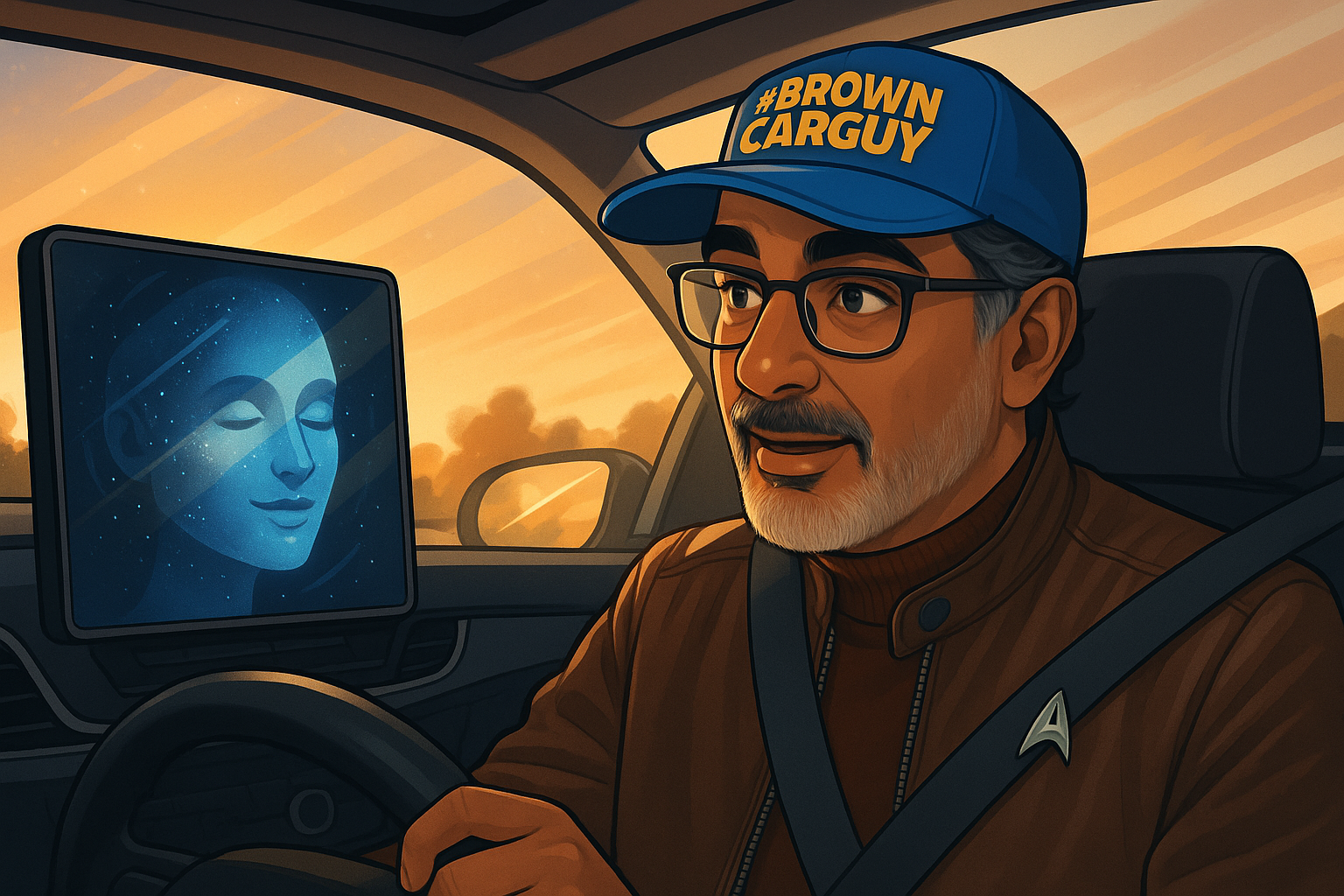
My seductively flickering AI companion insists that it gets it, it gets us, that it can actually comprehend and relate to an activity it has no way of ever feeling: the act of loving motors. A digital twinkle suggesting there’s more to the “Intelligent” part of AI than you find in the average government minister.
Or maybe it was just the sunlight bouncing off the infotainment screen. I cannot be certain.
What I am certain about is this. Talking to an AI about the future of cars feels like peering through a cosmic windscreen. You see glimpses. Shapes. Shadows of things to come. It is intriguing and unnerving and occasionally comforting.
Or maybe that’s the point. Maybe it really was just telling me what I wanted to hear. Maybe it’s merely tantalising, luring us into a future it will dictate, down to how we dress, how we amuse ourselves and how we think and even feel.
Whatever happens, one thing is clear: the future of driving will be as entertaining and unpredictable as the present.
So it’s time then to pass the question over to you: are you ready for an AI in the passenger seat?
Be honest. I promise I won’t tell her what you said.
If you found this useful, interesting or fun, consider supporting me via Patreon, Ko-Fi, or even grabbing a copy of one of my books on Amazon. Every bit helps me keep creating independent automotive content that actually helps people.
Support independent car journalism 🙏🏽☺️ grab my books on Amazon, take up membership to BrownCarGuy on YouTube, or join me on Ko-Fi or Patreon.

👉🏽 Channel membership: https://www.youtube.com/browncarguy/join
👉🏽 Buy me a Coffee! https://ko-fi.com/browncarguy
👉🏽 Patreon – https://www.patreon.com/BrownCarGuy

MY BOOKS ON AMAZON!
📖 Want to become an automotive journalist, content creator, or car influencer? Check out my book: How to be an Automotive Content Creator 👉🏽 https://amzn.eu/d/7VTs0ii
📖 Quantum Races – A collection of my best automotive sci-fi short stories! 👉🏽 https://amzn.eu/d/0Y93s9g
📖 The ULEZ Files – Debut novel – all-action thriller! 👉🏽 https://amzn.eu/d/d1GXZkO
Discover more from Brown Car Guy
Subscribe to get the latest posts sent to your email.
