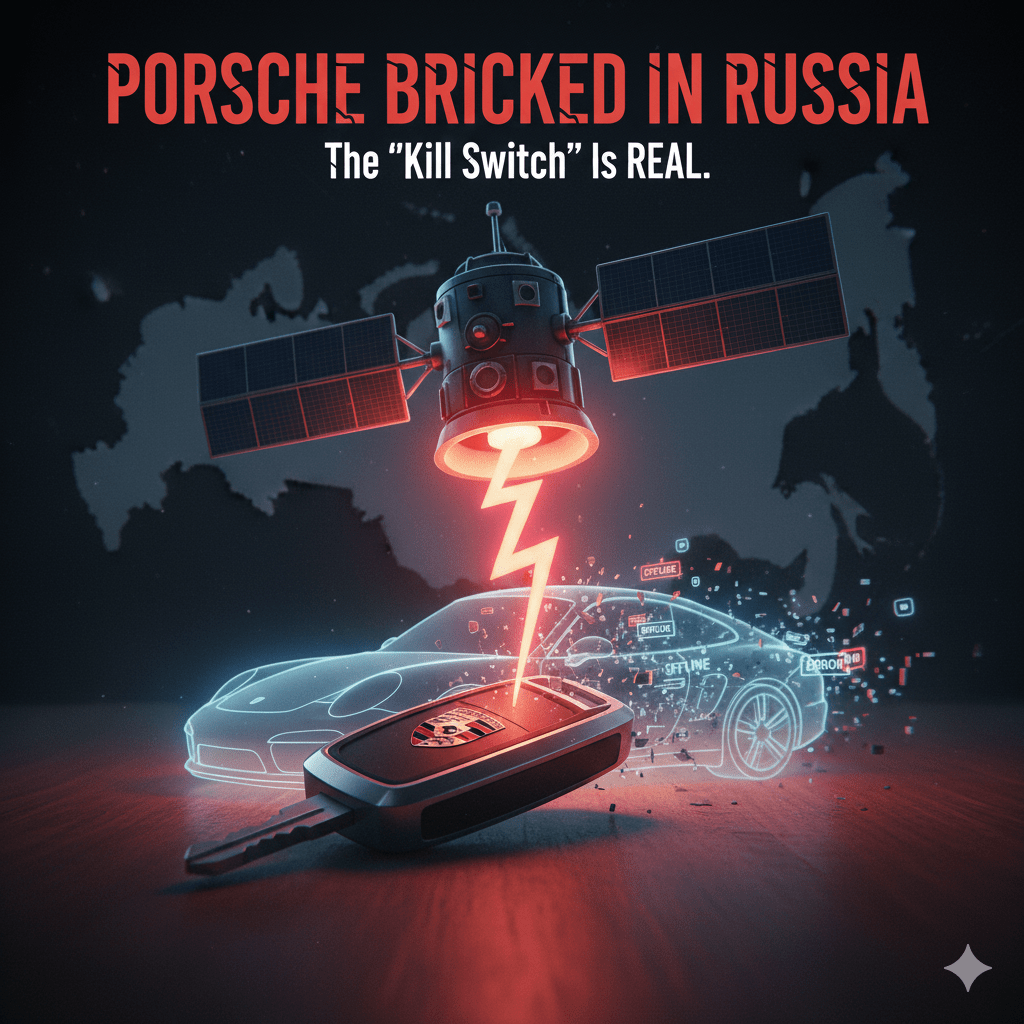
Hundreds of Porsches in Russia suddenly stopped working, and the fallout reveals something far bigger than a simple glitch – modern cars can now be switched off remotely
Every now and then, the car world delivers a story that feels less like automotive news and more like the opening act of an apocalyptic techno-thriller. The latest example arrived courtesy of Porsche owners across Russia, who discovered one morning that their pride and joy had transformed into a glossy, German-made paperweight. No warning, no recall, not even the courtesy of a “Sorry, mate, I can’t come out today.” Just… click, whirr, nothing. A perfectly fine engine that refused to start because the car couldn’t “phone home”. We used to worry about flat batteries or water in the distributor. Now we worry about satellite outage. Progress, they call it.
Hundreds of Porsches Go Dark
The event kicked off in late November 2025, with a sharp spike in reports around 28 November. By 1 December, Russian media were already in full swing, describing how Porsches equipped with the factory Vehicle Tracking System (PVTS) had fallen simultaneously into a sulk. Owners reported identical symptoms: the car unlocked normally, lit up as if ready for duty, the engine coughed into life… then immediately died as if scolded by an invisible German engineer muttering “Nein.”
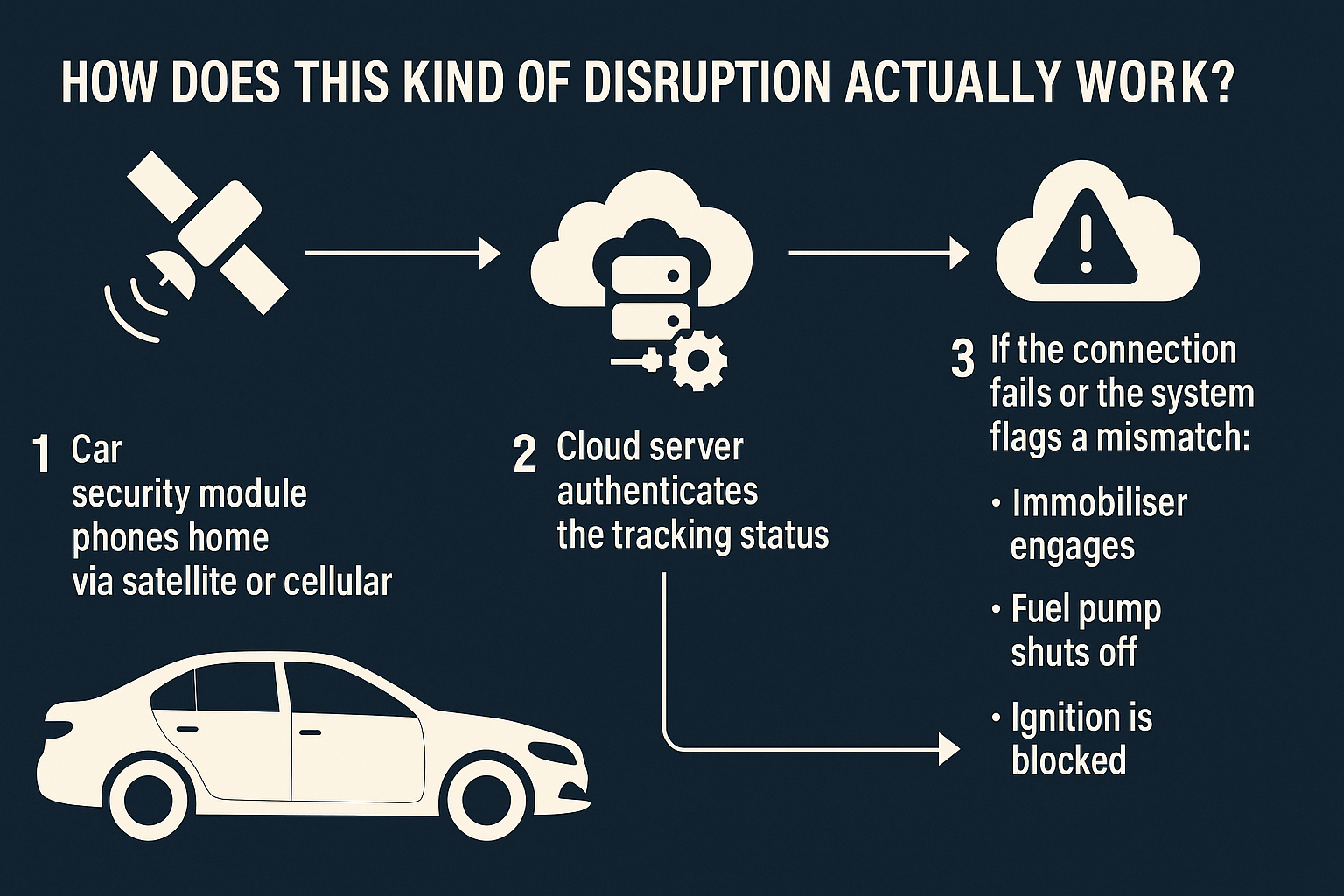
PVTS relies on satellite and cloud authentication. In theory, it’s a clever way to thwart car theft. In practice, it’s the automotive equivalent of being locked out of your house because your Wi-Fi had a funny turn.
The logic is simple enough: if the system can’t confirm the car’s identity or location, or if the connection drops, the immobiliser engages. This is brilliant when an actual thief is involved. Slightly less brilliant when a family in Krasnodar is trying to drive to the supermarket.
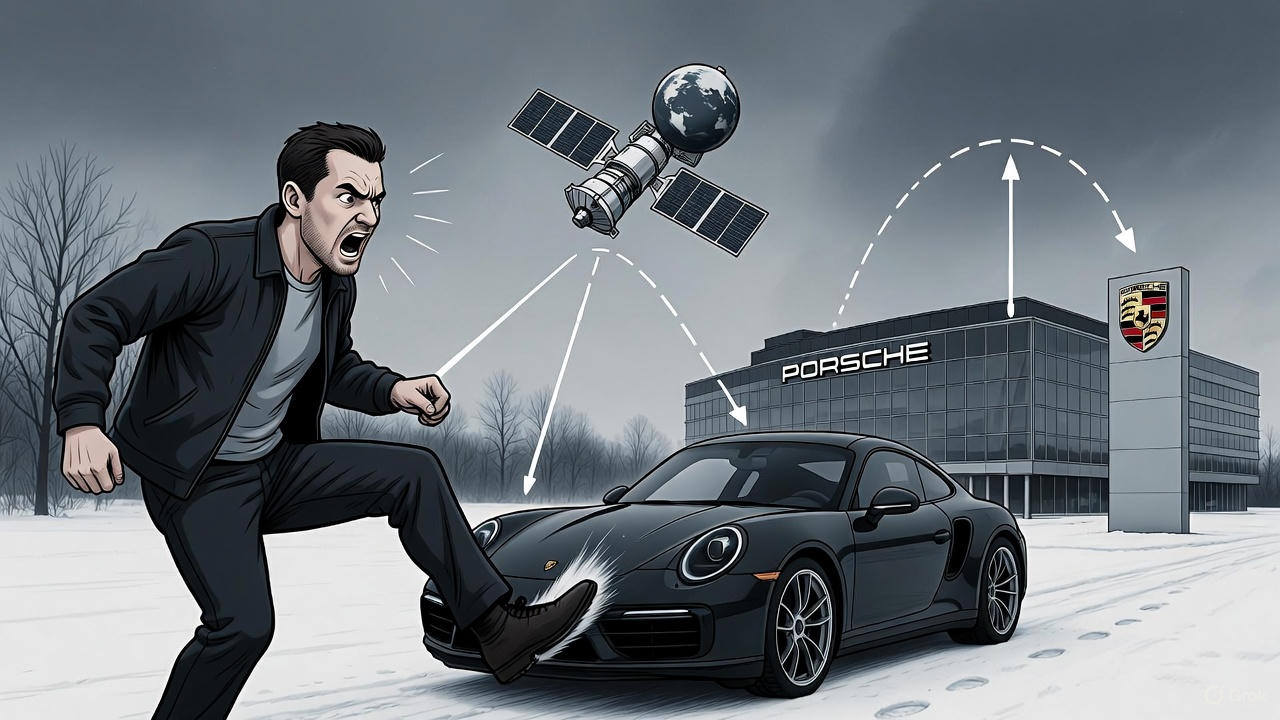
Was It a Glitch… or Something Else?
The official line is silence. Porsche doesn’t operate in Russia any more and therefore has no desire to comment on why its products were spontaneously reenacting the robot uprising from Terminator. So we’re left with theories.
The first is the straightforward one: a technical fault. Something somewhere in the satellite link misbehaved. A dropped handshake here, a corrupted signal there, and suddenly hundreds of cars decide that all of Russia is a crime scene.
But then we have the more dramatic explanations – and predictably, some Russian outlets were only too happy to oblige. There were murmurs of electronic interference, the ominous phrase “radioelektronnoy borby” (radio-electronic warfare), and speculation that perhaps the satellite link wasn’t lost naturally, but pushed.
One dealership spokesperson even suggested it might have been done deliberately, which, in fairness, is the kind of statement guaranteed to keep journalists, conspiracy theorists, and bored blokes on Telegram entertained for weeks.
Of course, there is zero evidence that Porsche, Europe, NATO, MI6, Mossad, or a rogue Bavarian software engineer pressed a big red button marked “RUSSIA: OFF”. But the mere fact that such a scenario is even plausible tells you everything you need to know about where the car industry has drifted.
The Kill-Switch Era Has Quietly Arrived
The real issue isn’t whether this particular outage was accidental or malicious. The issue is that modern cars are now utterly dependent on external infrastructure. Lose the signal, lose the car. It’s that simple.
The old carburettor on my Cortina might have been a cantankerous beast. It coughed, it wheezed, it occasionally considered self-immolation. But it never once required permission from a satellite before allowing me to go to the shops.
Today’s vehicles, stuffed to the roof-lining with connectivity, telematics, SIM cards, cloud-based authentication, and over-the-air updates, are no longer independent machines. They’re extensions of remote systems, operating on rules you neither see nor control. Your car now starts at the discretion of a distant server farm that probably also hosts cat videos and cryptocurrency scams.
And if anything interrupts that relationship – a fault, a bug, a cyber incident, or heaven forbid, geopolitical tension – your car becomes a museum piece.
The Geopolitical Elephant in the Garage
Let’s be honest: people have been muttering for years about the possibility of China remotely disabling its exported EVs should trade wars or political hostilities escalate. It was a credible fear. China controls the chips, the modems, the platforms, and the clouds powering its vehicles.
But irony struck from the other side. The first case that actually made headlines wasn’t a Chinese manufacturer disabling Western cars. It was Western cars bricking themselves inside Russia.
Without intending to, Porsche demonstrated exactly what experts have warned: any connected car from any country can theoretically be disabled remotely, either by accident or by design.
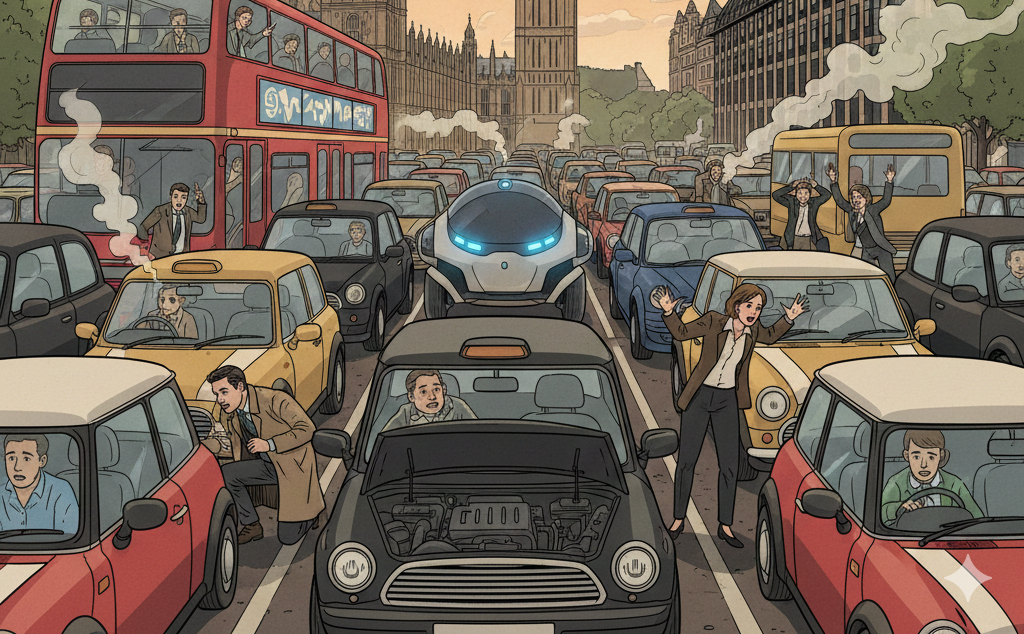
Now imagine this technology in wartime. A country could disable fleets of civilian cars. Commercial vehicles. Police and government vehicles. Everything from Teslas to BMWs to vans making deliveries for Tesco. Transport is infrastructure. Infrastructure is power. And power, these days, often runs through a satellite dish somewhere over the equator.
When the Tallinn Manual (the NATO guide on cyber warfare) says a cyber interference that significantly disrupts civilian function could qualify as a “use of force”, they weren’t joking. Disable a whole nation’s mobility and you haven’t caused inconvenience – you’ve caused paralysis.
So What Does This Mean for You and Me?
If your car has a tracking system, a SIM card, a 4G antenna, connected services, remote start, OTA updates, or a mobile app, then – in the broadest terms – it can be remotely influenced. Not necessarily switched off at will, but certainly disrupted under the wrong circumstances.
Countries will eventually demand local servers, offline fallbacks, and more control over foreign-made connected systems. They’ll have to. The vulnerability is now obvious.
As for individuals? You can reduce your exposure, but only so much. You could:
- Drive older, non-connected cars
- Disable telematics where legal
- Choose simpler systems
- Avoid cars that refuse to function without constant online validation
But ultimately, the industry has already committed to connectivity and remote control. The horse has bolted, phoned home, downloaded a firmware update, and is now refusing to leave the stable because it can’t find a satellite.
The Real Wake-Up Call
This Porsche outage wasn’t an act of war. It wasn’t a hostile operation. There’s no evidence it was deliberate at all. But it was a vivid, unavoidable demonstration of just how fragile our “smart mobility” ecosystem actually is.
We’ve traded mechanical resilience for digital dependency. We’ve accepted cars that require external approval to function. And now, when something as simple as a satellite hiccup can immobilise a £100,000 sports car, we’re starting to realise the implications.
The future isn’t autonomous. The future isn’t electric. The future, apparently, is asking your car: “Excuse me, is the cloud in a good mood today?”
And if not… well, better hope you’ve kept something with a carburettor tucked away, just in case the satellites decide they’re having a day off.
If you found this useful, interesting or fun, consider supporting me via Patreon, Ko-Fi, or even grabbing a copy of one of my books on Amazon. Every bit helps me keep creating independent automotive content that actually helps people.
Support independent car journalism 🙏🏽☺️ grab my books on Amazon, take up membership to BrownCarGuy on YouTube, or join me on Ko-Fi or Patreon.

👉🏽 Channel membership: https://www.youtube.com/browncarguy/join
👉🏽 Buy me a Coffee! https://ko-fi.com/browncarguy
👉🏽 Patreon – https://www.patreon.com/BrownCarGuy

MY BOOKS ON AMAZON!
📖 Want to become an automotive journalist, content creator, or car influencer? Check out my book: How to be an Automotive Content Creator 👉🏽 https://amzn.eu/d/7VTs0ii
📖 Quantum Races – A collection of my best automotive sci-fi short stories! 👉🏽 https://amzn.eu/d/0Y93s9g
📖 The ULEZ Files – Debut novel – all-action thriller! 👉🏽 https://amzn.eu/d/d1GXZkO
Discover more from Brown Car Guy
Subscribe to get the latest posts sent to your email.
