
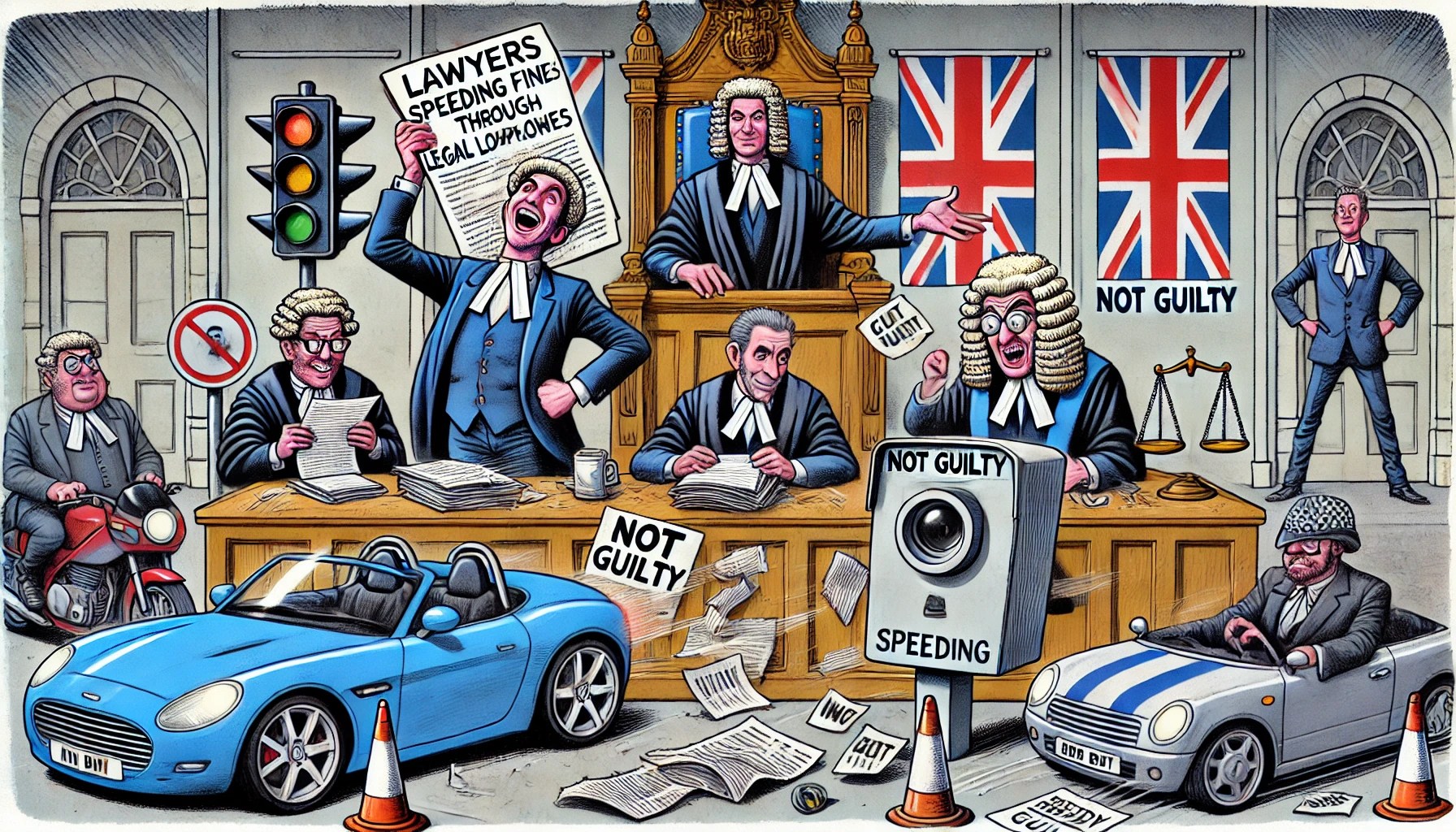
Think you’ve just been caught speeding? Don’t panic – your ticket might not stick. Here are five real-world legal loopholes that UK drivers have used to get fines cancelled… completely legally
Some drivers slam the brakes when they see a speed camera flash. Others lose the will to drive knowing they are done for, and that there’s no reprieve. Or is there? What if I told you that your speeding fine might not be as rock-solid as they want you to believe?
Welcome to the glitch in the matrix – where bureaucracy stumbles, signs disappear, and the law plays catch-up. Yes, there really are loopholes in UK speed trap enforcement – and believe it or not, they’ve worked for plenty of people, including one very famous David Beckham. Let’s break it down – what the law says, what real cases have shown, and how you might be able to challenge that dreaded Notice of Intended Prosecution (NIP).
What This Post Isn’t About
Before we dive into legal nit-picking and camera dodging, let’s be clear: this isn’t an invitation to speed recklessly. Speeding is dangerous and potentially fatal – nearly a quarter of all UK road deaths involve excessive speed.
What this post is about, is due process. Because when the system fails to follow its own rules, ordinary drivers have every right to challenge it – and occasionally win.
DISCLAIMER: This content is not legal advice. It highlights documented legal defences and case examples used successfully in the past. Always consult a qualified solicitor for your specific situation.

Speeding Fine Loopholes That Actually Work
These are loopholes based on real laws, precedents, and cases. They’re not hearsay – they’ve worked before, and in some cases, spectacularly.
1. Missing or Unclear Signage
Speed limits below the national limit (60mph single carriageway, 70mph dual) must be clearly signed with repeater signs at regular intervals. If those signs are missing, obstructed, or incorrectly placed – the speed limit might not be legally enforceable.
Real Case: In Coombes v DPP [2006], a driver successfully appealed after signage was hidden by overgrown shrubbery.
2. Calibration Issues
Speed cameras must be Home Office type-approved and regularly calibrated. If the certificate has expired or records are missing, the camera’s readings may be inadmissible in court.
Real Case: On Ireland’s N17 in 2023, over 1,800 fines were cancelled due to a lapsed calibration certificate on the camera.
3. NIP Timing – The 14-Day Rule
By law, a Notice of Intended Prosecution must be served to the registered keeper within 14 days of the alleged offence. Not sent. Served.
Real Case: In 2018, David Beckham successfully escaped a speeding charge thanks to this very loophole. Although he was clocked doing 59mph in a 40mph zone in his Bentley, the NIP wasn’t served within the legal 14-day period. His legal team argued – and the court agreed – that the delay invalidated the prosecution, regardless of the speed.
4. Unknown Driver – Section 172 Defence
If you genuinely cannot identify the driver at the time of the offence, and can prove you made all reasonable efforts to find out, you may avoid prosecution. This includes asking all drivers of the vehicle, checking logs, CCTV, or dashcam footage.
Real Cases: Numerous examples exist of drivers avoiding penalties under this defence – especially in households with shared cars.
5. Wrong Road / Private Land
Traffic laws and speed limits only apply on public highways. That means private land – like retail parks or industrial estates – may fall outside these rules unless they’ve been officially adopted.
Real Case: Drivers have successfully contested tickets issued in supermarket car parks and business parks, where councils failed to prove public-highway status.
What the Law Actually Says
Here’s the legal foundation for these loopholes:
- Road Traffic Offenders Act 1988 – Section 1: NIP must arrive within 14 days
- Road Traffic Act 1988 – Section 172: Registered keepers must name the driver or show they’ve made all reasonable efforts
- Traffic Signs Regulations (TSRGD) 2016: Defines legal signage requirements
- Home Office Type-Approval: Cameras must be certified and operated to standard
But remember: you need evidence. Screenshots, letters, camera photos, witness statements. Your word alone won’t cut it in court. Always get professional legal advice if you intend to contest an offence.
Register below for Free Loophole Checklist PDF
Fill in this registration form to get a free legal loophole checklist PDF


Speeding Is Still Dangerous
Despite all this, don’t lose sight of the fact that speed limits exist for a reason. In 2023, over 1,600 people died on UK roads – and excessive speed was a factor in nearly a quarter of those cases. Use these legal insights for justice, not recklessness!
What Do You Think?
Have you ever challenged a speeding fine and won? Know someone who has? Drop your story in the comments!
Drive safe. Stay smart. And always check the small print.
If you found this useful, interesting or fun, consider supporting me via Patreon, Ko-Fi, or even grabbing a copy of one of my books on Amazon. Every bit helps me keep creating independent automotive content that actually helps people.
Support independent car journalism 🙏🏽☺️ grab my books on Amazon, take up membership to BrownCarGuy on YouTube, or join me on Ko-Fi or Patreon.

👉🏽 Channel membership: https://www.youtube.com/browncarguy/join
👉🏽 Buy me a Coffee! https://ko-fi.com/browncarguy
👉🏽 Patreon – https://www.patreon.com/BrownCarGuy

MY BOOKS ON AMAZON!
📖 Want to become an automotive journalist, content creator, or car influencer? Check out my book: How to be an Automotive Content Creator 👉🏽 https://amzn.eu/d/7VTs0ii
📖 Quantum Races – A collection of my best automotive sci-fi short stories! 👉🏽 https://amzn.eu/d/0Y93s9g
📖 The ULEZ Files – Debut novel – all-action thriller! 👉🏽 https://amzn.eu/d/d1GXZkO
Discover more from Brown Car Guy
Subscribe to get the latest posts sent to your email.

Leave a comment