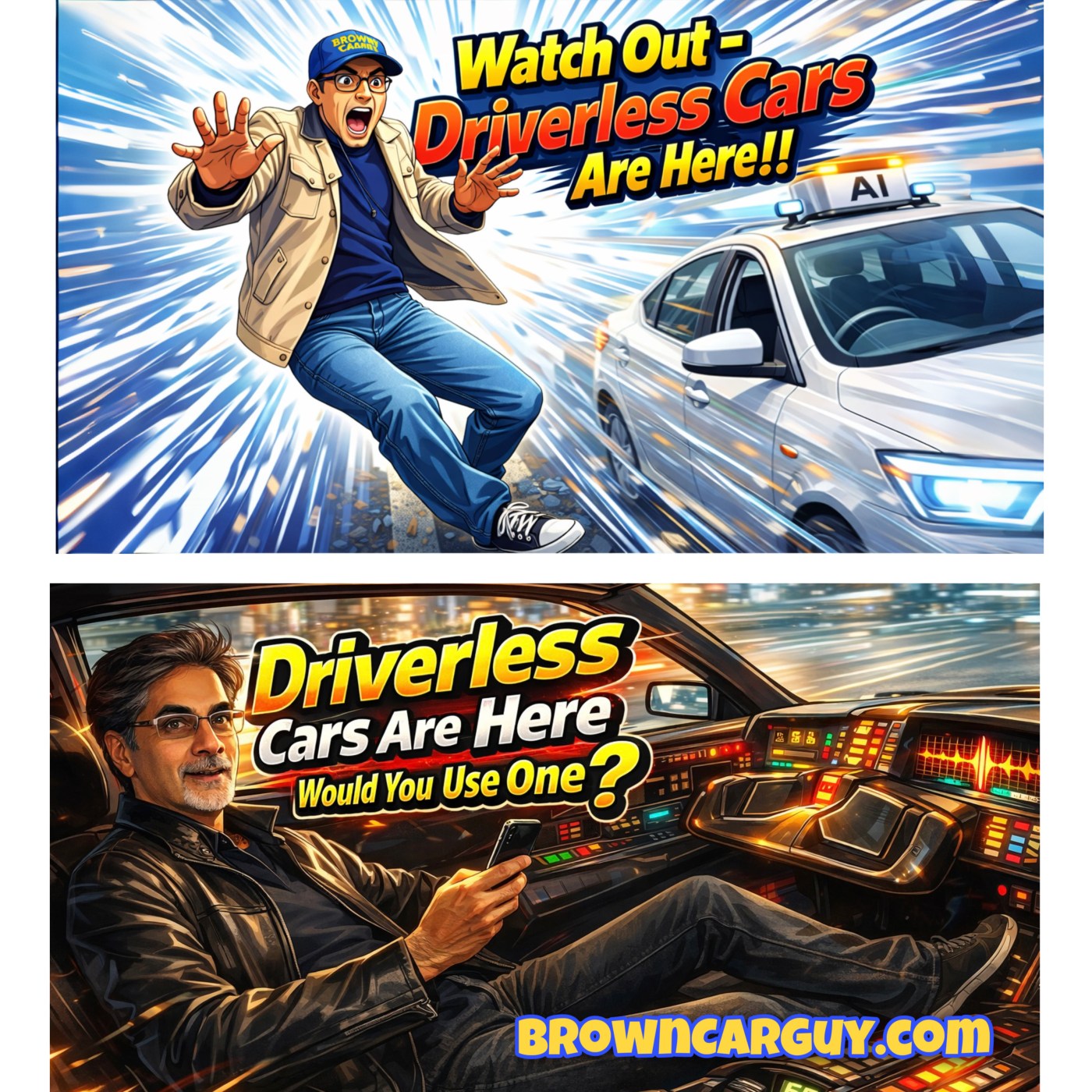
Autonomous vehicles are no longer science fiction – with driverless taxis arriving in the UK, we explore what this means for motorists, jobs, and the future of driving itself
There was a time when the idea of a car driving itself belonged firmly in the world of Knight Rider, sci-fi films, and future fantasies. Well, that future has arrived – not with a bang, but with a quiet software update and a fleet of taxi vehicles rolling onto real roads.
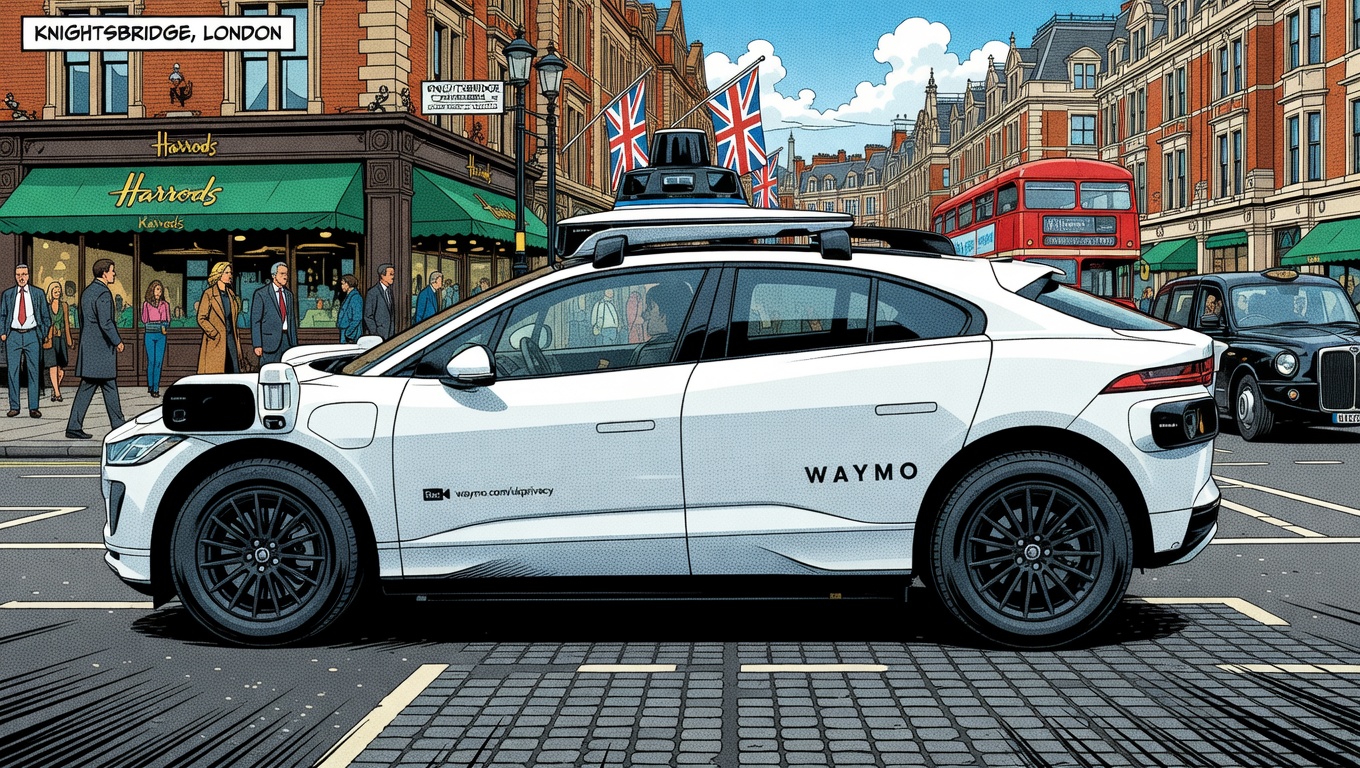
Driverless cars, or autonomous vehicles, are now legal for trials on UK roads, and in 2026 we are beginning to see the first real-world deployments, including pilot programmes for driverless taxis in cities like London. It feels a little bit under the radar, but make no mistake – this is one of the biggest shifts the automotive world has ever seen.
The question is no longer whether autonomous cars will become mainstream. The real question is: what happens next?
What Exactly Is a Driverless Car?
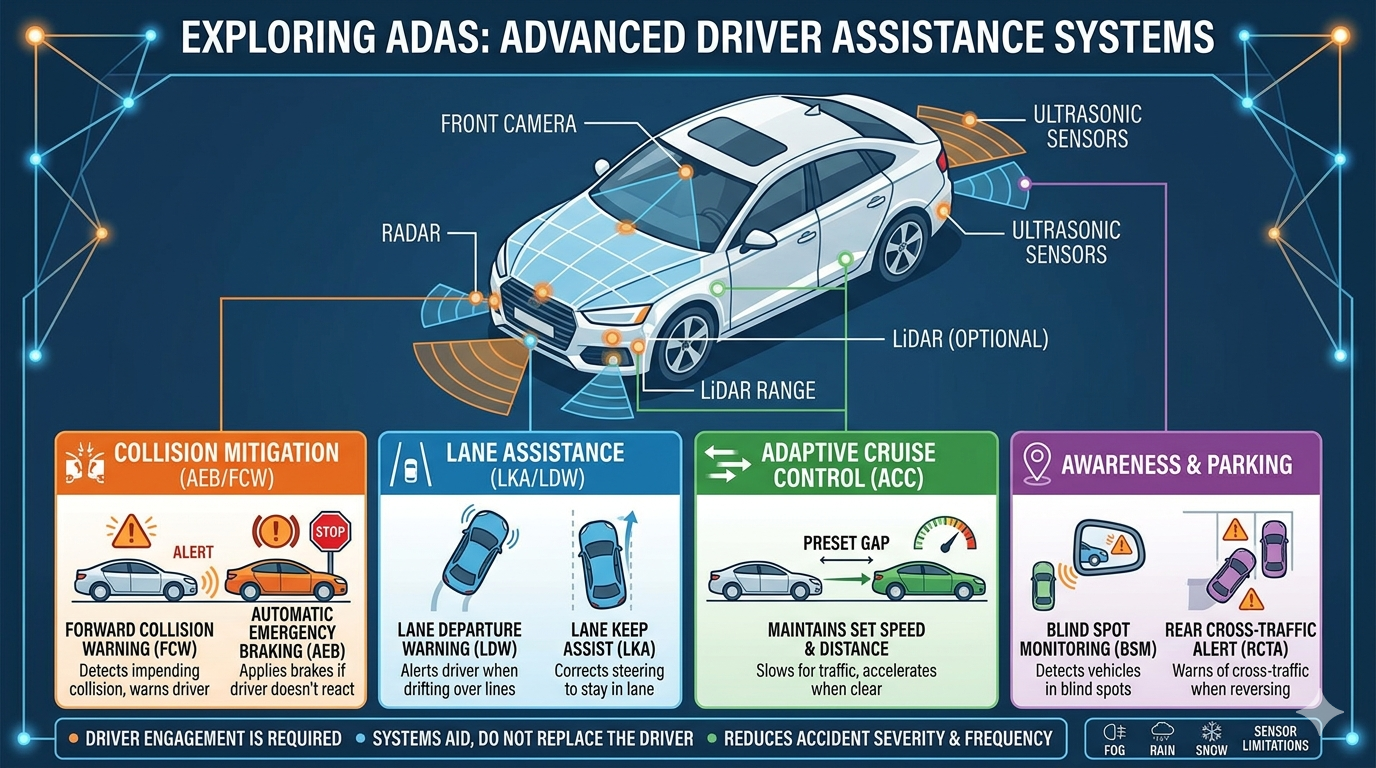
Let’s get one thing straight – not all “self-driving” cars are actually driverless. Most modern cars today come with advanced driver assistance systems, including adaptive cruise control, lane-keeping assist, and automated emergency braking. These features make driving easier, but they still require a human behind the wheel, paying attention.
True driverless cars, however, operate at what’s known as Level 4 or Level 5 autonomy, meaning the vehicle can drive itself without human input in certain conditions – or even all conditions.
That means:
- No hands on the wheel
- No feet on the pedals
- In some cases… no driver at all
And that’s where things start to get interesting.
Are Driverless Cars Actually Safer?
This is where the debate really heats up. Human drivers, for all our confidence and experience, are flawed. We get tired. We get distracted. We check our phones when we shouldn’t. We lose our temper in traffic. And unfortunately, these human errors are responsible for the vast majority of road accidents.
Autonomous vehicles, in theory, don’t suffer from any of these issues.
They don’t:
- Get sleepy after a long day
- Text while driving
- Engage in road rage
- Make impulsive decisions
Instead, they rely on sensors, cameras, radar, and AI decision-making systems that are constantly monitoring the environment.
The promise is simple: fewer accidents, fewer fatalities, safer roads.
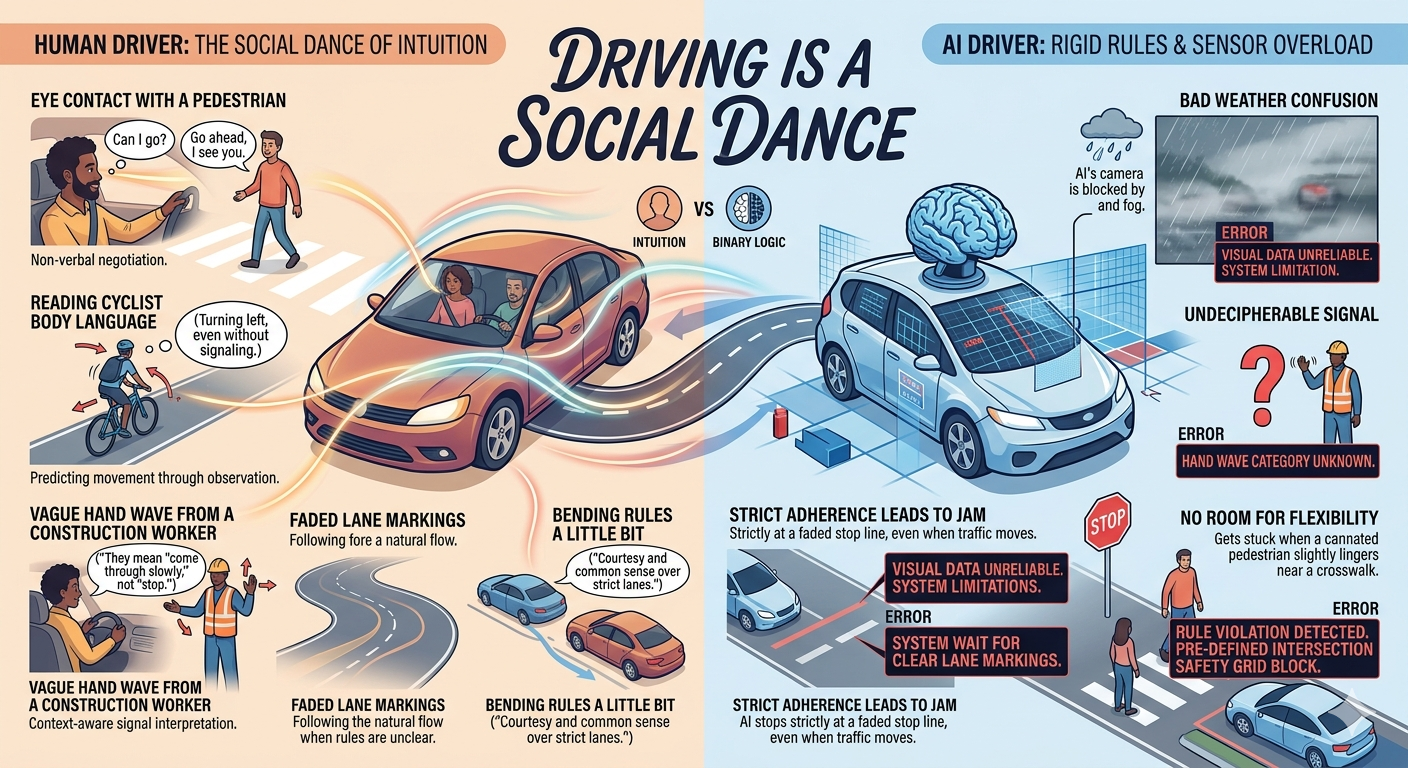
But here’s the catch. AI systems are only as good as their programming and data. Edge cases – unusual, unpredictable scenarios – remain a challenge. And when something does go wrong, the consequences can be serious.
So while autonomous cars may reduce overall accidents, they introduce a new kind of risk – one that is technological rather than human.
The End of Traffic Jams?
If you’ve ever sat in a motorway queue for no apparent reason, you’ve experienced what’s known as a “phantom traffic jam” – those frustrating slowdowns caused not by accidents or roadworks, but by human behaviour. One driver brakes slightly. The next overreacts. The ripple effect builds… and suddenly everyone is crawling.
An AI-driven network of vehicles could, in theory, eliminate this entirely. Driverless cars can:
- Maintain optimal distances
- Communicate with each other
- Adjust speed smoothly and predictably
The result?
- Smoother traffic flow
- Reduced congestion
- More efficient journeys
And when it comes to logistics, the impact could be even bigger. Imagine fleets of autonomous trucks:
- Driving overnight when roads are empty
- Operating continuously without rest breaks
- Delivering goods faster and more efficiently
This is likely where we’ll see the biggest early adoption – not in private cars, but in commercial transport and logistics.
The Human Cost – Jobs on the Line
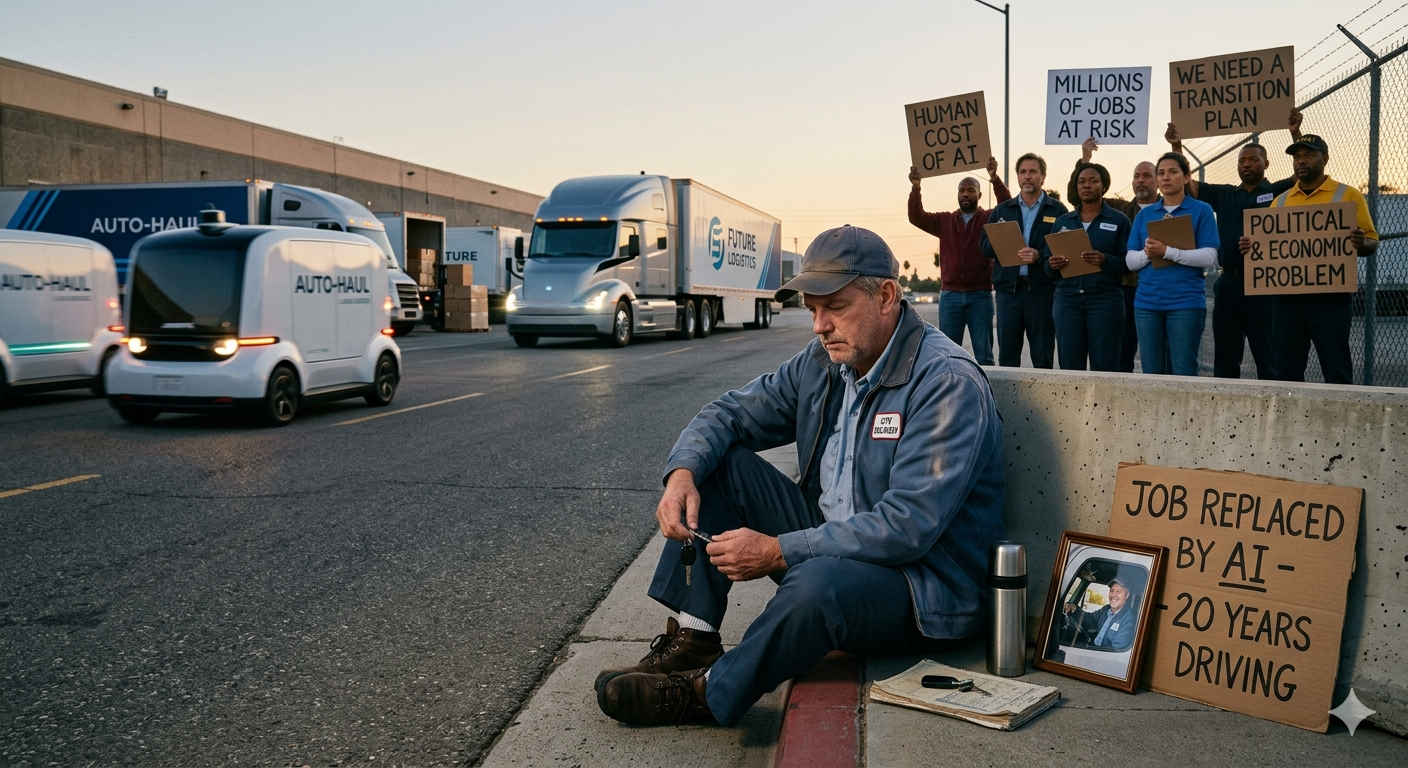
Now we get to the uncomfortable part of the conversation. Because while all of this sounds impressive, it comes with a very real consequence: jobs.
Millions of people worldwide rely on driving for their livelihoods:
- Taxi drivers
- Delivery drivers
- Truck drivers
- Ride-hailing operators
If autonomous vehicles scale up as expected, many of these roles could be reduced or even eliminated. And this is where the conversation stops being about technology… and becomes political and economic.
What happens to those workers? How do you retrain them? Who takes responsibility for that transition?
This is not a problem for the distant future. It’s something governments and industries will have to address sooner rather than later.
A Lifeline for Those Who Can’t Drive
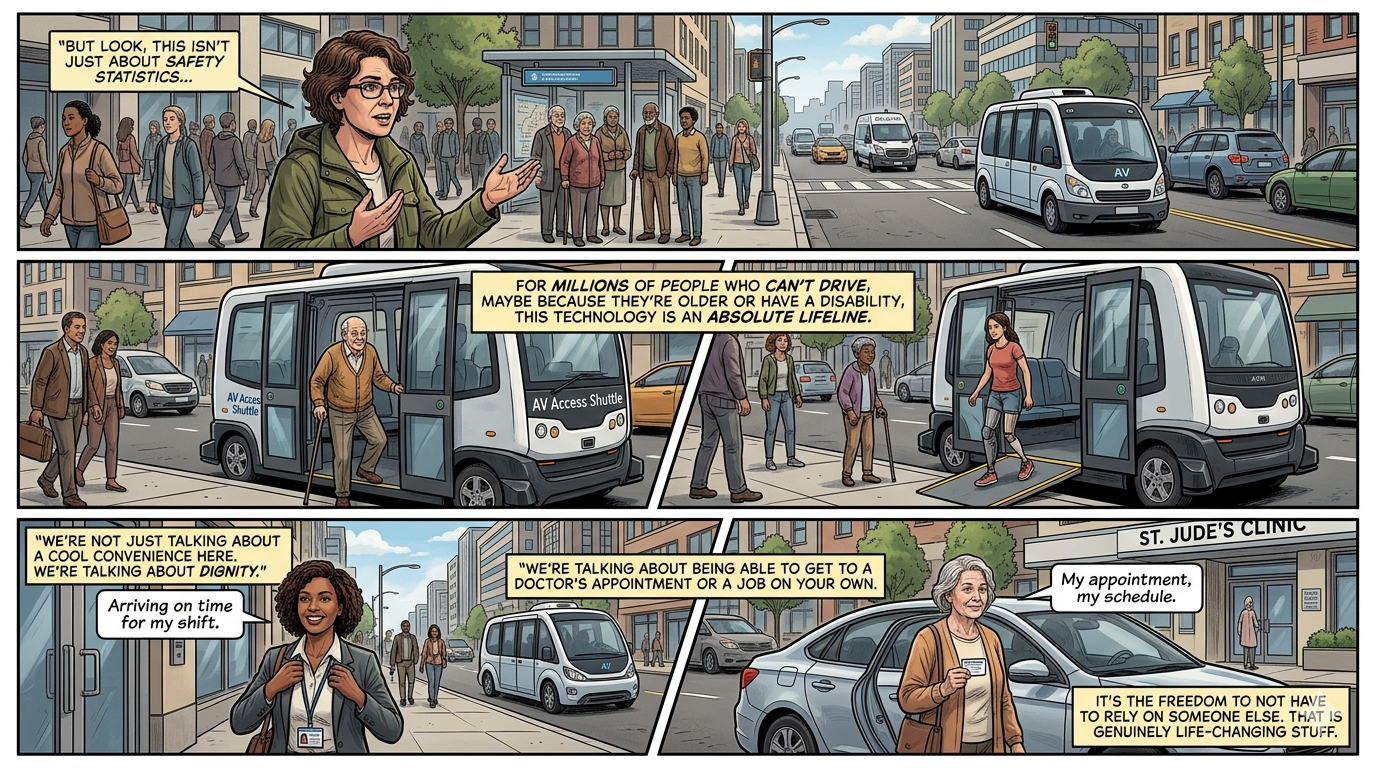
It’s not all negative, though. Far from it. For millions of people, driverless cars could be genuinely life-changing.
Think about:
- Elderly individuals who can no longer drive
- People with disabilities
- Those who never learned to drive
For them, autonomous vehicles represent:
- Independence
- Accessibility
- Dignity
Being able to travel freely, without relying on others, is something many of us take for granted. Driverless technology could restore that freedom to those who need it most.
And that is a powerful argument in favour of this technology.
Will AI Replace Driving Completely?
This is the big one. The question that every petrolhead is quietly dreading. Will AI replace driving entirely?
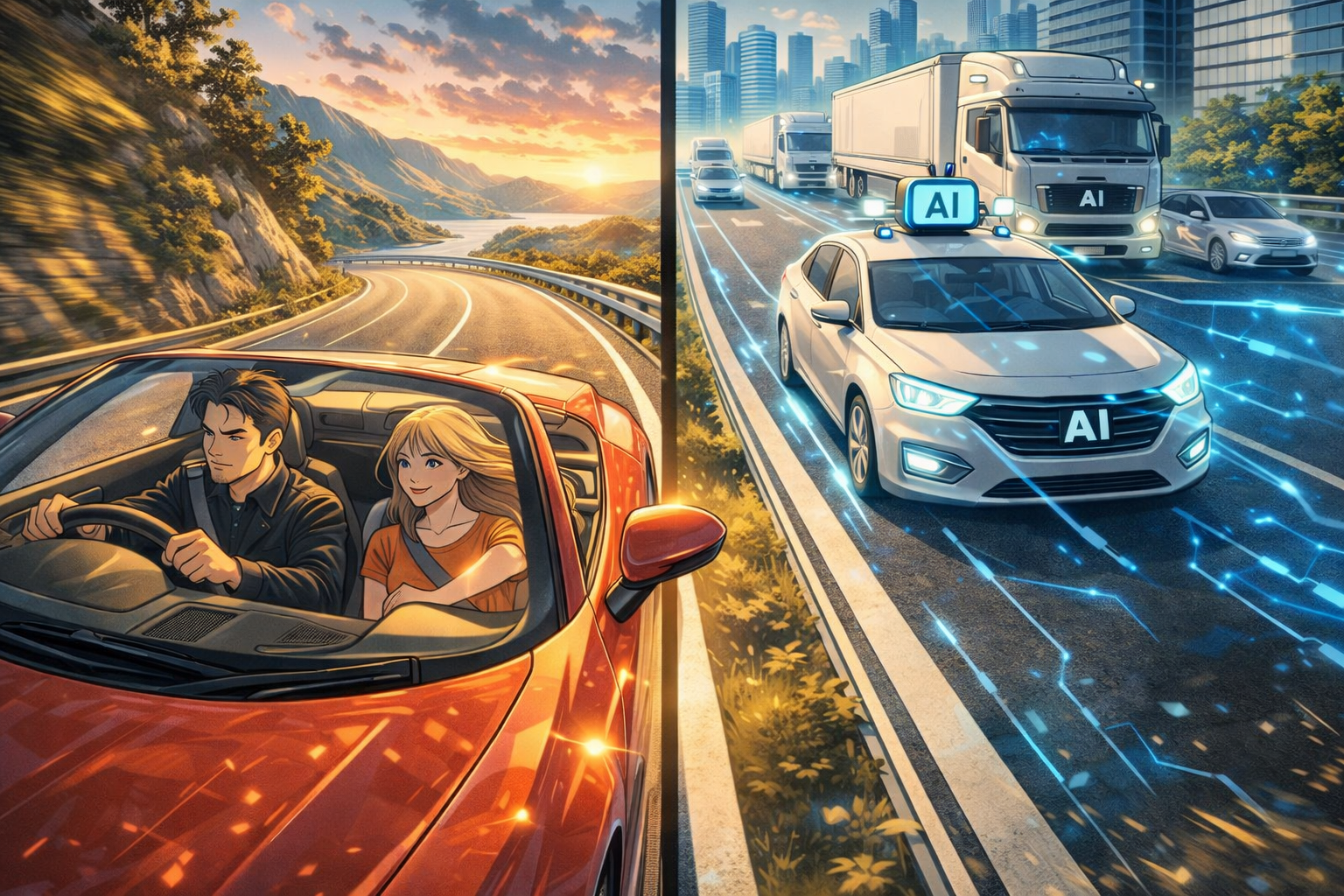
The evidence suggests… not quite. What we are likely heading towards is not a complete takeover, but a split future.
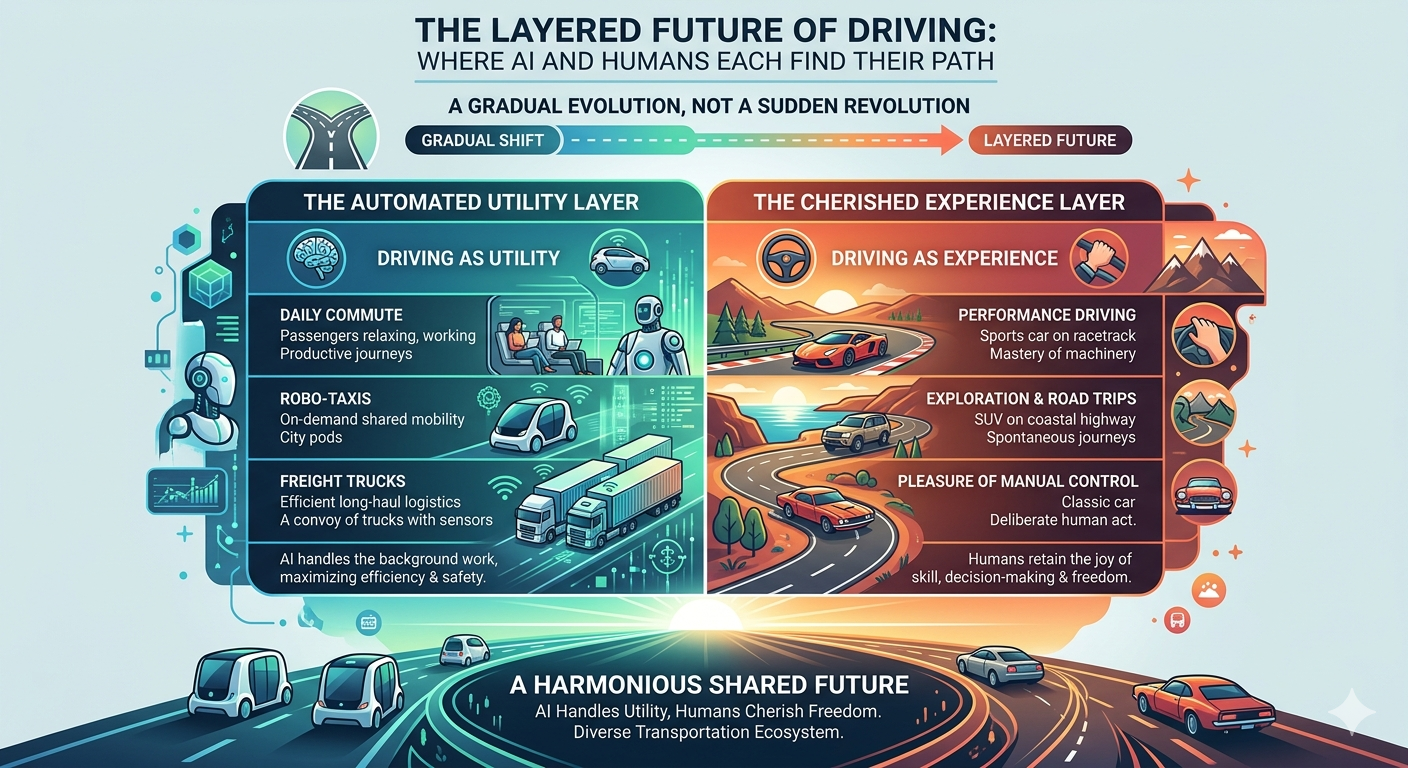
A Two-Lane Future: Utility vs Passion
Think of it like this. On one side, you have driving as a utility:
- Daily commutes
- Ride-hailing services
- Logistics and freight
This side becomes automated, efficient, and largely invisible. You get in, the car takes you where you need to go, and you don’t think about it.
But on the other side… You have driving as an experience. A choice. A passion. The kind of driving that enthusiasts love:
- Weekend drives
- Track days
- Classic cars
- Manual gearboxes
In this future, driving doesn’t disappear. It becomes more special. More intentional. Perhaps even more valued.
What Does This Mean for Car Culture?
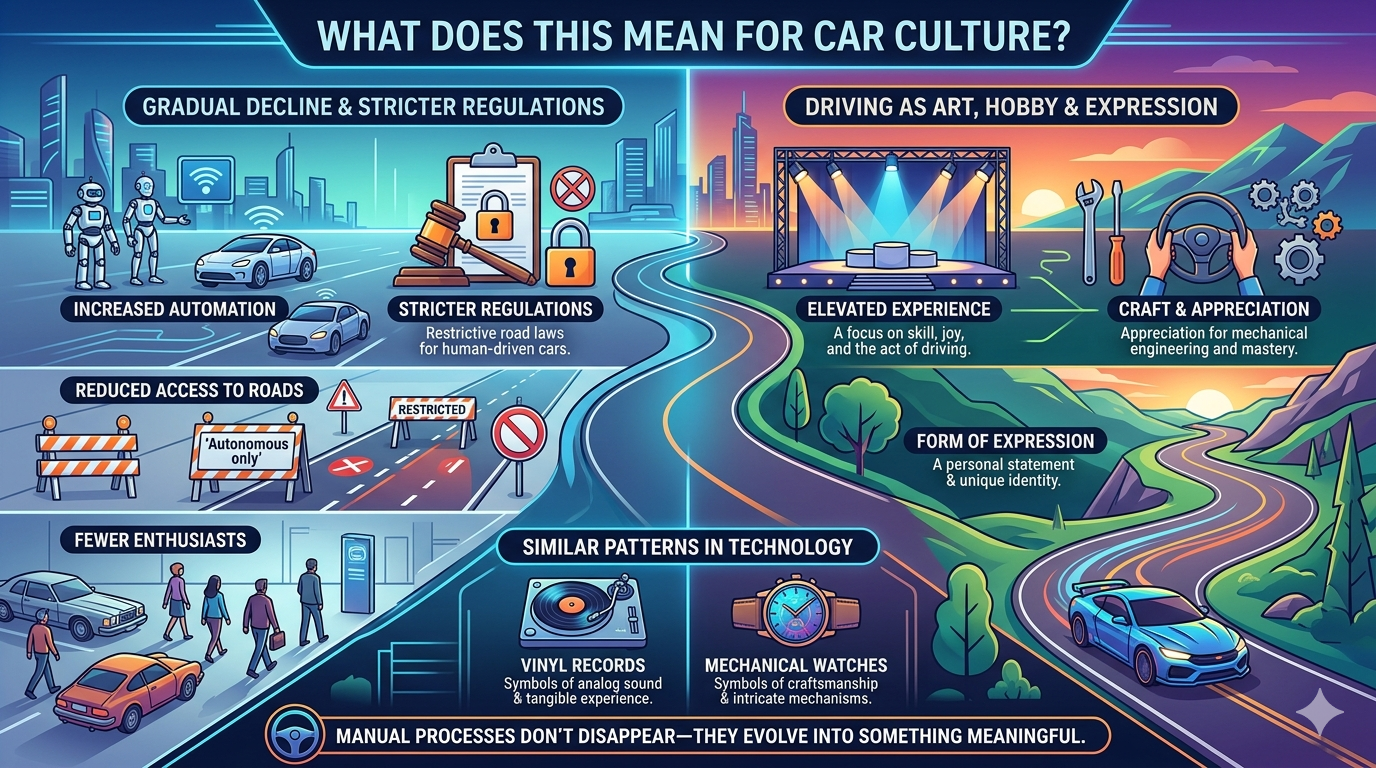
For enthusiasts, this shift could go either way. On one hand, increased automation might lead to stricter regulations, reduced access to roads, and a gradual decline in traditional driving. On the other hand, it could elevate driving to something almost artistic – a skill, a hobby, a form of expression.
We’ve seen similar patterns before. As technology advances, manual processes don’t always disappear – they evolve into something more meaningful.
Vinyl records didn’t vanish. Mechanical watches didn’t die. They became symbols of appreciation and craftsmanship. Driving could follow the same path.
So… Would You Use a Driverless Car?
That’s the question. Not whether they exist. Not whether they’re coming. But whether you, personally, would trust one. Would you sit back, relax, and let the car take over? Or would you always want your hands on the wheel?
Because ultimately, this isn’t just about technology. It’s about control. It’s about trust. And it’s about what driving means to you.
Final Thoughts: Evolution, Not Extinction
Driverless cars are not the end of driving. Hopefully!
They are the next chapter. Yes, they will change how we move. Yes, they will disrupt industries. Yes, they will challenge our assumptions.
But they won’t erase the human connection to cars. If anything, they potentially make it stronger. Because when something becomes optional… it often becomes more meaningful.
If you found this useful, interesting or fun, consider supporting me via Patreon, Ko-Fi, or even grabbing a copy of one of my books on Amazon. Every bit helps me keep creating independent automotive content that actually helps people.
Support independent car journalism 🙏🏽☺️ grab my books on Amazon, take up membership to BrownCarGuy on YouTube, or join me on Ko-Fi or Patreon.

👉🏽 Channel membership: https://www.youtube.com/browncarguy/join
👉🏽 Buy me a Coffee! https://ko-fi.com/browncarguy
👉🏽 Patreon – https://www.patreon.com/BrownCarGuy

MY BOOKS ON AMAZON!
📖 Want to become an automotive journalist, content creator, or car influencer? Check out my book: How to be an Automotive Content Creator 👉🏽 https://amzn.eu/d/7VTs0ii
📖 Quantum Races – A collection of my best automotive sci-fi short stories! 👉🏽 https://amzn.eu/d/0Y93s9g
📖 The ULEZ Files – Debut novel – all-action thriller! 👉🏽 https://amzn.eu/d/d1GXZkO
Discover more from Brown Car Guy
Subscribe to get the latest posts sent to your email.

Leave a comment