After years of rumours and regulatory drama, Euro 7 is finally confirmed – but is this really the death knell for petrol and diesel?
For what feels like a decade, Euro 7 has existed in that strange automotive limbo between prophecy and panic. Depending on which headline you read, it was either the final nail in the coffin of the internal combustion engine or a bureaucratic overreach that would make new cars unaffordable and wipe diesel off the map overnight. Now, however, the speculation phase is over. The final Euro 7 emissions regulations are confirmed, the implementation dates are set, and November 2026 is no longer some distant abstraction. It is eight months away.
So the question is simple: is this the end of petrol cars in Europe and the UK?
When Does Euro 7 Actually Start?
Let’s clear up the timeline first, because confusion is half the problem.
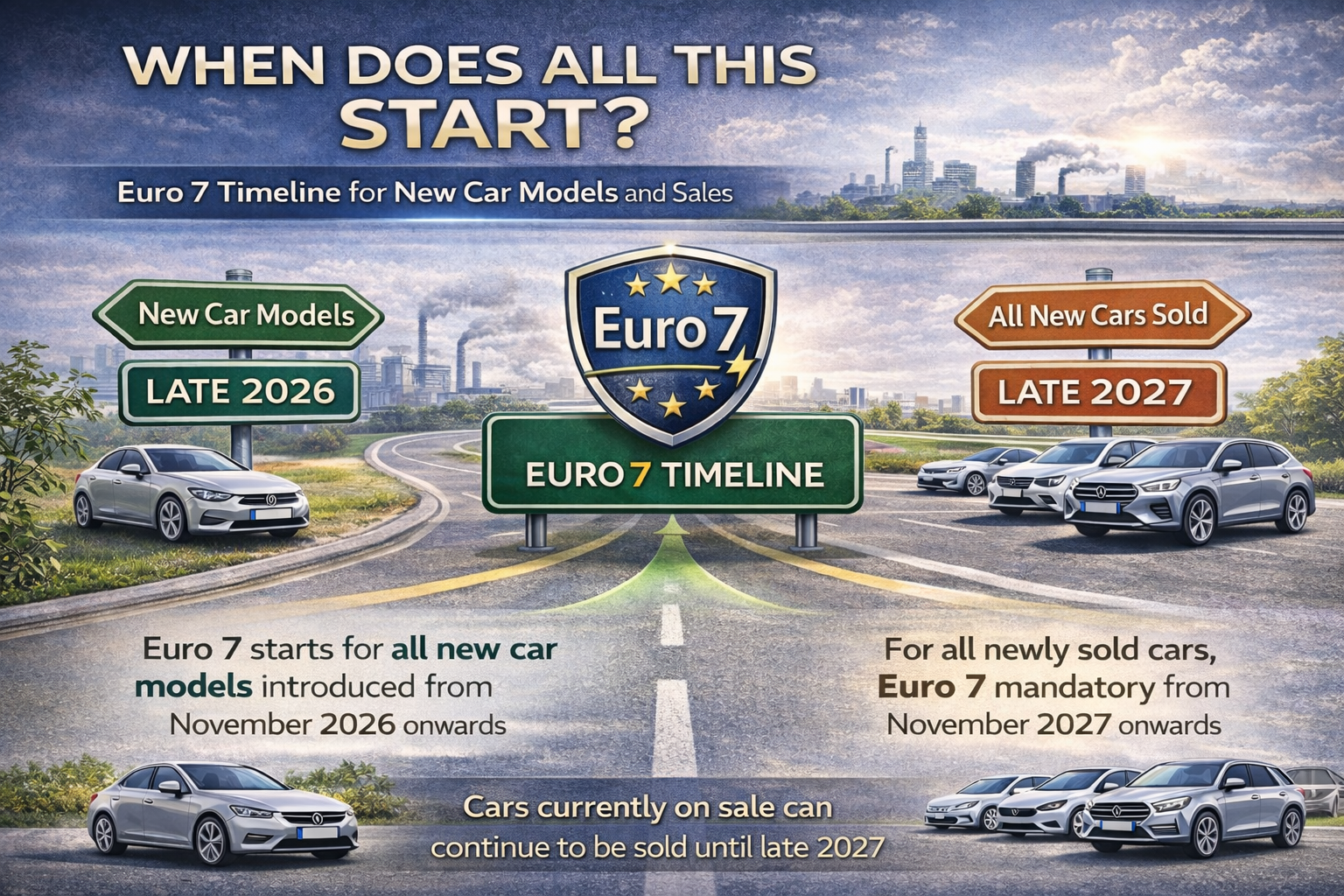
For brand-new car models introduced from November 2026, Euro 7 compliance is mandatory. For all new cars sold – including existing models already on sale – the rules apply from late 2027. That means manufacturers can continue selling current Euro 6-compliant cars until then, but any entirely new model launched after November 2026 must meet the updated standards from day one.
This is not a rumour. It is locked in.
Is Euro 7 a Revolution?
Short answer? No.
Long answer? It is more of a tightening and broadening of the regulatory net rather than a dramatic lowering of tailpipe limits for petrol and diesel cars. The final version of Euro 7 is notably less extreme than some early drafts suggested. There was a time when industry insiders feared impossible durability requirements, astronomical compliance costs and testing regimes that bordered on absurdity. At one point, the rumour mill had cars passing emissions tests in Siberian winters, Saharan heat and, presumably, on the surface of the moon.
What we have instead is evolutionary.
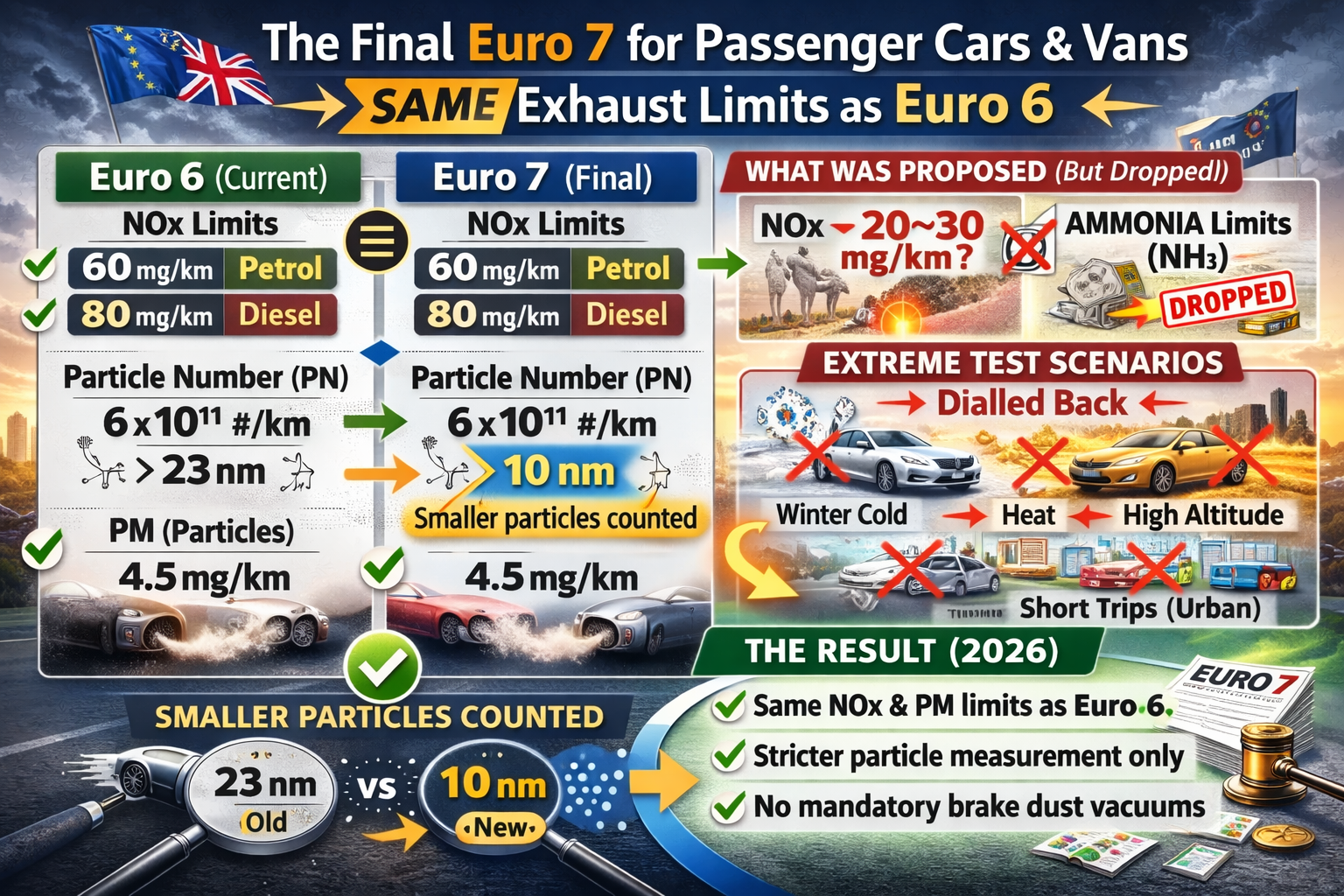
The headline tailpipe limits for cars and vans remain largely aligned with Euro 6. However, the monitoring becomes stricter, durability requirements are extended, and new areas of emissions – previously overlooked – are brought into scope.
Durability: Cleaner for Longer
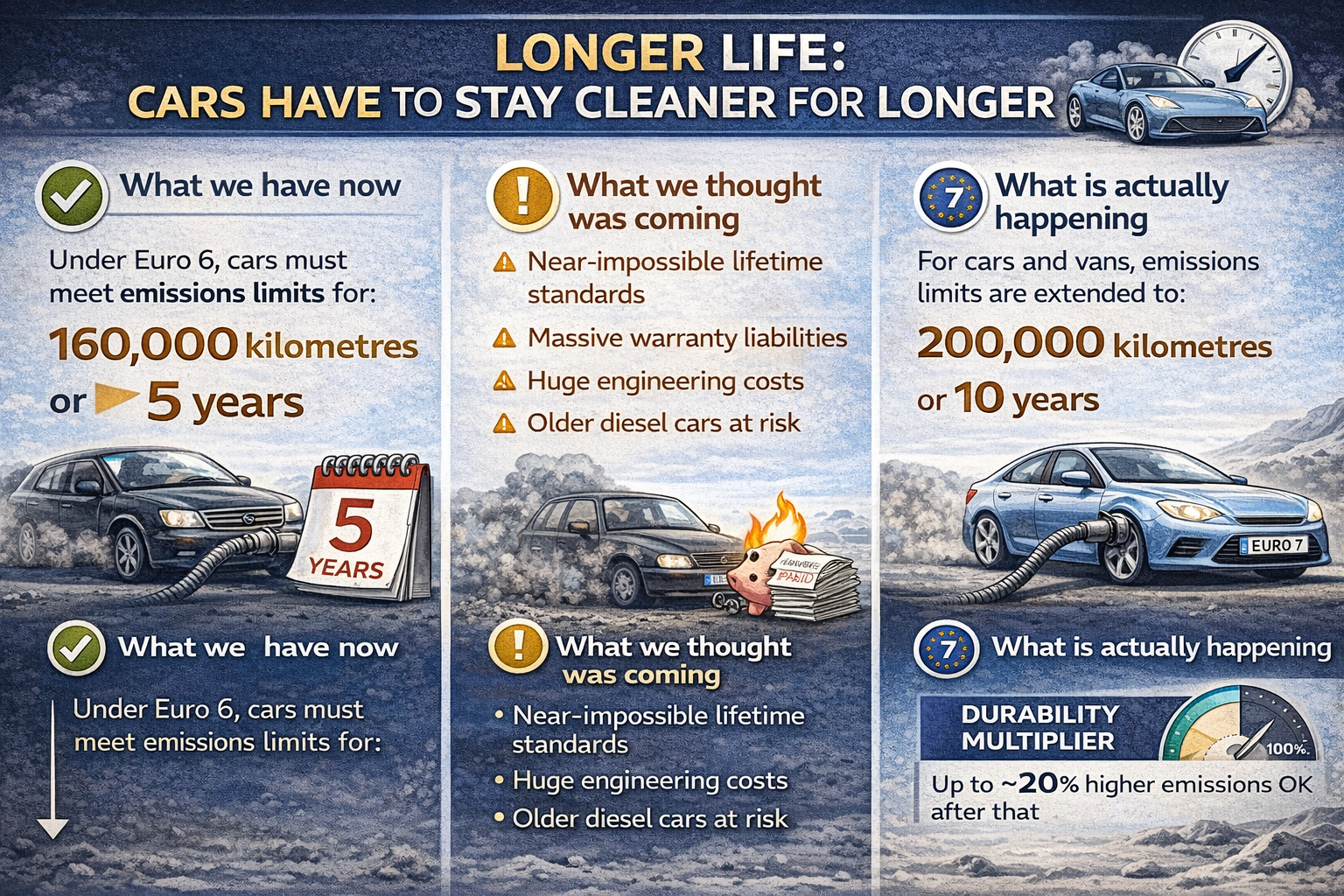
Under Euro 6, emissions systems had to comply for 160,000 kilometres or five years. After that, the legal durability window was considered satisfied, even though most cars obviously remain on the road much longer.
Euro 7 extends this to 200,000 kilometres or 10 years. That is an increase, but not an existential one. There is also a durability multiplier, meaning emissions may rise slightly – within defined margins – after the initial compliance period and still remain legal. In practical terms, manufacturers must build more robust systems, but they are not being asked to perform miracles.
The Bigger Story: Tyres and Brakes
One of the most significant shifts under Euro 7 is that it moves beyond tailpipes.
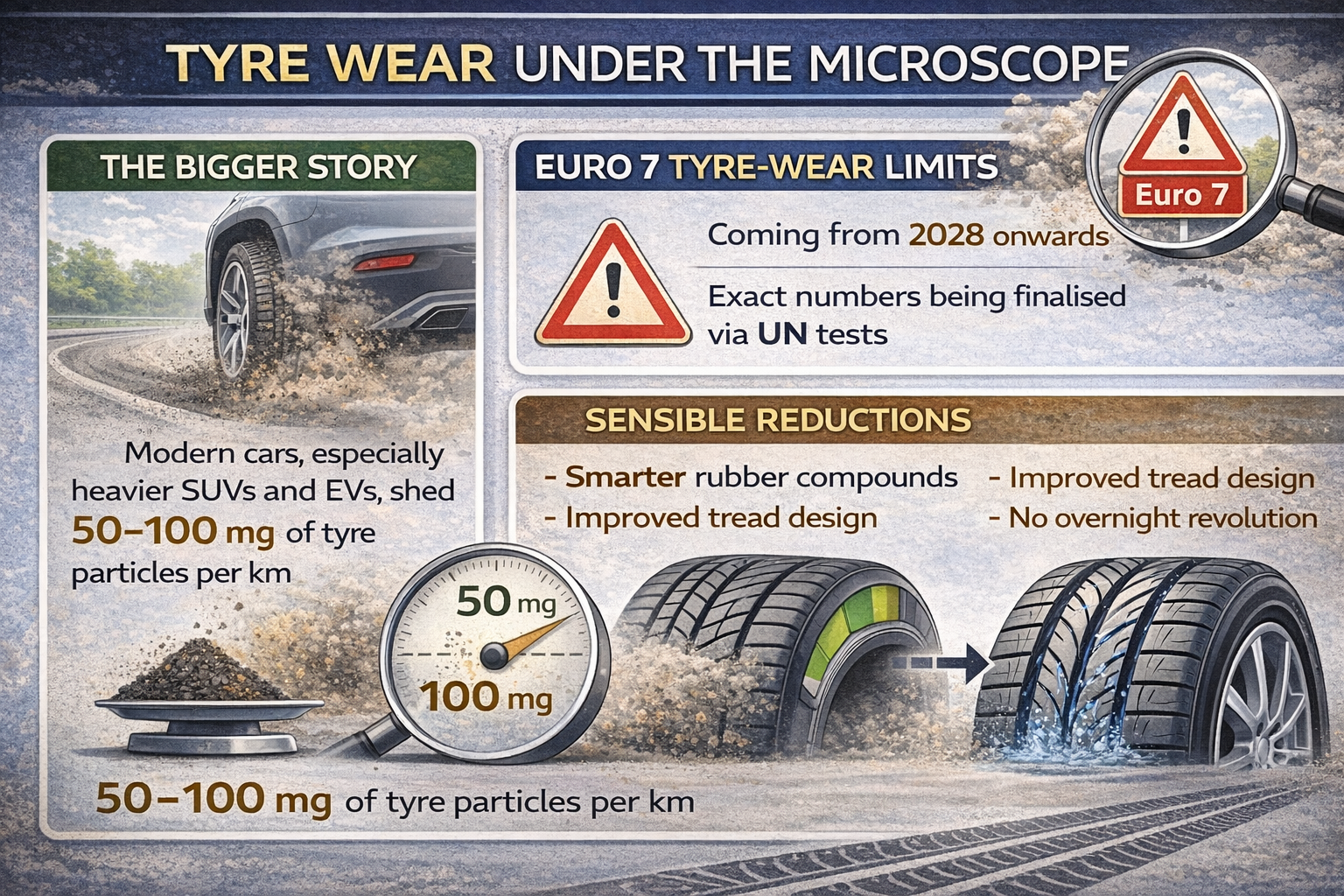
Tyre wear and brake dust are now part of the regulatory conversation. Modern cars, particularly heavier SUVs and electric vehicles, can shed between 50 and 100 milligrams of tyre particles per kilometre. Euro 7 introduces limits on these non-exhaust emissions from 2028 onwards, with detailed figures being finalised under a UN testing procedure.
This does not mean your car will suddenly lose grip or feel like it is running on eco-friendly soap. It likely means smarter rubber compounds, improved tread design and incremental engineering refinement. Evolution again – not revolution.
Plug-in Hybrids and Geofencing
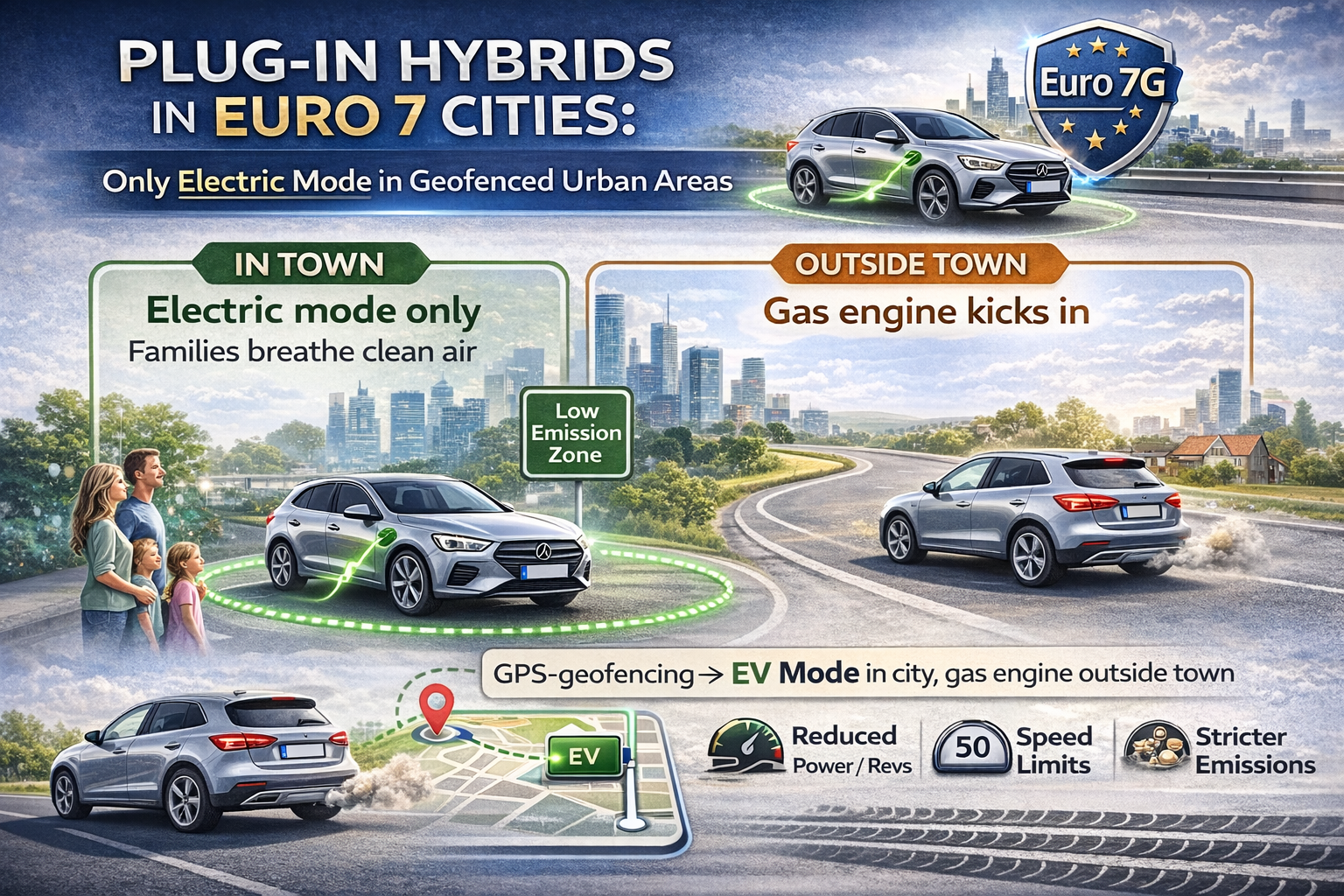
Plug-in hybrids receive a regulatory twist. Euro 7 formalises the requirement for certain PHEVs to prioritise electric-only driving in designated low-emission or zero-emission zones. Using GPS geofencing, the car can detect when it has entered a restricted urban area and automatically switch to battery power.
In simple terms: when you enter the city centre, it behaves like an EV. Outside town, the combustion engine operates normally. The idea is not to ban plug-in hybrids from cities, but to ensure they deliver on their electric promise where air quality matters most.
So… Is This the End of Petrol?
Here is the reality.
Euro 7 is not a ban on petrol or diesel cars. It does not outlaw combustion engines in 2026. It does not suddenly render existing cars obsolete. What it does is tighten oversight, extend durability expectations and expand emissions accountability to areas previously ignored.
If anything, the final form of Euro 7 arguably buys internal combustion a few more years of viability while the electric vehicle transition continues to mature.
Diesel may fade, but likely due to market demand and consumer preference rather than regulatory execution.
The Calm After the Panic
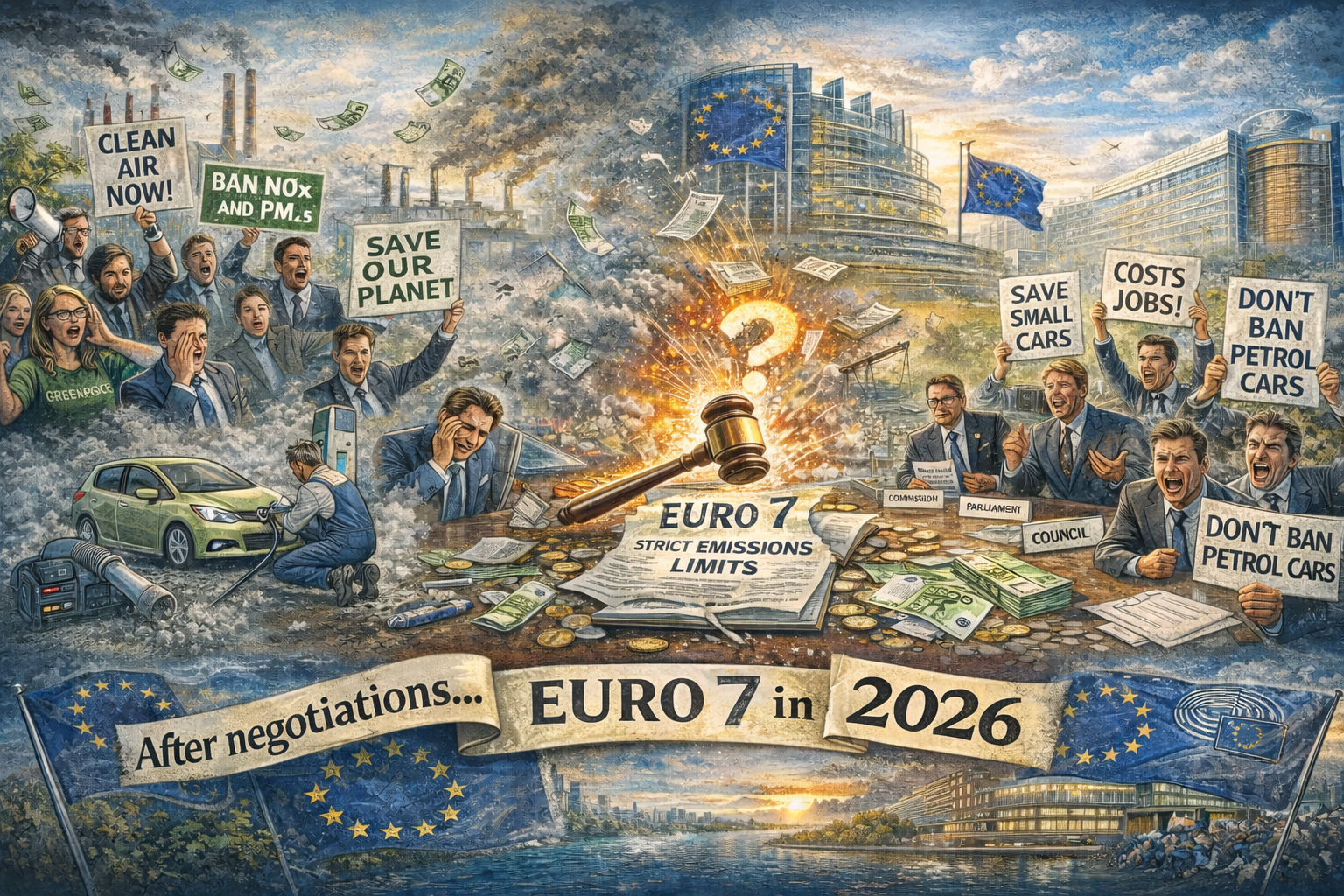
After years of alarmist headlines predicting the apocalypse of petrol, the final Euro 7 rules feel almost… restrained. There is reason for caution – regulation rarely moves backwards – but there is also room to breathe.
For buyers, enthusiasts and everyday motorists, the key takeaway is this: the sky is not falling in November 2026. But the direction of travel remains clear.
The internal combustion engine has not been executed. It has been placed under stricter supervision.
And as always, the future of motoring will be shaped as much by consumer demand and economics as by legislation.
The real question is not whether petrol ends in 2026.
It is whether we adapt intelligently – or panic unnecessarily.
If you found this useful, interesting or fun, consider supporting me via Patreon, Ko-Fi, or even grabbing a copy of one of my books on Amazon. Every bit helps me keep creating independent automotive content that actually helps people.
Support independent car journalism 🙏🏽☺️ grab my books on Amazon, take up membership to BrownCarGuy on YouTube, or join me on Ko-Fi or Patreon.

👉🏽 Channel membership: https://www.youtube.com/browncarguy/join
👉🏽 Buy me a Coffee! https://ko-fi.com/browncarguy
👉🏽 Patreon – https://www.patreon.com/BrownCarGuy

MY BOOKS ON AMAZON!
📖 Want to become an automotive journalist, content creator, or car influencer? Check out my book: How to be an Automotive Content Creator 👉🏽 https://amzn.eu/d/7VTs0ii
📖 Quantum Races – A collection of my best automotive sci-fi short stories! 👉🏽 https://amzn.eu/d/0Y93s9g
📖 The ULEZ Files – Debut novel – all-action thriller! 👉🏽 https://amzn.eu/d/d1GXZkO
Discover more from Brown Car Guy
Subscribe to get the latest posts sent to your email.
