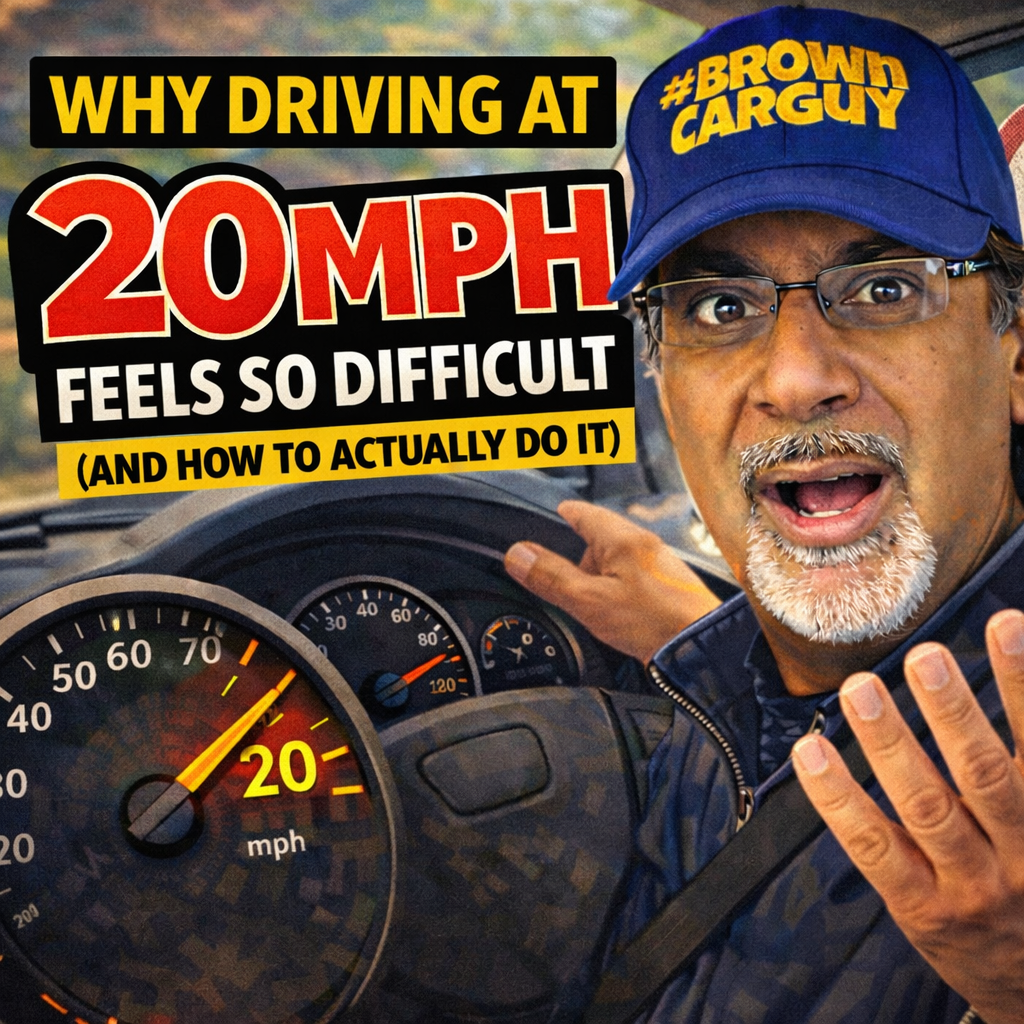
Twenty miles an hour should be easy, yet for millions of drivers it’s oddly stressful, unintuitive, and dangerously easy to get wrong
Twenty-mile-an-hour limits are rapidly clogging up the arteries of UK cities. Proponents tend to wave away any resistance with the same breezy refrain: What’s the problem? Just stick to twenty. Twenty’s plenty. Alright then.
This isn’t about reopening the endless argument over whether 20mph limits are right or wrong. That debate has become so polarised it’s practically its own motorsport. What interests me far more is the quieter, more universal question that ordinary drivers keep asking themselves. Drivers who genuinely want to do the right thing, obey the law, and get home without stress. Why is it so damn hard to drive that slowly?
Driving at 20mph soundseasy. In practice, it can feel borderline impossible. You’re trundling along in a 20 zone, not rushing, not driving like an idiot, genuinely trying to stick to the limit. You glance down and somehow you’re doing twenty-four. Twenty-five. Maybe twenty-six. Not because you intended to speed, but because the car simply went quicker than you thought it would.
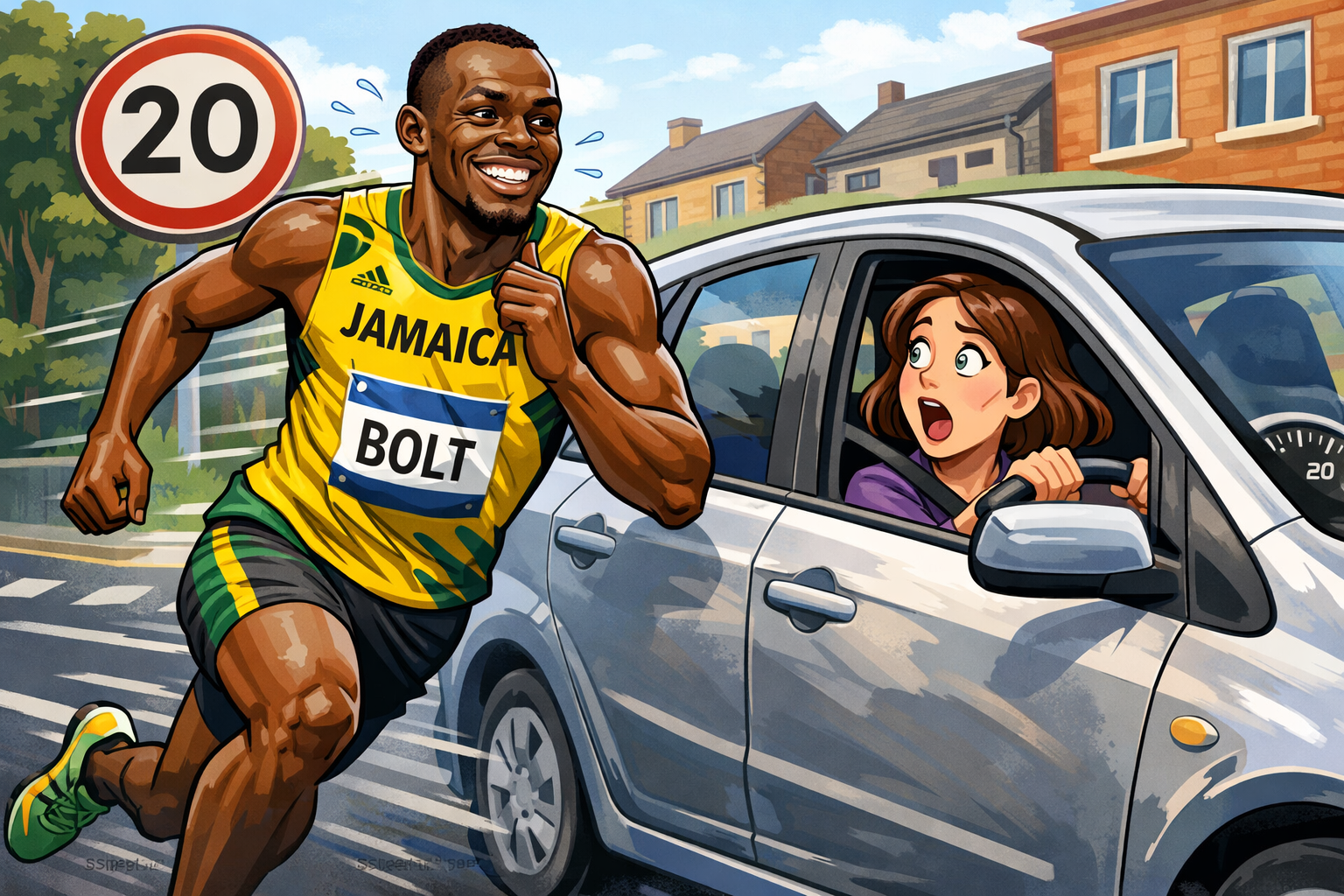
That’s when the little internal panic kicks in. You lift off, dab the brake, flick your eyes to the mirrors, search for the sign again, and suddenly driving feels tense, fiddly, and oddly stressful. All at a speed where nothing dramatic should be happening. A speed that, incidentally, is slower than Usain Bolt flat out. During his 9.58-second 100-metre world record, his average speed was over 23mph, and at his peak he hit more than 27.
Which tells you everything you need to know about how unnatural twenty miles an hour actually is.
Why 20mph Feels Wrong in the First Place
Let’s start with an uncomfortable truth that rarely gets acknowledged. Cars were not designed around twenty-mile-an-hour cruising. Most modern cars are geared, calibrated and mapped to feel relaxed at thirty, forty, fifty or motorway speeds. That’s where throttle response smooths out, engines settle, and everything feels cohesive and calm. Twenty sits awkwardly in between, like a speed nobody ever really planned for.
In a lot of manual cars, first gear is frantic and antisocial. Second gear feels like it wants to get on with life. So you end up micro-managing the car: lift, brake, lift again, glance at the speedo, repeat. It’s mentally noisy driving, and mentally noisy driving is not calm, alert driving.
Modern refinement makes this worse, not better. At thirty you feel momentum. At twenty you feel almost nothing. Sound insulation, smooth power delivery and light steering all conspire to remove the natural cues drivers once relied on. The result is that your eyes spend more time glued to the speedometer than the road ahead, which is exactly the opposite of what good driving should look like.
The Bit No One Likes Admitting
Most of us were never trained to drive at twenty. Think back to your driving lessons. Thirty limits were the foundation. Forties and fifties appeared occasionally. Seventy was the big one. And the unspoken rule was always keep up with traffic while staying legal. Twenty-mile-an-hour zones either didn’t exist in most places, or they were short, specific sections where they made obvious sense, outside schools, hospitals or busy high streets.
There was no module called low-speed discipline in dense urban environments. No sustained practice at holding a precise, artificially low speed for mile after mile. So now we have a generation of drivers being judged on behaviour they were never properly taught. That does feel a bit unfair.
Enforcement Came First. Education Didn’t.
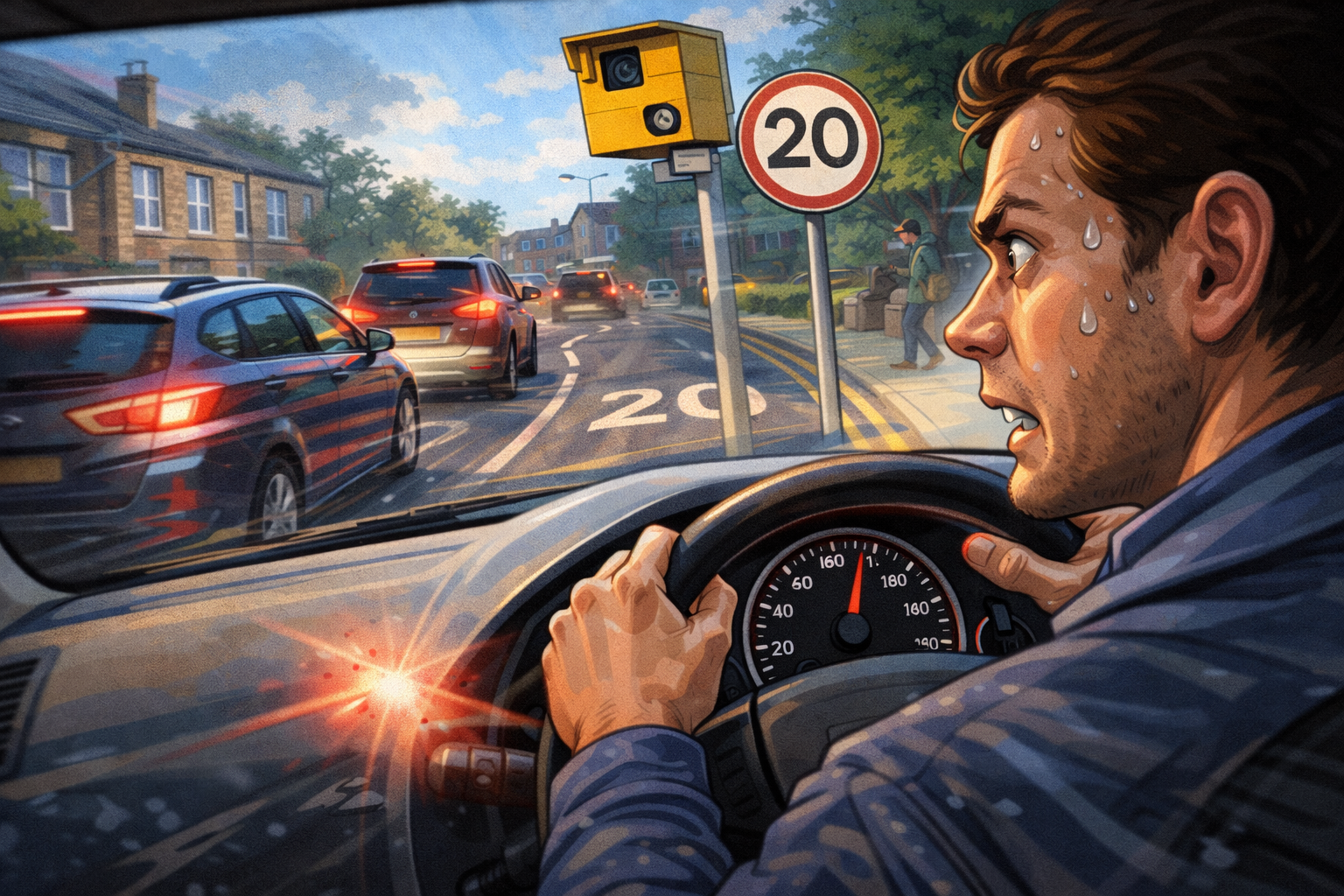
Into that gap came enforcement. Average speed cameras. Mobile vans. AI-driven systems. Smart technology that does not care whether the car felt awkward or whether you drifted a couple of miles an hour without realising.
The effect is predictable. Drivers become hyper-focused on speed rather than surroundings. You get fixation. You get anxiety. You get sudden braking for cameras instead of smooth, flowing progress. Ironically, roads often feel less calm, not more.
So What Actually Helps?
There are techniques. None of them are exciting. All of them feel slightly unnatural. But they do work.
1. Gear choice matters more than people realise
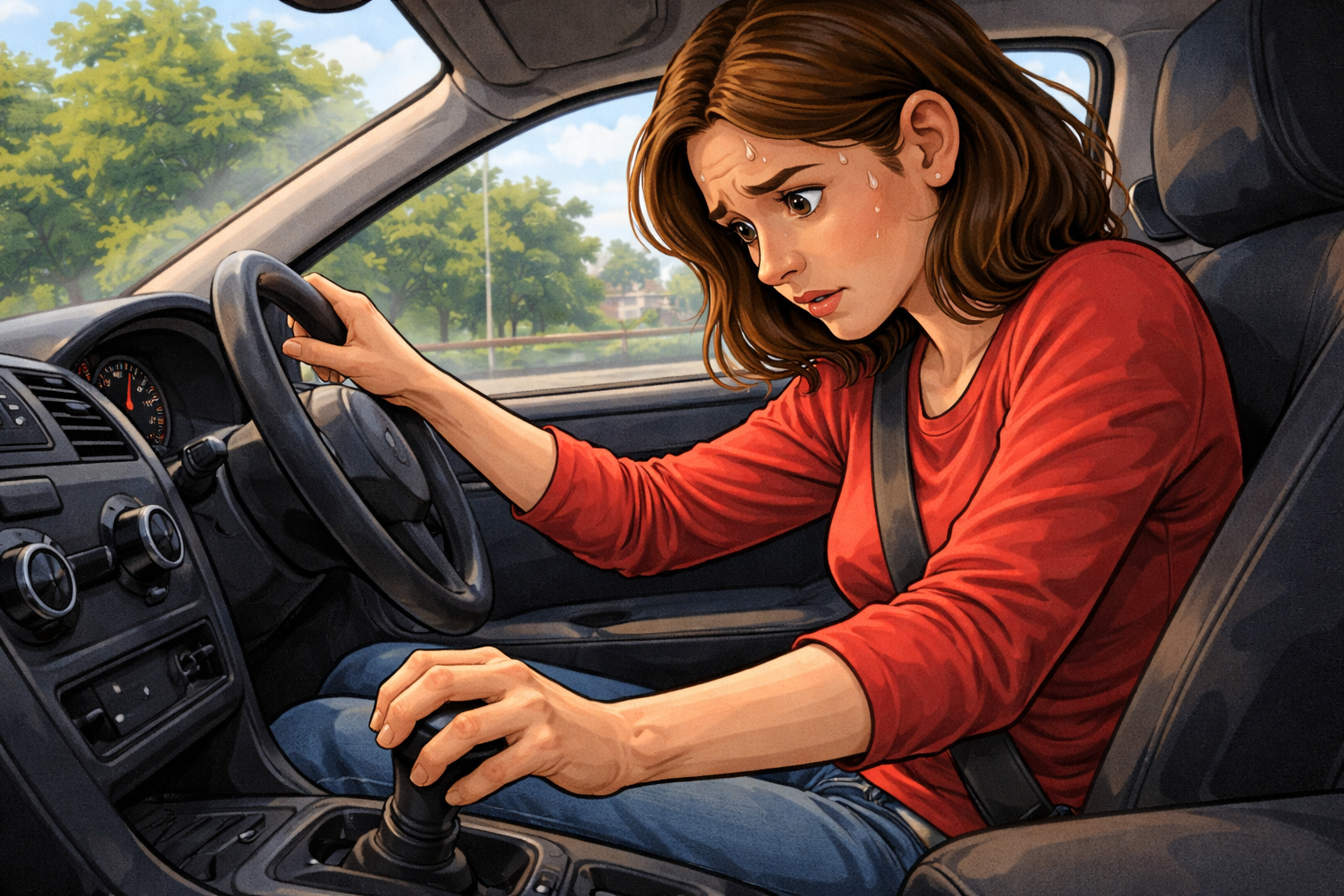
This is mainly for manual drivers. There is no single perfect gear for twenty miles an hour. It depends on the car and the engine. That said, in many manuals, second gear makes twenty easier to control because it naturally sits around eighteen to twenty, and when you lift off, the car slows itself. That alone stops a lot of unconscious creep into the mid-twenties.
Let’s be honest: it doesn’t feel right. The engine feels busier, and yes, it’s less efficient. You’ll use a bit more fuel and emit a bit more. But it gives you control.
If your car is genuinely happy in third gear at twenty without labouring, that can be quieter and more efficient on steady roads. The trade-off is reduced engine braking, which makes it easier to drift over the limit without noticing. The real rule is simple: use the highest gear that holds twenty smoothly, without juddering, while still giving you control. Control first. Efficiency second.
That’s how you stay legal without staring at the speedo like it’s judging you.
2. Stop chasing the car in front
This one catches a lot of people out. Twenty is not a target. It’s a cap. If the car ahead pulls away, let it. Gaps are not a moral failure. Most creeping over twenty happens because drivers subconsciously match someone else’s pace instead of holding their own discipline. We’ve been conditioned to keep up with traffic, and it feels instinctively right to accelerate when others do.
That instinct is exactly what gets you nudged into a speed awareness course.
3. Beware when exiting junctions
Nearly all accidental speeding in 20 zones happens just after junctions. You accelerate away instinctively, settle into the flow, and forget you’re still in a twenty. Make it a habit: every junction equals a speed check. Clearing the junction doesn’t mean accelerating normally. In a 20 zone, “normal” has changed.
4. Manage pressure, not just speed
Driving at twenty can make you feel like a moving roadblock, especially in unfamiliar areas where you’re half-expecting a hidden camera. Traffic builds up. Tailgaters appear. And some of them are intimidating.
Here’s the key thing: you are not obliged to drive at the emotional comfort level of the car behind. You are obliged to drive no faster than the posted limit and in a way that keeps your licence intact. Calm consistency beats reactive driving every time.
Personally, when someone tailgates, I slow slightly and give myself more braking room. If they still don’t get the message, I position left where possible to invite a safe overtake. And if it’s really bad, I’ll pull over briefly and let them pass. What I will not do is let someone else bully me into speeding.
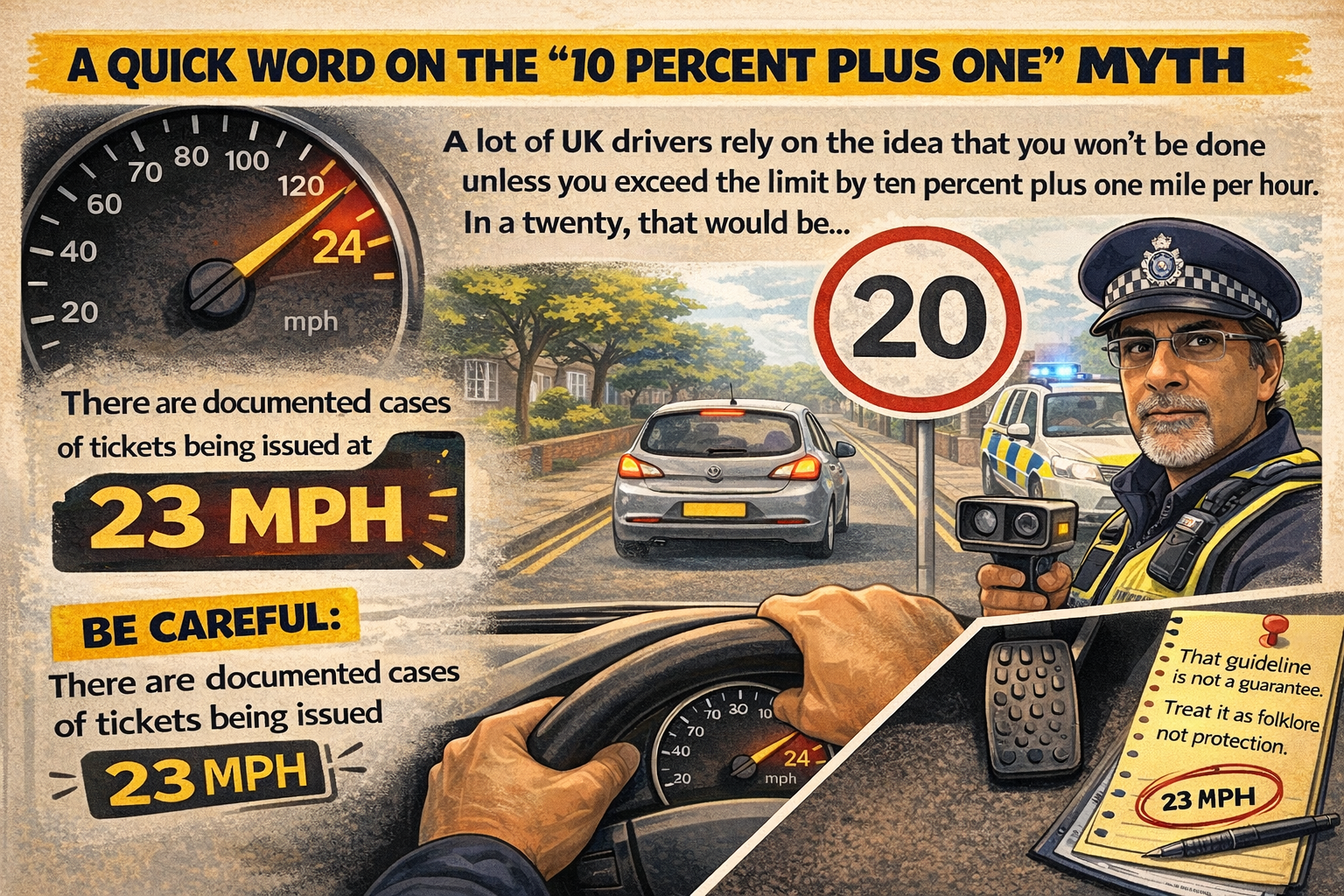
A quick word on the “10% plus one” myth while we’re here. Yes, many drivers assume they won’t be done unless they exceed the limit by ten percent plus one mile an hour. In a twenty, that would be twenty-four. Be careful. There are documented cases of tickets at twenty-three. Treat that rule as folklore, not protection.
5. Use technology when it’s available
Speed limiters are excellent in 20 zones. Cruise control can work in some cars. Speed warnings may be annoying, but they prevent accidental drift. I also use Waze to highlight posted limits when signage is unclear. This isn’t cheating. It’s using every available tool to protect your licence.
The Mindset Shift That Changes Everything
This part matters more than people realise. Stop thinking of twenty-mile-an-hour driving as slow driving. Think of it as precision driving.
At twenty, you’re not there to make progress. You’re there to manage space, observe hazards, anticipate pedestrians, cyclists, side roads and unpredictable movement. Speed becomes secondary. Awareness becomes primary. Focus on those elements and the sensation of “going nowhere” fades into the background.
It’s still not thrilling. But it becomes purposeful.
The Bigger Problem
Over the last decade, we’ve changed the rules of everyday driving dramatically. Lower limits. Smarter enforcement. Tighter margins for error. But we never changed the way we teach driving to match that reality. We are enforcing behaviour we never properly trained for.
That gap is where frustration lives. It’s why drivers feel caught out rather than corrected, and why conversations about 20mph zones keep turning emotional instead of practical. So if you struggle at twenty, it doesn’t mean you’re a bad driver. It means you’re driving in an environment that evolved faster than the training did.
If this resonated, let me know. Do 20mph zones feel calmer where you drive, or just more stressful? And if you’ve found your own ways of coping, share them. As long as they don’t involve scrolling TikTok to pass the time at twenty. That’s a definite no.
If you found this useful, interesting or fun, consider supporting me via Patreon, Ko-Fi, or even grabbing a copy of one of my books on Amazon. Every bit helps me keep creating independent automotive content that actually helps people.
Support independent car journalism 🙏🏽☺️ grab my books on Amazon, take up membership to BrownCarGuy on YouTube, or join me on Ko-Fi or Patreon.

👉🏽 Channel membership: https://www.youtube.com/browncarguy/join
👉🏽 Buy me a Coffee! https://ko-fi.com/browncarguy
👉🏽 Patreon – https://www.patreon.com/BrownCarGuy

MY BOOKS ON AMAZON!
📖 Want to become an automotive journalist, content creator, or car influencer? Check out my book: How to be an Automotive Content Creator 👉🏽 https://amzn.eu/d/7VTs0ii
📖 Quantum Races – A collection of my best automotive sci-fi short stories! 👉🏽 https://amzn.eu/d/0Y93s9g
📖 The ULEZ Files – Debut novel – all-action thriller! 👉🏽 https://amzn.eu/d/d1GXZkO
Discover more from Brown Car Guy
Subscribe to get the latest posts sent to your email.
