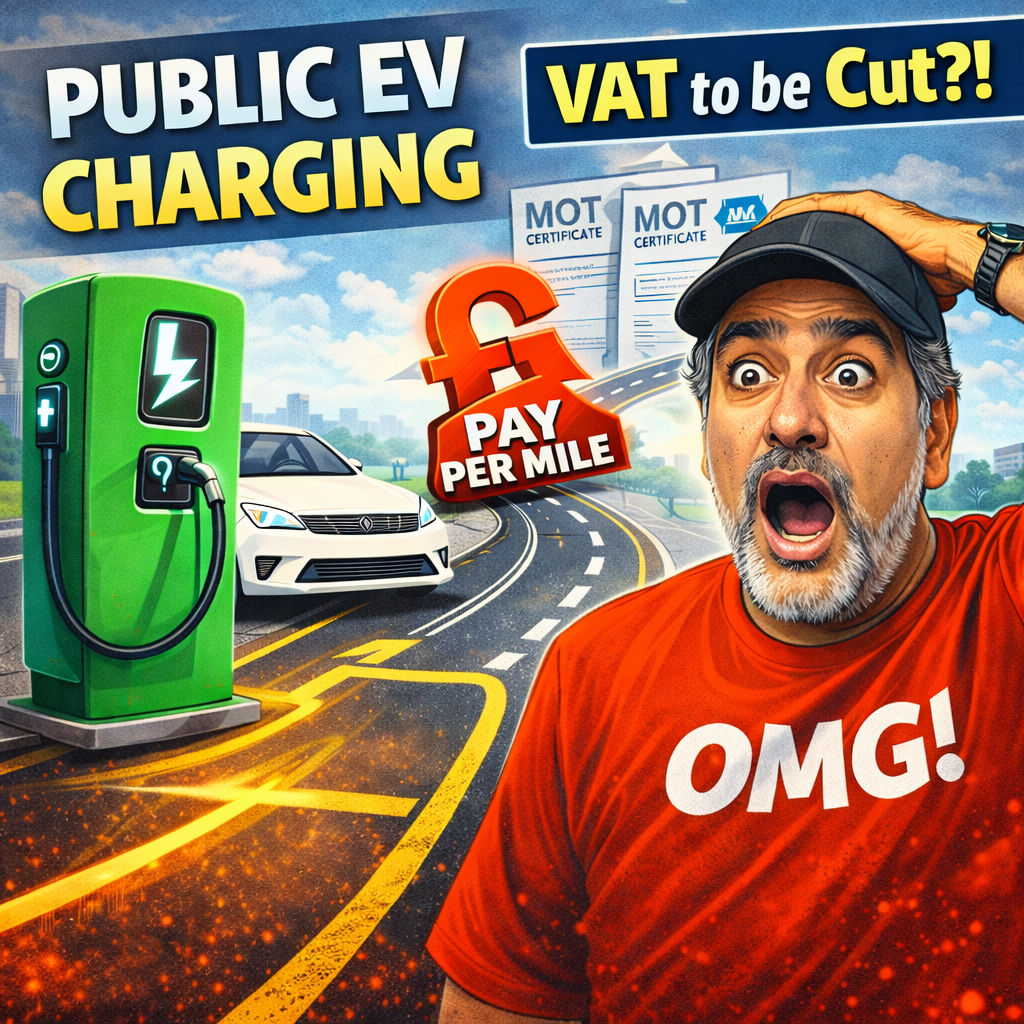
Reports of a VAT cut on public EV charging feel less like progress and more like a late correction to the confusion created by pay-per-mile policy
Reports that the Government is preparing to cut VAT on public EV charging should be welcome news. Yet the timing tells a more troubling story. This move appears less like a long-planned correction and more like a hurried response to the growing unease around pay-per-mile road pricing, exposing an EV transition increasingly driven by reaction rather than strategy.
For years, the so-called “pavement tax” has been one of the most obvious, and most criticised, flaws in the UK’s electric vehicle transition. Drivers without access to home charging have paid significantly more to run an EV than those fortunate enough to own a driveway, despite driving the same cars and using the same electricity. The disparity has never made sense, and it has actively discouraged urban motorists, renters and flat-dwellers from switching to electric.
So on the surface, reports that VAT on public EV charging could be cut from 20% to 5% look like progress. Long overdue progress, in fact. But dig a little deeper and the timing raises uncomfortable questions about why this fix is suddenly being prioritised now.
The answer appears to lie with pay-per-mile.
From 2028, electric vehicles are expected to be subject to a mileage-based road charge, estimated at around three pence per mile, on top of Vehicle Excise Duty. The stated aim is to replace declining fuel duty revenues as petrol and diesel sales fall. In Treasury terms, the logic is straightforward. Mileage is predictable. It scales neatly. It does not disappear as technology evolves.
What seems to have been underestimated, however, is the psychological impact of layering new costs onto EV ownership just as the market is still trying to find its feet.
Internal concerns reportedly growing within the Treasury suggest that pay-per-mile risks denting EV demand far more than anticipated. The Office for Budget Responsibility has already warned that the policy could materially reduce electric car sales over the coming years. Faced with that prospect, the Government now appears to be reaching for counterbalances, and cutting VAT on public charging is the most obvious lever available.
The problem is that this sequence matters.
Fixing public charging costs only after announcing a controversial mileage tax gives the impression of policy being built backwards. Tax first. Reassure later. Patch the consequences once the numbers start to wobble. That is not the same as a coherent, confidence-building transition strategy.
There are also practical concerns that remain largely unanswered. How exactly pay-per-mile will be implemented is still unclear, with mileage reporting via annual MOT tests widely tipped as the most likely mechanism. If so, the knock-on effects for the used car market could be significant, and encouraging owners to hold onto older cars for longer.
And that is already happening.
The UK car parc is ageing. Drivers are keeping vehicles for record lengths of time, not out of nostalgia, but because uncertainty makes replacement risky. When motorists are unsure whether electric cars will become cheaper, more expensive, or more tightly controlled in the years ahead, the safest option is often to do nothing.
Cutting VAT on public EV charging is the right move. It always was. But doing it now, in apparent response to fears about pay-per-mile, exposes a deeper issue. EV policy that feels reactive breeds hesitation. Hesitation slows adoption. And slowing adoption undermines the very transition the policy is meant to support.
If the goal is to bring motorists along willingly, clarity and consistency matter as much as incentives. Without them, even well-intentioned fixes risk being seen not as progress, but as damage control.
If you found this useful, interesting or fun, consider supporting me via Patreon, Ko-Fi, or even grabbing a copy of one of my books on Amazon. Every bit helps me keep creating independent automotive content that actually helps people.
Support independent car journalism 🙏🏽☺️ grab my books on Amazon, take up membership to BrownCarGuy on YouTube, or join me on Ko-Fi or Patreon.

👉🏽 Channel membership: https://www.youtube.com/browncarguy/join
👉🏽 Buy me a Coffee! https://ko-fi.com/browncarguy
👉🏽 Patreon – https://www.patreon.com/BrownCarGuy

MY BOOKS ON AMAZON!
📖 Want to become an automotive journalist, content creator, or car influencer? Check out my book: How to be an Automotive Content Creator 👉🏽 https://amzn.eu/d/7VTs0ii
📖 Quantum Races – A collection of my best automotive sci-fi short stories! 👉🏽 https://amzn.eu/d/0Y93s9g
📖 The ULEZ Files – Debut novel – all-action thriller! 👉🏽 https://amzn.eu/d/d1GXZkO
Discover more from Brown Car Guy
Subscribe to get the latest posts sent to your email.
