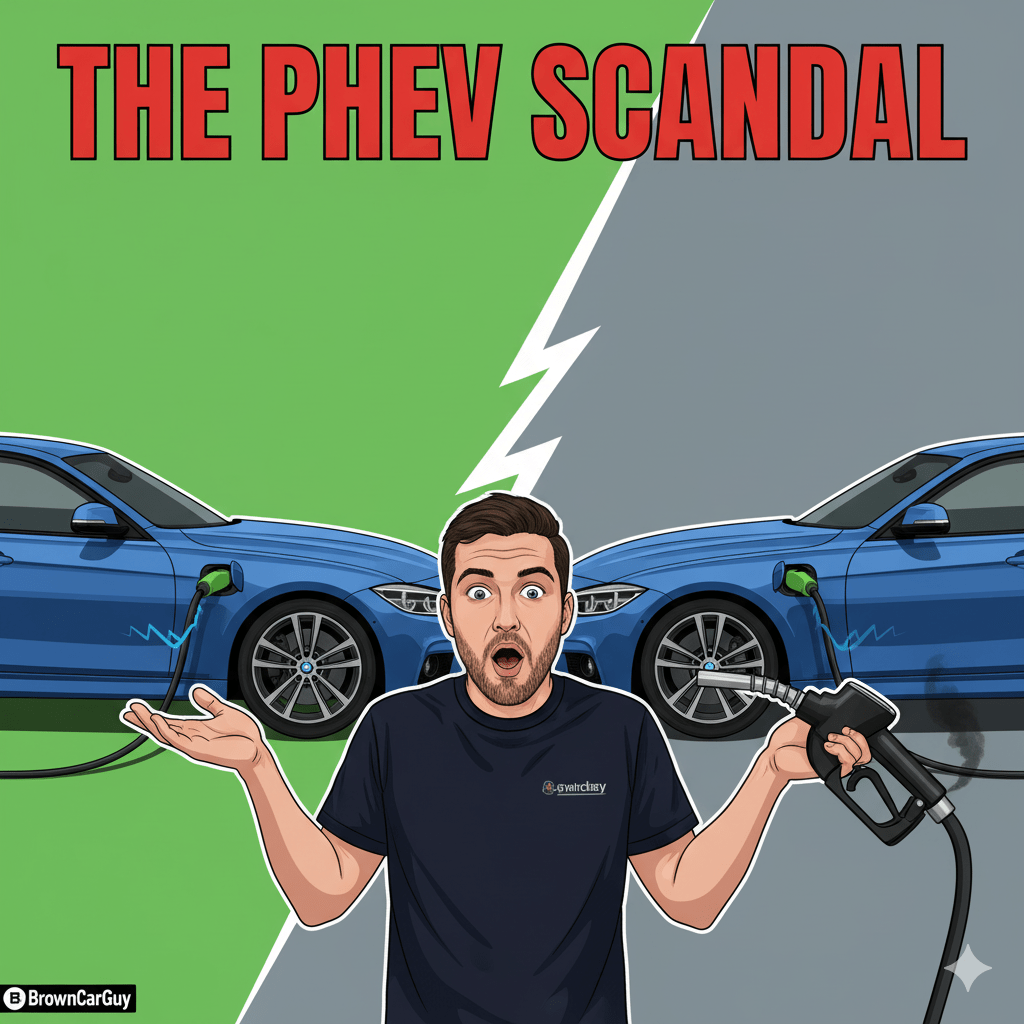
How Plug-In Hybrids Became the Car Industry’s Dirty Little Secret
They were supposed to be the perfect bridge to a greener motoring future – the best of both worlds. Drive electric around town, and petrol on the motorway. No range anxiety, no compromise, no problem. But according to a new report by Transport & Environment, plug-in hybrid electric vehicles (PHEVs) might be one of the biggest greenwashing scandals in the car industry. In the real world, these so-called eco-friendly cars are polluting almost as much as petrol vehicles.
So what went wrong? And more importantly – are PHEVs worth buying at all?
The Promise vs the Pollution
When plug-in hybrids hit the scene, they seemed like a genius idea. You’d plug in at home, cruise silently in EV mode, and then seamlessly switch to petrol power for long journeys. A smooth transition toward electrification, without the pain of planning every charge.
But in reality, the data tells a very different story.
T&E analysed data from over 800,000 plug-in hybrids across Europe and found that real-world CO₂ emissions are nearly five times higher than official figures. In other words, that shiny “30g/km” badge on the back of your PHEV might as well read fiction.
Why? Because the average driver only covers about 27% of their miles in electric mode – not the 84% that regulators assume in lab tests. And even when in EV mode, many cars still wake up the engine to help with hills, heating, or heavy acceleration.
In short: we’ve built a generation of cars that could be clean… if only we used them properly.
The Human Factor: We Forgot to Plug In
Here’s the painful truth – most people just don’t plug them in.
It’s not because they’re lazy; it’s because the system isn’t set up to make it easy. Company-car drivers – who make up a big chunk of PHEV users – often have fuel cards but no access to charging points at work or home. So they just run them like ordinary petrol cars.
Meanwhile, many private owners can’t charge on the street or forget after a long day. Others overestimate how far the electric range really goes – especially in winter, when 30 miles can quickly become 15 once you switch on the heater.
And when that tiny battery runs out, your “eco car” becomes a heavy petrol-burning beast dragging around hundreds of kilos of unused battery and motors. Not exactly saving the planet, is it?

Engineering Half-Measures and Regulatory Blind Spots
Let’s be fair – the problem isn’t just the drivers. A lot of PHEVs are compromised by design. Small batteries (10-15 kWh), underpowered motors, and no heat pumps mean the internal-combustion engine is constantly being called back into duty.
Manufacturers love them because they tick regulatory boxes without requiring full EV architecture. Governments love them because they make emissions graphs look better on paper. And consumers love them because they sound smart – “eco-friendly without the faff.”
Everyone wins… except the atmosphere.
And let’s not forget – these generous CO₂ assumptions have allowed carmakers to avoid an estimated €5 billion in fines. All while the planet keeps warming and urban air quality keeps falling.
The Fix: It’s Not the Tech, It’s the Usage
Here’s the thing – plug-in hybrids can work brilliantly if used properly.
If you can charge at home every night, if your daily commute is short, and if your car has decent electric range and power, you’ll see massive savings in both fuel and emissions.
But if you can’t plug in daily, you’re better off buying a self-charging hybrid like a Toyota or Honda, which is designed to recover energy automatically. And if you do long motorway journeys, a diesel-hybrid or mild-hybrid petrol might actually be cleaner overall.
Hybrid Cheat Sheet:
- If you can plug in daily – go PHEV or EV.
- If you can’t – go self-charging or diesel-hybrid.
- If you do big motorway hauls – mild-hybrid, diesel or efficient petrol still makes sense.
- If you just want less faff – skip the cable and the guilt.
The tech isn’t the villain – our habits are.
Green or Greenwashed?
The irony is that PHEVs could have been a crucial stepping stone in the transition to electric mobility. Instead, they’ve become a symbol of policy loopholes and marketing spin – a technology undermined by the way we use it, and the way it’s been sold.
It’s like the guy demanding a refund because his gym “isn’t making him fit” – all while eating pizza on the sofa. The gym’s fine. It’s the effort that’s missing.
So next time you see a “Plug-In Hybrid” badge, don’t assume it’s clean just because it plugs in. Ask yourself: will you actually use the plug?
Because if you don’t – you’re not driving a green car. You’re driving a heavier, thirstier, and more expensive petrol one.

If you found this useful, interesting or fun, consider supporting me via Patreon, Ko-Fi, or even grabbing a copy of one of my books on Amazon. Every bit helps me keep creating independent automotive content that actually helps people.
Support independent car journalism 🙏🏽☺️ grab my books on Amazon, take up membership to BrownCarGuy on YouTube, or join me on Ko-Fi or Patreon.

👉🏽 Channel membership: https://www.youtube.com/browncarguy/join
👉🏽 Buy me a Coffee! https://ko-fi.com/browncarguy
👉🏽 Patreon – https://www.patreon.com/BrownCarGuy

MY BOOKS ON AMAZON!
📖 Want to become an automotive journalist, content creator, or car influencer? Check out my book: How to be an Automotive Content Creator 👉🏽 https://amzn.eu/d/7VTs0ii
📖 Quantum Races – A collection of my best automotive sci-fi short stories! 👉🏽 https://amzn.eu/d/0Y93s9g
📖 The ULEZ Files – Debut novel – all-action thriller! 👉🏽 https://amzn.eu/d/d1GXZkO
Discover more from Brown Car Guy
Subscribe to get the latest posts sent to your email.
