Approaching 57, I ask if age really sidelines us – or if experience, insight and resilience make older workers more essential than ever
In just a couple of months, I’ll be 57 years old. And honestly? Some days, I feel it. The knees creak more than they used to, the waistline’s trying to sneak past the speed limit, and let’s not even mention how often I forget what I came into the room for.
Now… where was I? Oh yes… Professionally, too, the landscape has shifted. There’s less work floating around, fewer calls coming in, and a niggling voice that asks: maybe I’ve had my time. Maybe I really am edging towards my sell-by date.
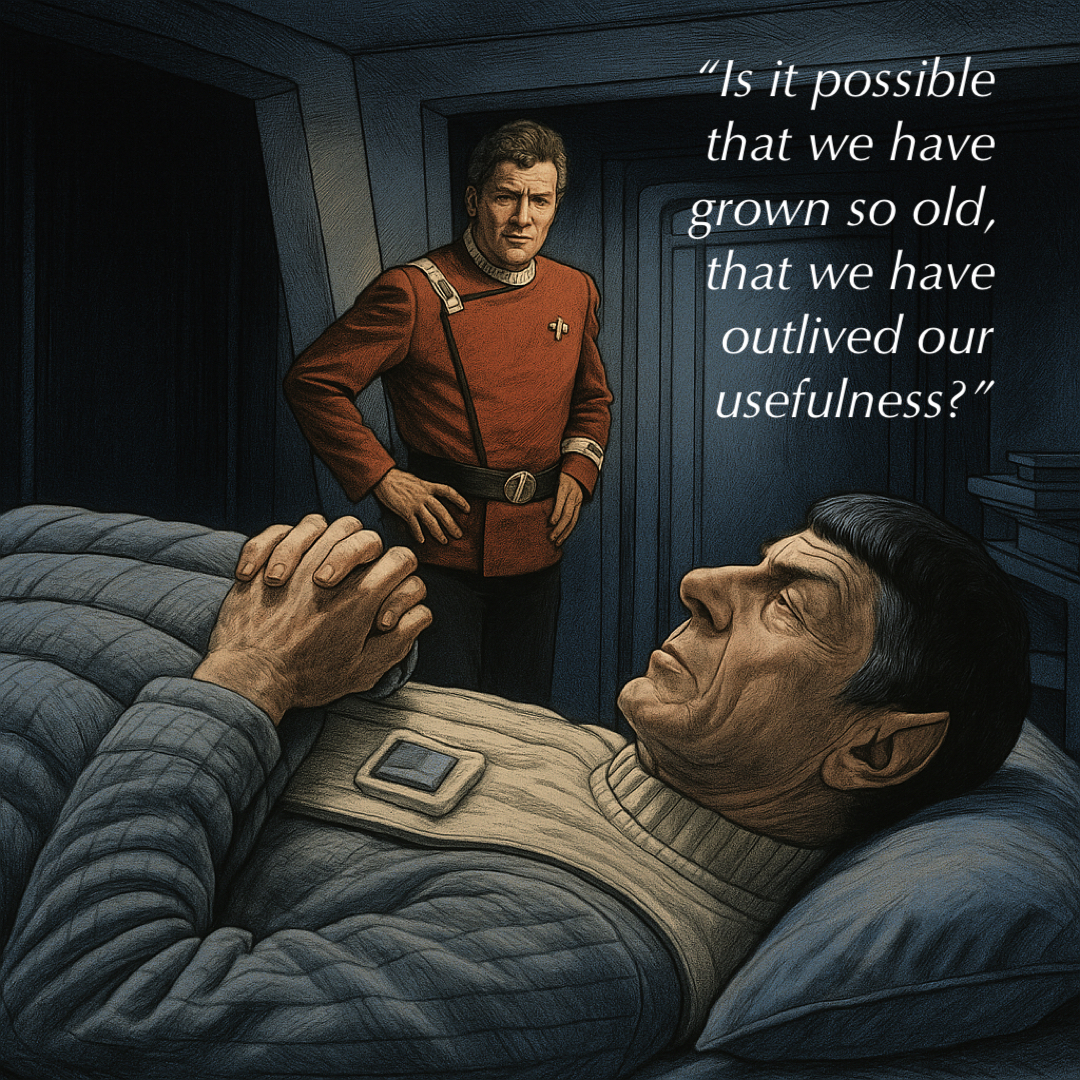
Which brings me to one of my favourite moments in Star Trek VI: The Undiscovered Country. A weary Spock turns to Kirk and sighs: “Is it possible that we have grown so old that we have outlived our usefulness?”
Ouch. That hits close to home.
Here’s the thing though, in the Star Trek timeline, more than seventy years later, Spock is still active – turning up in The Next Generation, and not just pottering about with a pipe and slippers. He’s out there brokering peace between Vulcans and Romulans, being absolutely pivotal. So much for obsolescence.
And really, isn’t 60 the new 40 anyway? Just look at Tom Cruise, still hanging off aeroplanes in Mission: Impossible or Keanu Reeves gunning down half of Hollywood as John Wick – both of these guys are in their sixties!
Though in fairness, I’m not fit, nor good-looking, and the only thing I can leap off is a slightly high kerb. Still, if they can keep going, maybe there’s a lesson there.
Because while it’s easy to wallow in doubts about age, the truth – as the research shows – is far more inspiring. There’s plenty of life, creativity, and usefulness left in us older dogs yet. Don’t just take my word for it: the data proves it.

The Myth of the Past-It Worker
Ageism is one of the last acceptable prejudices in the workplace. Too often, employers assume older workers are expensive, slow to adapt, or just coasting to retirement. But the evidence says otherwise.
- OECD’s Employment Outlook 2025: found that older workers in their 50s and 60s perform as well as younger colleagues in most roles, particularly in knowledge-based and service industries. Multigenerational workforces actually boost productivity.
- Centre for Retirement Research (Boston College): revealed little evidence that older workers harm company performance. In fact, profitability and productivity remain steady when firms retain them.
- Kim (2023) study on wages vs productivity: showed older employees often deliver productivity on par with prime-age workers, sometimes at better value, because their wages don’t always reflect their actual output.
- Bain & Company: companies with age-diverse teams experience lower turnover and higher productivity. Training costs are lower, knowledge is passed on faster, and businesses are more stable.
- NIOSH (US research): older workers are less likely to waste time or break safety rules. They bring what’s called “organisational citizenship” – basically, they play nicely with others and often act as natural mentors.
So yes, we may have more grey hairs and slightly slower reflexes, but that’s counterbalanced by fewer mistakes, more insight, and a steadier hand. If anything, employers who sideline older workers are wasting resources.
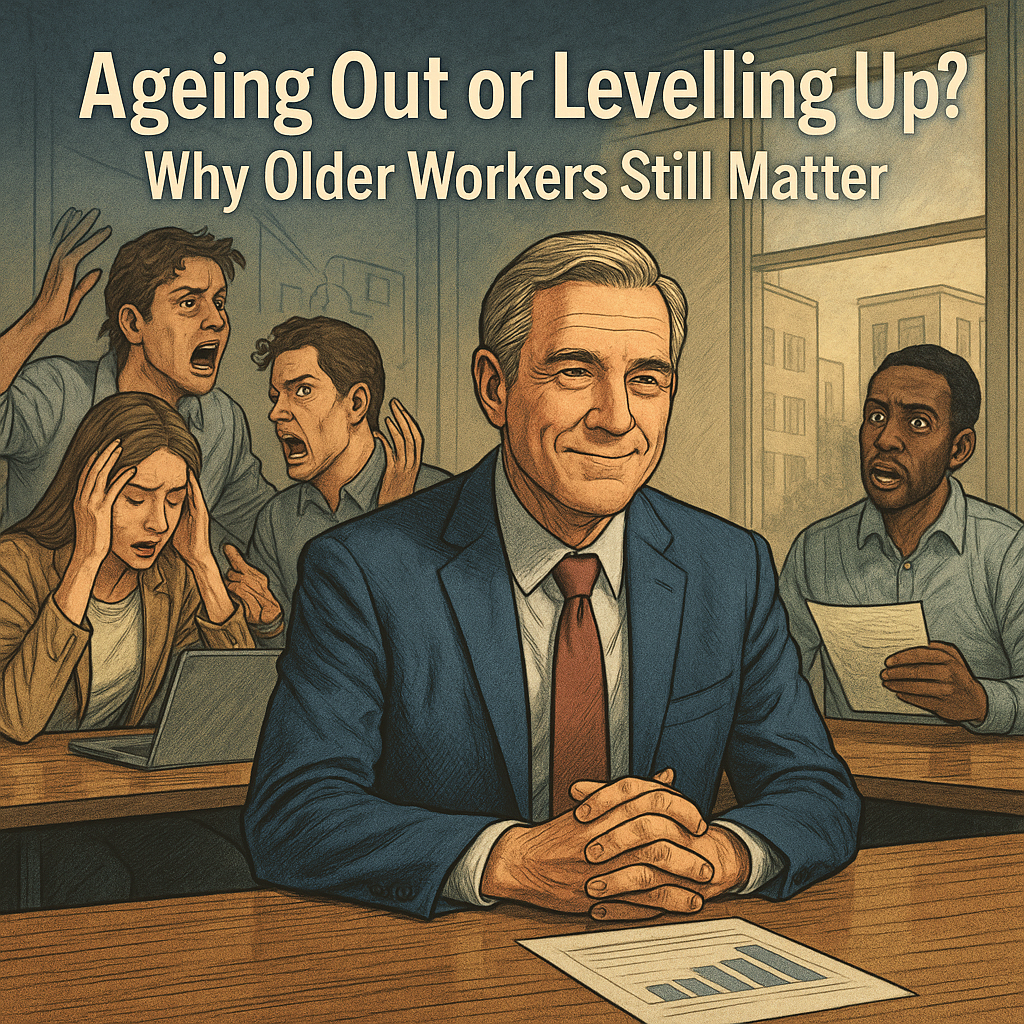
What Companies Get Wrong
Many firms still see older employees as a cost problem rather than an asset. Traditional seniority-based pay scales sometimes exaggerate this by linking age with salary regardless of output. That’s when the myth of being “overpaid” takes root.
But look deeper and the maths works differently. Factor in:
- Reduced recruitment costs (we don’t flit between jobs like go-getters chasing selfie Likes).
- Lower training requirements (we’ve done it all before – though we can still learn new tech).
- Stability and mentorship (someone has to stop the twenty-something from sending the email that causes a global PR meltdown).
Suddenly, the “expensive older worker” doesn’t look so pricey after all.
Lessons from Japan
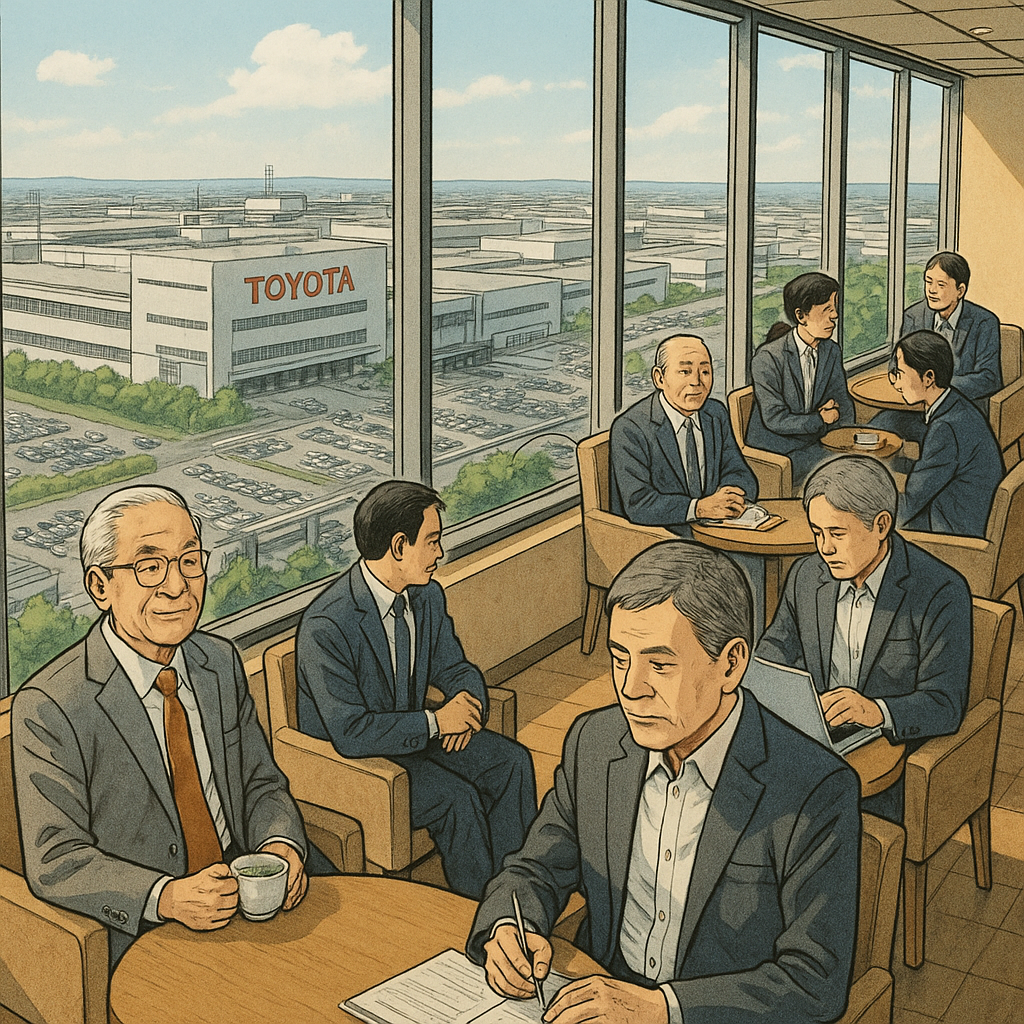
Japan provides a fascinating case study. Traditionally, employees retire at 60. But the law requires companies to offer re-employment until at least 65, often with reduced responsibilities.
Sometimes this morphs into the madogiwa-zoku – the “window-side tribe” – older staff who turn up, do very little, maybe mentor, maybe just sit by the window. Sounds like a cushy gig. But culturally, it’s about loyalty, honouring service, and keeping institutional memory alive.
And here’s the thing: younger staff know those “window sitters” have decades of knowledge to tap into. They become informal mentors, wise sounding boards, and corporate historians. Remove them entirely, and companies risk not just a knowledge drain but also a cultural vacuum.

No Expiry Date on Value
So, is there a sell-by date on usefulness? The evidence screams: absolutely NOT! If anything, by ignoring or ejecting older workers, companies stymie growth, lose mentorship, and destabilise teams.
Sure, we may not run as fast as we once did, but we run smarter. We don’t just bring skills; we bring scars, stories, shortcuts, and a sense of perspective younger colleagues don’t yet have. And in turbulent times, that stability is gold dust.

Evergreen, Not Expired
As I sit here contemplating the looming 57th candle on my cake, I don’t feel done. Far from it. I feel overflowing with skills, experience, and knowledge. If anything, I feel under-utilised. Like a well-worn tool – one that not only still gets the job done, but has been smoothed and refined over time to make the task easier, quicker, and cleaner.
To apply ageism is to waste that potential. It’s to doom your organisation to repeat the same mistakes we already learned from – often painfully – thirty years ago. It’s to operate in a vacuum of ignorance when a deep well of experience is sitting right there, ready to be tapped. It’s to dismiss not just what older workers can do, but what they can prevent.
Older employees aren’t a burden. We’re a force multiplier. We’re the stabilisers on the bike, the compass in the fog, the memory card that stops the whole system from crashing. Ignore us, and you’re not just disrespecting people – you’re sabotaging your own progress.
So, am I past my sell-by date? Hardly. If anything, I’m more valuable now than ever – and so are millions like me. All we need is the opportunity to prove it.
And just in case anyone’s wondering – yes, I’m still available, by the way. Just DM me dude!
If you found this useful, interesting or fun, consider supporting me via Patreon, Ko-Fi, or even grabbing a copy of one of my books on Amazon. Every bit helps me keep creating independent automotive content that actually helps people.
Support independent car journalism 🙏🏽☺️ grab my books on Amazon, take up membership to BrownCarGuy on YouTube, or join me on Ko-Fi or Patreon.

👉🏽 Channel membership: https://www.youtube.com/browncarguy/join
👉🏽 Buy me a Coffee! https://ko-fi.com/browncarguy
👉🏽 Patreon – https://www.patreon.com/BrownCarGuy

MY BOOKS ON AMAZON!
📖 Want to become an automotive journalist, content creator, or car influencer? Check out my book: How to be an Automotive Content Creator 👉🏽 https://amzn.eu/d/7VTs0ii
📖 Quantum Races – A collection of my best automotive sci-fi short stories! 👉🏽 https://amzn.eu/d/0Y93s9g
📖 The ULEZ Files – Debut novel – all-action thriller! 👉🏽 https://amzn.eu/d/d1GXZkO
Discover more from Brown Car Guy
Subscribe to get the latest posts sent to your email.
