
What’s Really Going On Inside Your Car This Summer
£1000s worth of fuel lost?! Or just another slice of summer sensationalism designed to make motorists panic at the pumps? If you’ve seen recent headlines warning that your petrol is quietly evaporating in the sun, you might be wondering whether your fuel tank is basically a barbecue now. Let’s clear the hot air – and talk about what’s really going on in your car when the mercury rises. Because yes, petrol does evaporate. But no, your tank isn’t secretly sipping away your savings. And modern cars are far more clever than the scaremongering tabloids give them credit for.
Fuel Evaporation: The Real Science
Petrol is a volatile substance – meaning it can turn into vapour, especially when it’s warm. This isn’t new or surprising. Vapour build-up in your fuel tank is a fact of life.
Back in the day, you’d sometimes smell petrol near older cars on hot days. That wasn’t a leak – that was vapour escaping into the atmosphere. Annoying? Sure. Dangerous? Not really. Wasteful? Absolutely.
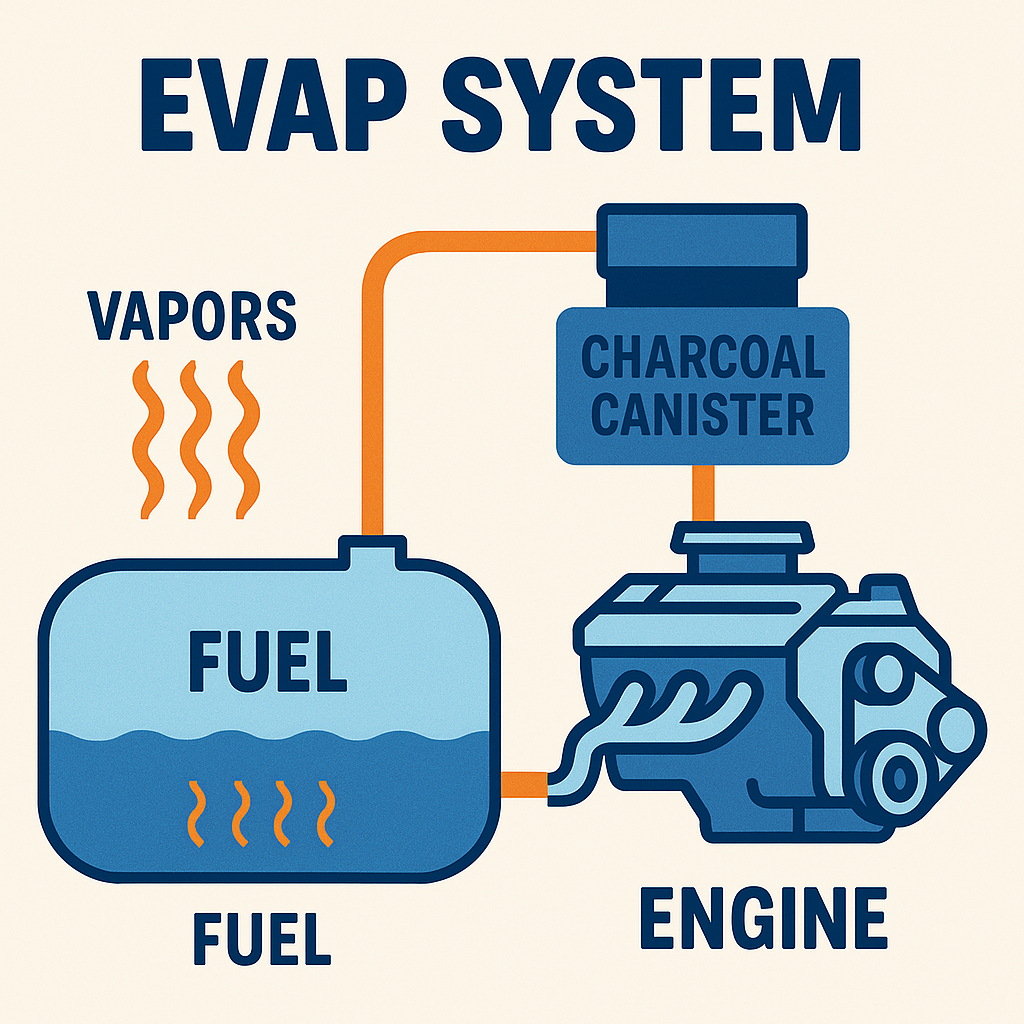
But since the 1970s, all modern cars have been fitted with a clever little bit of engineering called the EVAP system – short for Evaporative Emission Control.
How the EVAP System Works
Here’s how it all works:
- Petrol vapour builds up in your fuel tank.
- These vapours are captured by the EVAP system’s charcoal canister – think of it like a sponge for fuel vapour.
- When you drive, those vapours are sent back into the engine and burned as fuel.
- Nothing escapes. Nothing wasted.
This not only reduces emissions but actually helps improve fuel efficiency. So your car is already dealing with fuel evaporation by design. Unless something’s gone wrong, you’re not losing fuel – you’re reclaiming it.
So… Can You Still Lose Fuel in Hot Weather?
Technically, yes. But realistically? Hardly.
If your EVAP system isn’t functioning – maybe your charcoal canister is damaged or your fuel cap is loose – then yes, vapour might escape. But even in the worst-case scenario, you’re looking at about 1–2% fuel loss over an entire summer.
That’s maybe £1 to £2 per tank, not the thousands being shouted about online. And that’s if something’s broken. In most cars? Everything’s working fine.
Signs Your EVAP System Might Be Faulty
- Strong smell of petrol, especially around the back of the car
- Check Engine Light (some cars monitor the EVAP system)
- Noticeable drop in fuel economy
Most commonly, it’s a worn-out or saturated charcoal canister. Replacement cost? Typically £100–£300, depending on your car and how tricky it is to get to. But honestly, EVAP systems are built to last the lifetime of the car, and failure is rare.
Fuel Tank DOs and DON’Ts in Summer
✅ Do keep your tank topped up – less air space = less vapour build-up
❌ Don’t overfill after the pump clicks – you could flood the EVAP system
✅ Do tighten your fuel cap properly
❌ Don’t worry about fuel vanishing in the heat – your car’s got it covered
Extra Summer Fuel-Saving Tips
Whether it’s 18°C in Devon or 50°C in Dubai, these classic fuel-saving tips still apply:
- Check your tyre pressures – underinflated tyres = more drag = more fuel
- Use your air-con smartly – yes it uses fuel, but open windows at motorway speeds cause even more drag
- Drive smoothly – avoid hard acceleration or braking
- Lighten your load – your boot isn’t a storage locker for five years of “just in case” clutter
So, Should You Panic About Fuel Evaporation?
No. Absolutely not.
I’ve lived and driven in countries where it regularly hits 50°C, and never once have I found my fuel tank mysteriously empty from sitting in the sun.
This whole fuel evaporation panic? It’s just that – panic. Your modern car is designed to capture and use that vapour. As long as you don’t overfill your tank or leave the cap loose, you’re fine.
Final Thoughts: Chill Out and Drive On
So next time you see a scary headline, take it with a pinch of salt and a splash of petrol – okay maybe not the splash of petrol! Your car isn’t boiling your money away. It’s engineered not to.
Instead of worrying about phantom fuel loss, worry about the real stuff – like potholes, ULEZ charges, and the rising cost of jam donuts.
If you found this post helpful, share it with someone who’s been side-eyeing their fuel gauge in the heat. And if you really want to support independent motoring journalism, buy me a coffee, check out my books on Amazon, or hit the subscribe button on my BrownCarGuy YouTube channel.
If you found this useful, interesting or fun, consider supporting me via Patreon, Ko-Fi, or even grabbing a copy of one of my books on Amazon. Every bit helps me keep creating independent automotive content that actually helps people.
Support independent car journalism 🙏🏽☺️ grab my books on Amazon, take up membership to BrownCarGuy on YouTube, or join me on Ko-Fi or Patreon.

👉🏽 Channel membership: https://www.youtube.com/browncarguy/join
👉🏽 Buy me a Coffee! https://ko-fi.com/browncarguy
👉🏽 Patreon – https://www.patreon.com/BrownCarGuy

MY BOOKS ON AMAZON!
📖 Want to become an automotive journalist, content creator, or car influencer? Check out my book: How to be an Automotive Content Creator 👉🏽 https://amzn.eu/d/7VTs0ii
📖 Quantum Races – A collection of my best automotive sci-fi short stories! 👉🏽 https://amzn.eu/d/0Y93s9g
📖 The ULEZ Files – My all-action thriller set in a dystopian ULEZ future! 👉🏽 https://amzn.eu/d/jhADkOt
Big Thanks to my Supporters!
Discover more from Brown Car Guy
Subscribe to get the latest posts sent to your email.

Leave a comment