A New Automotive World Order is Emerging with its Epicentre in the East
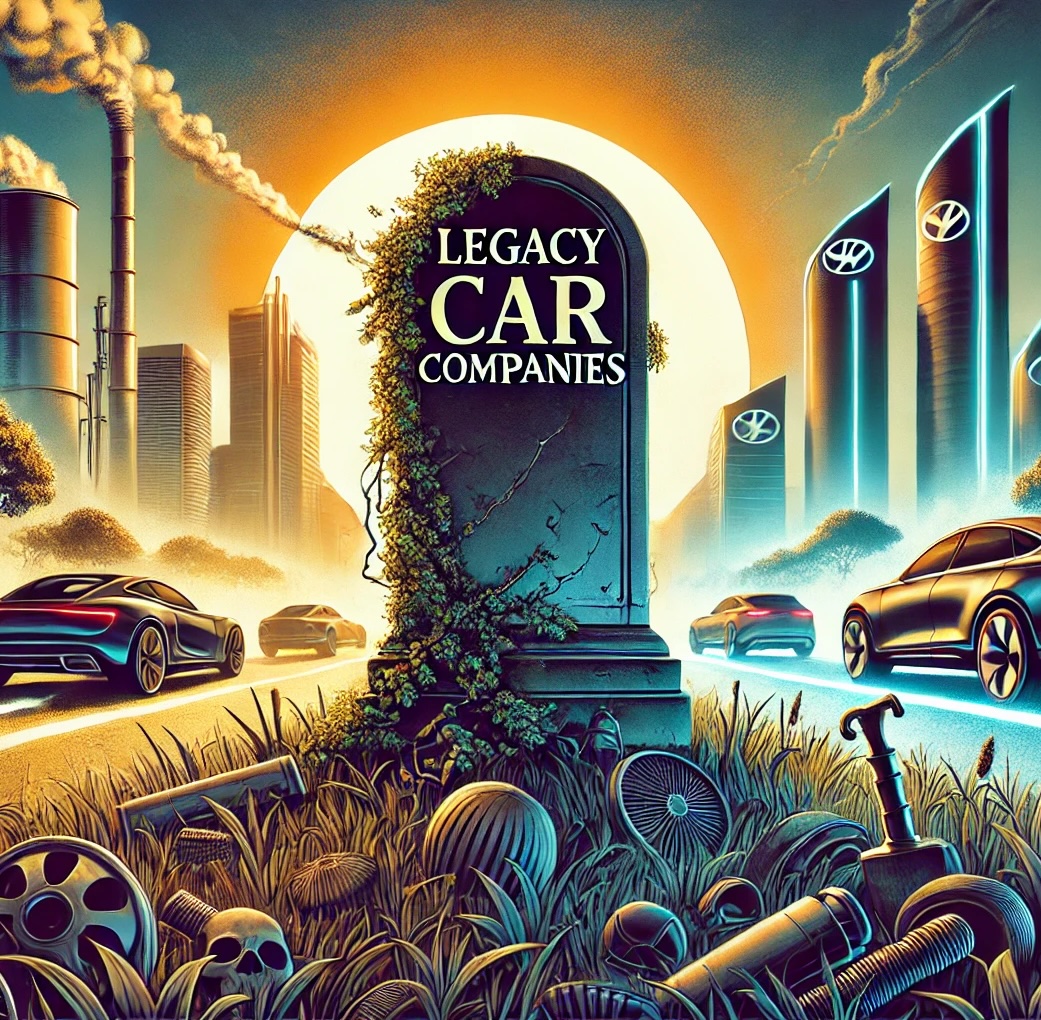
The car industry as we know it is dying. Not slowly, not gracefully, but choking on its own fumes and grinding its gears to a halt. Legacy carmakers, once mighty titans of the road, are now resembling flailing dinosaurs, desperately stomping around, clueless as to what to do about the massive asteroid darkening their skies and hurtling toward them.
Meanwhile, from the East, a tidal wave of new players has emerged. They’re leaner, smarter, faster, and bringing innovation that makes legacy carmakers look like relics.
Make no mistake: the East isn’t just winning—it’s annihilating the competition.
From Britain to Bollywood: The Empire Strikes Back
Once upon a time, Britain was the biggest exporter of cars in the world. In the 1950s, British manufacturers accounted for a quarter of the world’s automotive exports. But those glory days are long gone. Today, the UK’s car industry has dwindled to a shadow of its former self, assembling vehicles for foreign brands rather than producing home-grown icons. Aston Martin? Reliant on Middle Eastern investment. McLaren? Abu Dhabi now owns a significant chunk. Jaguar-Land Rover? Entirely owned by India’s Tata Motors.
This is a far cry from the days when Britain handed over the Morris Oxford to India. The Indians transformed it into the Hindustan Ambassador, which became the best-selling car in the country for decades. Fast forward to the present, and India’s Tata and Mahindra are debuting cutting-edge vehicles at the Auto Expo in New Delhi. Tata’s electrified Nexon and Mahindra’s Born Electric Vision concepts are redefining innovation.
Meanwhile, the UK recorded just 775,014 cars produced in 2022—a 40-year low. This marked an 11% decline from the previous year, highlighting the stark contrast between Britain’s past and present. Car executives in the West are refreshing their CVs and learning to speak Hindi right now.
Cars That Jump: Pothole Busters
Growing up, I remember the absurd car jumps in Bollywood movies. The hero would change gear, and the car would magically leap over obstacles without a ramp in sight. Today, China has turned that cinematic fantasy into reality. The BYD Yangwang U9 electric supercar can actually jump. Thanks to its advanced suspension system, it can tackle potholes – a feat that feels like a cheeky jab at Britain’s crater-ridden roads.
Britain spends an estimated £8 billion annually on road repairs, yet potholes persist. This is in stark contrast to China, where infrastructure investment fuels rapid urban development and supports technological advancements in the automotive sector.
The Rise of the East: The New Dominian
BYD, Geely, Great Wall Motors—these brands aren’t just knocking on the door; they’re bulldozing it, along with the entire building, or should that be factories. These companies lack the nostalgic heritage of their Western counterparts, but they don’t need it. Consider the Ora Ballet Cat, a retro-styled EV that evokes the spirit of the Beetle more effectively than Volkswagen’s managed with its own Beetle revival.
China exported 3.92 million vehicles in the first ten months of 2024, a 59.7% year-on-year increase. Of all the EVs sold in the world, 70% were made in China. Chinese automakers now dominate their domestic market and are making aggressive inroads into Southeast Asia, Europe and even the Middle East.
In Dubai, where I visited recently, Chinese cars are everywhere. Just six years ago, they were a rarity. Now, they’re unavoidable. BYD’s models, such as the Seal and Dolphin, are gaining traction globally thanks to their affordability and innovation.
Korea and Japan: Northeast Asia Not Out
While the East rises, South Korea and Japan are holding their ground. Hyundai and Kia continue to produce award-winning vehicles, including the Hyundai Ioniq 5 and Kia EV6, which have been celebrated for their design and technology. Hyundai’s global EV market share rose to 8% in 2023, solidifying its position as a key player.
Japan, on the other hand, is grappling with its slow transition to EVs. Despite challenges, Toyota is making strides with models like the bZ4X. Honda and Nissan are consolidating resources, with their merger aiming to streamline EV production and reclaim market share. The recently unveiled Honda O Saloon Concept shows that Japan still has the potential to surprise.
Europe’s Industry: Titanic Was Unsinkable Too
Europe’s carmakers are stuck in quicksand. High labour costs, stringent emissions regulations, and union struggles are dragging them down. Volkswagen’s profits plummeted 64% in Q3 2024, forcing them to rethink operations. Stellantis, meanwhile, has announced plans to shut down underperforming factories in an effort to cut costs.
Europe’s inability to adapt quickly enough to market shifts has turned once-mighty automakers into lumbering giants. The EV revolution is happening, but Europe’s pace is sluggish compared to the nimbleness of China and India.
US Loses Its Muscle
In the United States, the decline is equally stark. Production peaked at nearly 10 million cars per month in the 1970s but fell to just 1.3 million in 2024. Iconic models like the Camaro and Challenger have been discontinued, leaving the Mustang as one of the last standing muscle cars. Meanwhile, Tesla’s controversial Cybertruck epitomises America’s polarised automotive landscape — hailed by some, ridiculed by others.
Is This an Extinction Level Event for Legacy Carmakers?
Legacy carmakers are in the throes of an extinction-level crisis. Tariffs and protectionism offer no real solutions. History shows that survival depends on innovation and cost-efficiency — something China and India are excelling at. They’re not weighed down by nostalgia or legacy; they’re focused solely on the future.
Heritage vs Innovation
Legacy brands have one card left to play: heritage. But even here, they’re faltering. Jaguar’s decision to abandon its history in favour of a complete reinvention feels like a misstep. Consumers buy into legacy brands for their stories, yet these brands seem eager to erase their past.
The Road Ahead
So, here we are. The East is rising, and the West is falling. The question isn’t whether the industry will change — it already has. The question is whether we’ll even recognise it by the time the dust settles.
Are we witnessing the death throes of an era, or the birth of something entirely new? One thing’s for sure: the road ahead is going to be bumpy. Whether we drive across it or leap over it in a Yangwang U9 depends on who’s behind the wheel.
Follow all my channels https://linktr.ee/browncarguy
Get my books! https://amzn.eu/d/9fwhSoQ | https://amzn.eu/d/9IHhqXA
Sponsor my content from as little as £3 at https://ko-fi.com/browncarguy
Big Thanks to my Supporters!
CraftLab (https://www.CraftLab.my)
Tom Conway-Gordon (https://www.instagram.com/anycoloursolongasits_black/)
And others! 🙏🏽☺️
Discover more from Brown Car Guy
Subscribe to get the latest posts sent to your email.

I couldn’t of expressed this point better. One important factor that was left out was the fact that legacy auto has to contend with legacy costs. This means paying their workers in the US long-standing life support such as contributing to emplyee 401K or annual cash injection etc. These companies have to make up these losses somewhere so they buy cheaper parts or skimp out on crucial quality control measures all the while increasing the price of their vehicle offerings to supply rich american elitists to stroke their egos and social status via the vehicles they drive. This is why everything is gone premium and realistically sold to the 1%. Families have been quickly abondoned since they the majority across North America can not afford to buy cash up front or fincance with exorbant interest rates in a failing monatary system. Legacy auto knows the psychology of buyers and the dire issues in the economic markets. In essence, they are the equivelant of someone drowning and grasping for anyone around them just to save themselve from impending death.
All the temporay tariffs from the US will not save Legacy auto. In fact, they have no real concious about families that can not afford their vehicles so they simply don’t care about the bulk consumer. They care far more about their reputation on the global stage such as a politician would embroiled in a dramatic scandal that threatens their public image. The East as you remarked care about real values and innovation. North American capitalistic culture has become self-serving and rotten and it needs to die. Period.
LikeLiked by 1 person
Thanks for these insightful points!
LikeLike
The Titanic believed it was unsinkable until it wasn’t and one day in the near future there will be without a doubt a movie released based on the industry in the same vein that tells a story of the its demise. The parallels are uncanny. The Titanic was a show boat to service the rich and fluant its grandeur and wealth all the while coasting the open seas with its own belief of its invincibility until it struck its fate. Ultimately it was the Titanics own hubris that caused its demise. Sound familiar. This is the case of Legacy Auto. They are all going premium servicing products to the rich while the common folk get left behind and unable to to afford the percieved luxury of the status quo. It’s not the point of the common folk wanting to be like the rich, cause family unity is simply their riches. It’s the ignorance from the auto makers participating in such demeaning social marketing behaviour just to stay relevent and afloat as a company to create new sales. The new emerging companies from the East are built on innovation, value, and respectful practices such as it should be along with tech that is 20 years ahead of legacy auto. It’s not a matter of if, but a matter of when. Legacy Auto is toxic to the consumer and North American tariffs can only temporarily deter a full takeover from the East. The issue is it seems like we’re watching a slow motion train derailment in real-time. It just needs to happen so we can clean up the mess and move forwards.
LikeLiked by 1 person