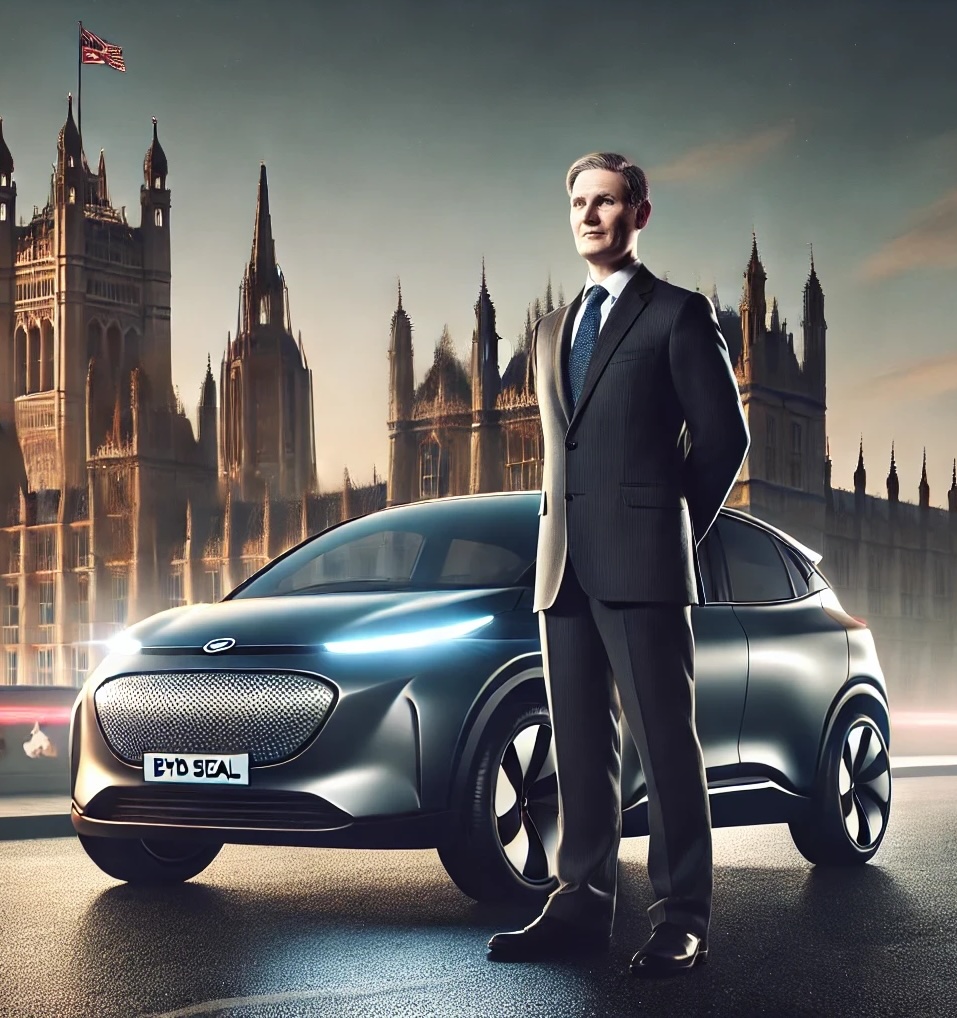
Plus ZEV Mandate Miss, and latest battery tech and charging infrastructure updates
The electric vehicle (EV) revolution is rolling forward, but not without its share of twists, turns, and roadblocks. The UK has seen impressive EV sales growth, but recent political decisions are shaking things up. Labour has officially reversed the 2035 ban on petrol and diesel car sales, bringing the deadline back to 2030. So, what does this mean for the car industry, buyers, and the broader push for electrification?
UK EV Sales: A Record Year, But Is It Enough?
In 2024, the UK hit a record 382,000 EVs sold, giving electric vehicles a 19.6% market share – slightly above the predicted 18.5% and a steady increase from 16.5% in 2023. Sounds like progress, right?
Not so fast. The government’s Zero Emission Vehicle (ZEV) mandate – also known as the Vehicle Emissions Trading Scheme – had set a target of 22% for 2024. Falling short by 2.5% might not seem catastrophic, but for carmakers, it could mean fines of up to £15,000 per non-compliant vehicle. And the bigger problem is this – the 2025 target jumps to a daunting 28%.
Even with a 3% market share increase year-on-year, hitting an 8% jump in 2025 seems unlikely. The government is currently reviewing the ZEV mandate, and there’s a public consultation underway. Labour’s decision to reinstate the 2030 petrol and diesel ban further complicates matters, creating uncertainty for manufacturers and consumers alike.
Consultation here: https://www.gov.uk/government/consultations/phasing-out-sales-of-new-petrol-and-diesel-cars-from-2030-and-supporting-the-zev-transition
The Bigger Picture: A Global Race for EV Dominance
While the UK grapples with mandates and targets, the global EV race is accelerating. China leads the charge, producing 70% of all EVs sold worldwide in 2024. Beyond production, they dominate the supply of battery components like lithium and gallium. Recent export restrictions proposed by China could disrupt Western automakers heavily reliant on these materials.
Meanwhile, technological breakthroughs are on the horizon. Scientists in South Korea have developed fire-resistant batteries, while “single crystal” electrodes promise EV batteries that could last millions of miles. Such innovations could eliminate common concerns about battery degradation and safety, potentially reshaping consumer confidence.
However, trade wars loom large. Europe has imposed a 50% tariff on Chinese EVs, and the US has gone even further with a 100% tariff. Retaliation from China could exacerbate supply chain challenges, especially for critical EV components.
Winter Woes: EV Range and Charging Challenges
Cold weather isn’t just uncomfortable for people; it’s tough on EVs too. A recent report highlighted that freezing temperatures can slash EV range by up to 40%, shaving off as much as 132 miles. Charging times also increase in the cold, adding frustration for drivers.
While the UK’s charging infrastructure is improving, regional disparities persist. On-street charging remains concentrated in London, leaving areas like Northern Ireland underserved. For private buyers, these challenges add to existing hesitations about switching to electric.
Charging Infrastructure: Promising Progress
There’s good news on the infrastructure front. Zapmap reports a record 20,000 new charge points installed in 2024, bringing the total to nearly 74,000 – a 38% year-on-year increase. Ultra-rapid chargers (150kW+) saw an 84% rise, and the number of charging hubs with six or more rapid chargers more than doubled.
Destination chargers – found in places like retail parks and leisure areas – are making it easier for drivers to top up while they shop or dine. The government’s LEVI programme aims to address regional disparities, promising a more equitable distribution of on-street charging by 2025.
The Road Ahead: What Does the Future Hold?
The EV future looks promising, but challenges remain. Zapmap’s data shows that 61% of EV drivers believe public charging has improved, yet reliability issues persist. Upcoming advancements in battery technology, like solid-state batteries, could deliver longer range, faster charging, and lower costs.
However, hitting the UK’s ambitious EV targets will require more than tech. Policymakers must provide clarity and consistency, manufacturers need to offer affordable options, and consumers must feel confident that EVs fit seamlessly into their lives.
What Do You Think?
Labour’s decision to reverse the 2035 ban has reignited debates about the best path forward for electrification. Should the transition be enforced, or should EVs naturally become the better choice as technology and infrastructure improve?
Let me know your thoughts in the comments below. Are EVs the future, or are we trying to force the revolution before it’s ready? If you’re as passionate about cars and motoring as I am, make sure to like, share, and subscribe for more updates!
Follow all my channels https://linktr.ee/browncarguy
Get my books! https://amzn.eu/d/9fwhSoQ | https://amzn.eu/d/9IHhqXA
Sponsor my content from as little as £3 at https://ko-fi.com/browncarguy
Big Thanks to my Supporters!
CraftLab (https://www.CraftLab.my)
Tom Conway-Gordon (https://www.instagram.com/anycoloursolongasits_black/)
And others! 🙏🏽☺️
Discover more from Brown Car Guy
Subscribe to get the latest posts sent to your email.

Leave a comment