Drivers to be scored out of 100 based on in-car and traffic camera monitoring – privileges could be revoked!
For years, we’ve been told that driving is becoming safer, smarter, and more regulated, but what if the next phase isn’t about enforcement at all, at least not in the traditional sense, and instead marks a shift towards something far more pervasive, far more subtle, and arguably far more consequential for the everyday motorist?
300 miles, multiple charges, and one very real reality check – oh, and make sure you’ve got extra cash in the bank!
So, I recently did what many EV evangelists will tell you is absolutely fine, totally normal, and nothing to worry about… I drove an electric vehicle from London to Bristol and back. Now before anyone sharpens their pitchforks or plugs in their keyboards to type an angry comment, let me say this upfront: this is not an anti-EV rant.
I like EVs. I really do. Around town, they’re brilliant – smooth, quiet, effortless, and occasionally smug. But take them out of their natural habitat and onto the open motorway, and suddenly things get… interesting. Let me walk you through what actually happens.
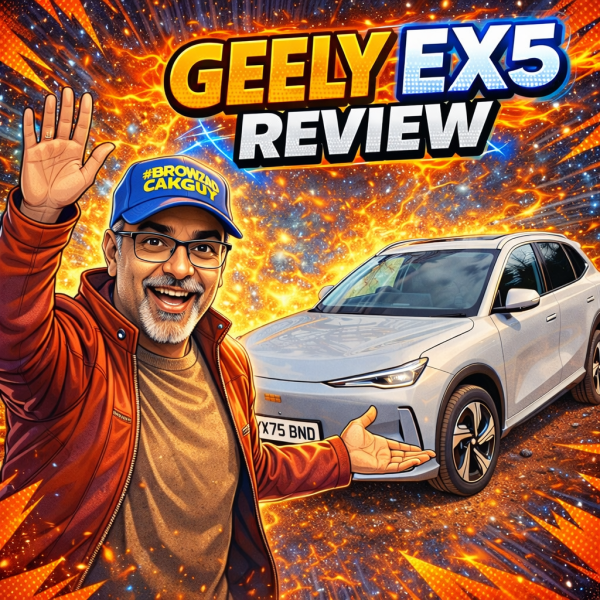
The Geely EX5 marks the official arrival of Geely Auto into the UK market, and while the badge might be unfamiliar to many British buyers, the company behind it most definitely isn’t. This is the same automotive giant that owns Volvo, Polestar, Lotus, Smart and Zeekr, so there’s serious engineering muscle behind this car. The EX5 is Geely’s opening move in one of the most competitive segments in the country right now: the mid-size electric family SUV. Think Kia EV6, Hyundai Kona Electric, BYD Atto 3 and MG4 Extended Range territory.
You’ve seen it. Shelves of tiny cars, obsessively arranged like a miniature showroom. Looks like a toy collection. It isn’t. It’s something far deeper, and slightly more revealing than most collectors would care to admit
“When will you grow up?!” an old friend once asked when he visited my home in Dubai and took one look around my front room. His eyes lingered, not in admiration or envy, but in sheer perplexity at my cabinet full of model cars. He’s not a car guy. But I’m obviously the BrownCarGuy.
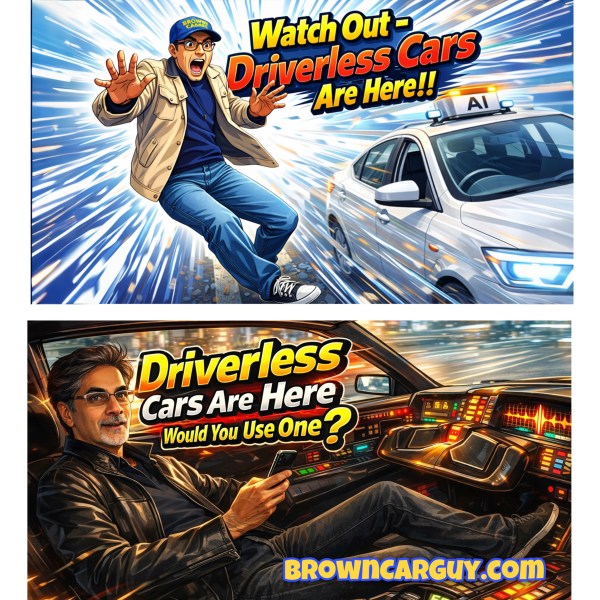
Autonomous vehicles are no longer science fiction – with driverless taxis arriving in the UK, we explore what this means for motorists, jobs, and the future of driving itself
There was a time when the idea of a car driving itself belonged firmly in the world of Knight Rider, sci-fi films, and future fantasies. Well, that future has arrived – not with a bang, but with a quiet software update and a fleet of taxi vehicles rolling onto real roads.
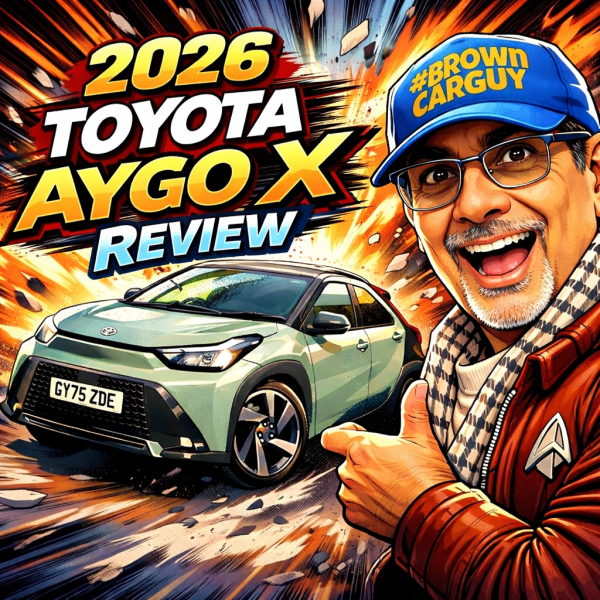
Toyota’s smallest crossover gets a major upgrade with a new hybrid drivetrain, more tech and higher prices – but has the cheeky Aygo X grown up a little too much?
Some cars don’t change very often. Others quietly evolve until one day you realise they’ve become something quite different from what they started out as. That’s exactly what has happened to the Toyota Aygo X.
The war in the Middle East may feel like a distant geopolitical crisis – but it could have huge consequences for the global car industry
War, as history repeatedly reminds us, rarely stays confined to the battlefield. Its shockwaves travel outward through trade routes, energy markets, financial systems and, inevitably, everyday life. The latest escalation in tensions involving Iran may appear geographically distant to most motorists, but in reality the conflict is unfolding in one of the most strategically critical arteries of the global economy. And if events continue to escalate, the repercussions could ripple straight through the global automotive industry.
The reason lies in a narrow stretch of water that most people have never heard of, but which quietly underpins the entire modern economy. It’s called the Strait of Hormuz.
Tim, Fuzz, Joanna Lumley, Baby Godzilla… and a Trip to the Toilet!
Tim Shaw and Fuzz Townshend are back with Car S.O.S. Series 14, bringing more outrageous restorations, emotional stories, and some properly bizarre behind-the-scenes moments – including a Nissan Pulsar GTI-R debate, a Rover P4 with a mental-health mission, and one unforgettable toilet incident.
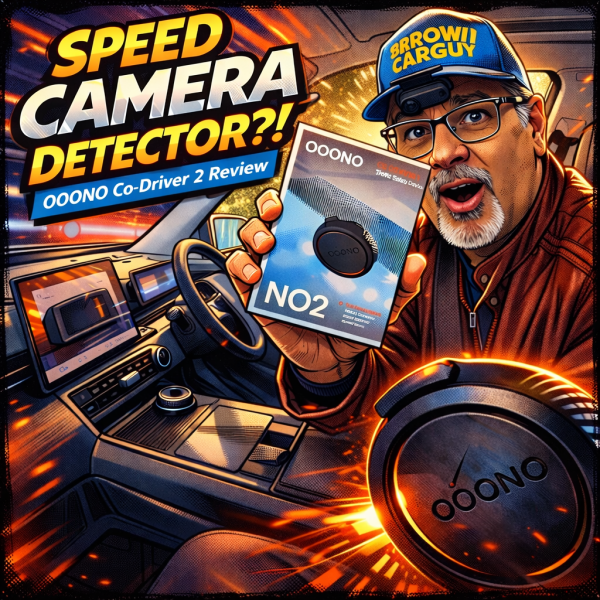
A tiny puck-shaped gadget promising to warn drivers about speed cameras and road hazards – I tested the OOONO Co-Driver NO2 to see if it really works
Modern cars are crammed with technology. Screens everywhere, navigation systems that want to talk to you constantly, lane-keeping assistants tugging at the wheel, and warning chimes that make you feel like you’re piloting a passenger jet rather than driving to Tesco. And yet, despite all that technology, there is still one thing many drivers worry about: speed cameras. Enter the OOONO Co-Driver NO2, a small Scandinavian gadget that promises to act like a silent passenger in your car – warning you about speed cameras, road hazards, and traffic issues ahead without distracting you with yet another screen. It’s an interesting idea. But does it actually work? Let’s give it a go!
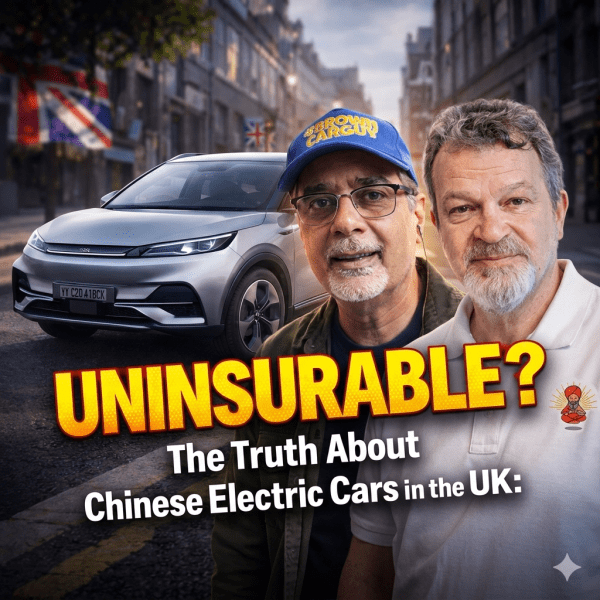
Reports indicate insurers refusing to cover Chinese cars or quoting high premiums – we check in with the Motor Claims Guru
Chinese electric cars are arriving in Britain faster than you can say “range anxiety”. From sleek executive saloons to well-priced family SUVs, brands like BYD, MG, XPeng and GWM Ora are rapidly becoming familiar sights on UK roads. And frankly, it’s not hard to see why. These cars often deliver impressive technology, strong performance and generous equipment for significantly less money than many established rivals. I’ve driven quite a few of them recently and in many cases I’ve been pleasantly surprised. But there’s a growing issue that some buyers are only discovering after they’ve signed on the dotted line. Insurance.