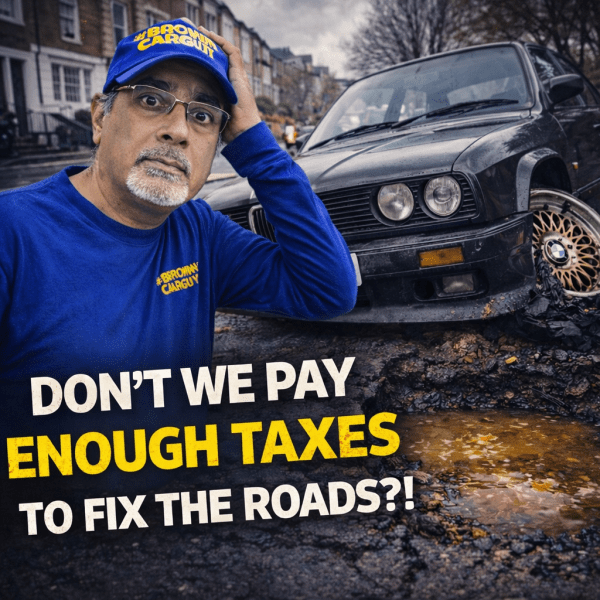
UK motorists contribute around £35 billion annually through fuel duty, VED and charges – yet we’re still dodging craters. Where does the money actually go?
Our roads right now look like grey apple crumble. I’m not exaggerating. There are more craters on a typical UK high street than on the entire surface of the moon, and yet we – the long-suffering, tax-paying, suspension-replacing motorists of this sceptred isle – are shelling out a small nation’s GDP just for the privilege of driving across them.
After years of rumours and regulatory drama, Euro 7 is finally confirmed – but is this really the death knell for petrol and diesel?
For what feels like a decade, Euro 7 has existed in that strange automotive limbo between prophecy and panic. Depending on which headline you read, it was either the final nail in the coffin of the internal combustion engine or a bureaucratic overreach that would make new cars unaffordable and wipe diesel off the map overnight. Now, however, the speculation phase is over. The final Euro 7 emissions regulations are confirmed, the implementation dates are set, and November 2026 is no longer some distant abstraction. It is eight months away.
Why This Season of Fasting Could Make Britain’s Roads Safer
Tomorrow, something unusual happens. Lent begins for Christians. Ramadan begins for Muslims. Two great traditions, drawn from different scriptures, different histories, different spiritual traditions – and yet arriving on our calendars almost side by side. Both are seasons of restraint. Of discipline. Of reflection. Of giving something up. And so I want to suggest something radical.
Before you steam up the windows this Valentine’s Day, here’s what UK driving law actually says about car romance, careless driving, and those awkward police knock moments
Valentine’s Day. The one evening of the year when restaurants are overbooked, hotel prices are outrageous, roses are in short supply, and otherwise sensible adults suddenly decide the most romantic place on earth is the back seat of a hatchback in a dimly lit supermarket car park. But it that actually legally allowed? Before you head out tonight, watch the full breakdown below – because it could save your blushes, and what feels harmless and romantic could, in certain circumstances, fall under careless driving, public order offences, or Highway Code breaches.
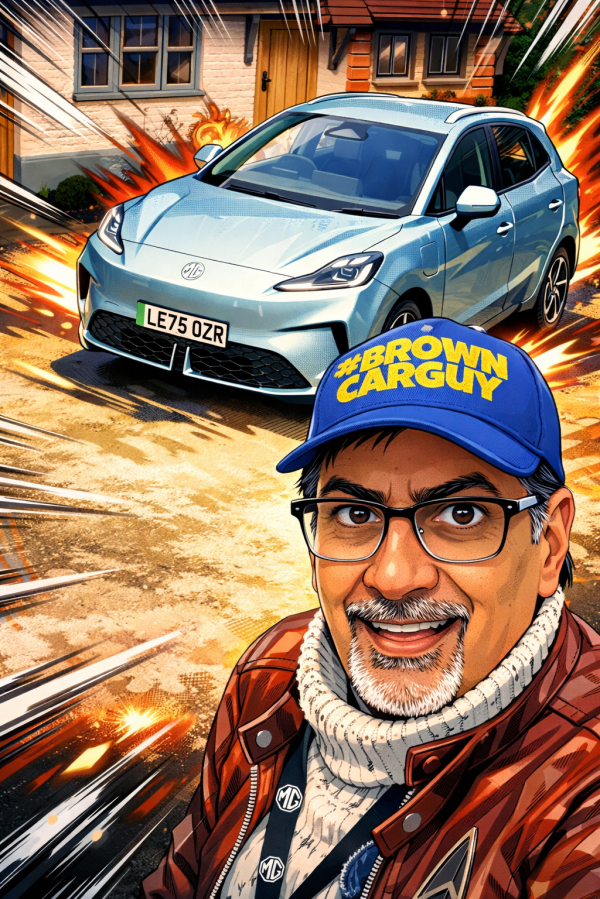
MG launches the MG4 EV Urban alongside the existing MG4 EV, but this is no mere trim level – it’s a bigger, cheaper, more practical front-wheel drive electric hatch with a very different mission
The MG4 EV has, in a remarkably short period of time, become one of the most significant electric cars in the UK market. It accounts for a substantial chunk of MG’s sales, has won multiple awards, and proved that an affordable rear-wheel drive electric hatchback with genuine driver appeal could exist outside of premium price brackets. And now, MG has done something curious. It has launched another car… also called MG4 EV.
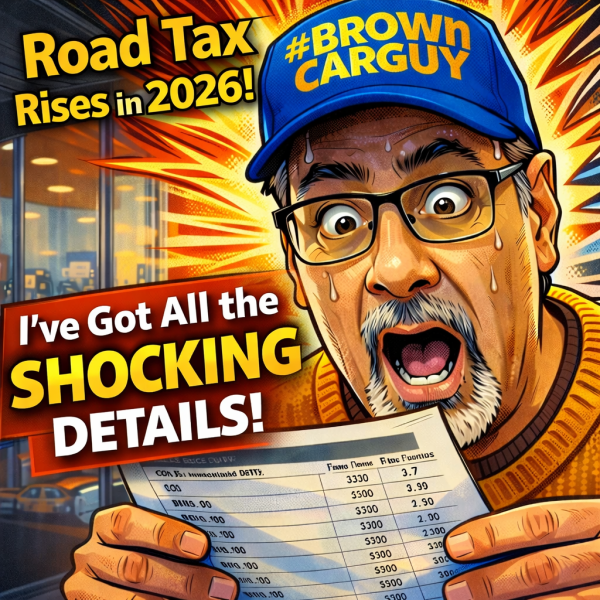
The £5,690 VED Shock, Modern Classics Trap & Why No Car Is Safe Anymore
From April 2026, the cost of owning a car in the UK shifts again. Not with a single dramatic ban or headline-grabbing announcement, but with a carefully calibrated set of Vehicle Excise Duty changes that, taken together, tell a very clear story. A story about who is being nudged. Who is being punished. And who, increasingly, is being priced out. In this piece, I’m going to walk you through every major UK road tax (VED) change coming in April 2026, using the actual Treasury tables, not speculation, not press-release gloss, and not the usual “this only affects rich people” dismissal. Because it doesn’t.
Car crime in Britain has quietly evolved from high-end vehicle theft into something far more widespread, mundane and unsettling – and if you drive, it almost certainly affects you
Let me start with a statistic that should stop every UK motorist mid-scroll. According to the latest RAC research, one in four UK drivers has been the victim of car crime in the past twelve months. Not one in four luxury car owners. Not one in four people who park badly or leave laptops on their seats. One in four drivers, full stop. And if you live in a town or a city, it gets worse. In urban areas, nearly half of all motorists report some form of vehicle crime.
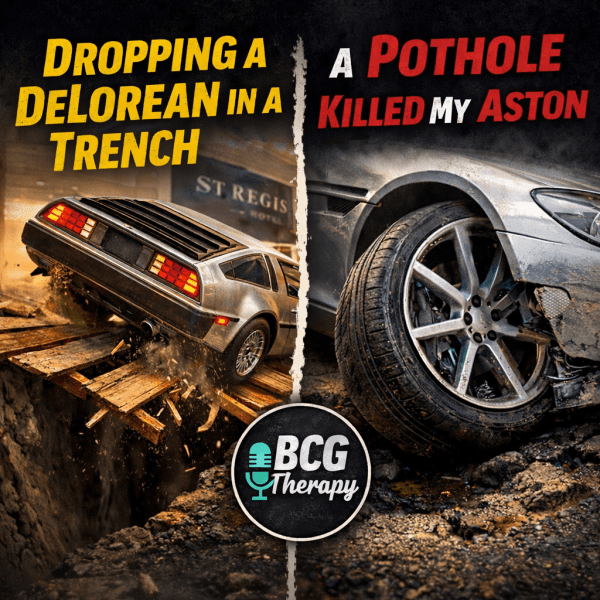
A DeLorean, an Aston, and a growing sense that driving no longer works in our favour
Some motoring moments make you laugh later. Others make you stop and think, hang on… something’s not right here. In this episode of BCG Therapy Podcast, a near-disaster involving a DeLorean nearly disappearing into a trench at a luxury hotel in Dubai with actual Star Wars Stormtroopers watching, and a glamorous Aston Martin that would take on Spectre but was defeated by a British pothole spark a much bigger conversation about modern motoring – and why driving increasingly feels stacked against the very people doing it.
Once upon a time, you could walk into a showroom and buy a brand-new, small, petrol car without taking out a second mortgage. That era is quietly being legislated out of existence
Not that long ago, buying a brand-new small car felt like a perfectly sensible, attainable thing to do. You walked into a dealership, pointed at a modest little hatchback, signed a few forms, and drove away knowing you hadn’t just committed yourself to years of financial regret. Cars like the Ford Fiesta became staples of British life for a reason. They were affordable, simple, easy to live with, and perfectly suited to everyday motoring. They weren’t glamorous, but they were democratic. They worked. And then, almost without ceremony, they disappeared.
The Fiesta is gone. The price of cars like the Fiat Panda has crept towards £20,000. The entry-level petrol car, once the backbone of the market, is becoming an endangered species. So what happened?
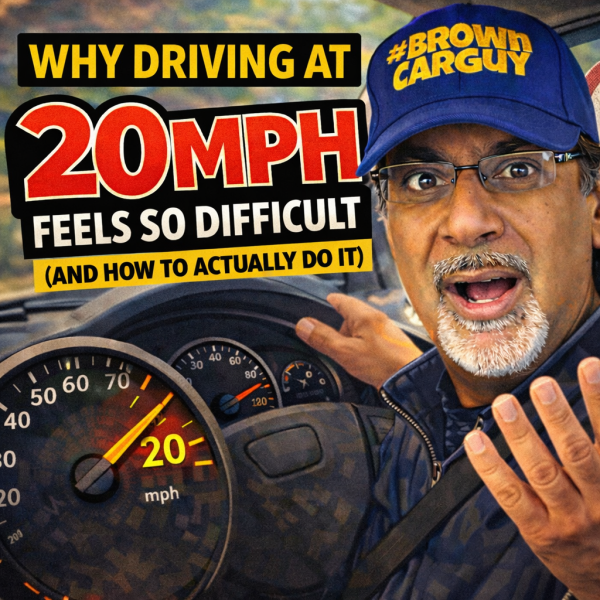
Twenty miles an hour should be easy, yet for millions of drivers it’s oddly stressful, unintuitive, and dangerously easy to get wrong
Twenty-mile-an-hour limits are rapidly clogging up the arteries of UK cities. Proponents tend to wave away any resistance with the same breezy refrain: What’s the problem? Just stick to twenty. Twenty’s plenty. Alright then.
This isn’t about reopening the endless argument over whether 20mph limits are right or wrong. That debate has become so polarised it’s practically its own motorsport. What interests me far more is the quieter, more universal question that ordinary drivers keep asking themselves. Drivers who genuinely want to do the right thing, obey the law, and get home without stress. Why is it so damn hard to drive that slowly?